Articles from the world of GE Aerospace Stories that inspire
Featured Leading research articles from GE Aerospace
It’s in their blood: one family’s passion for aviation
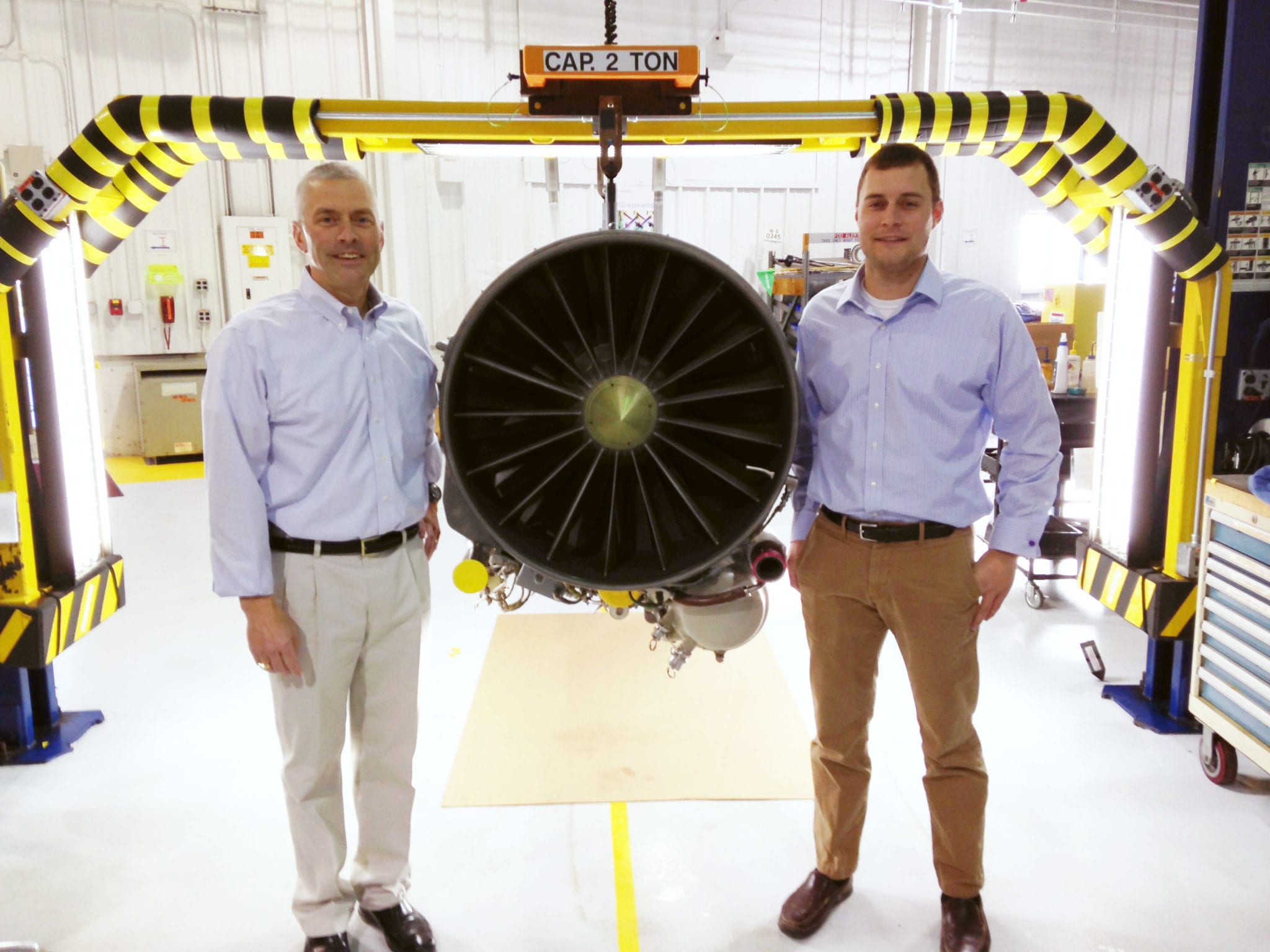
“You must have been influenced by the smell of jet fuel in the house growing up.”The Rock family has a passion for the aviation industry. With three generations of mechanical engineers and two generations of pilots in the family, the Rocks’ prove that passion is a hereditary trait.Philip Rock, the patriarch of the family, was a B-17 co-pilot during World War II. He completed eight missions in Germany, in the last of which he was shot down and captured, surviving in a German POW camp through the end of World War II. Phil became a mechanical engineer after returning home in 1945; he earned a business degree from Harvard University and eventually became the Engineering Leader for a 2,000+ employee organization in Massachusetts.Phil passed on his passion and work ethic to his son, Peter Rock Sr., and his grandson, Peter Rock Jr.Listen in as Pete Sr., a UMass Lowell and MIT graduate and Engineering Leader at GE Aviation in Lynn, Massachusetts, and his son, Pete Jr., a Boston University graduate, Aviation Advanced Course student at MIT and member of GE’s Edison Engineering Development Program, talk about their passion for the aviation industry, family history, and diverse experiences at GE. To hear more GE Aviation podcasts, subscribe to GE Aviation on YouTube. Sign up for the weekly Bike Shop newsletter to get the latest and the greatest from GE Aviation.
The Smithsonian goes to school!
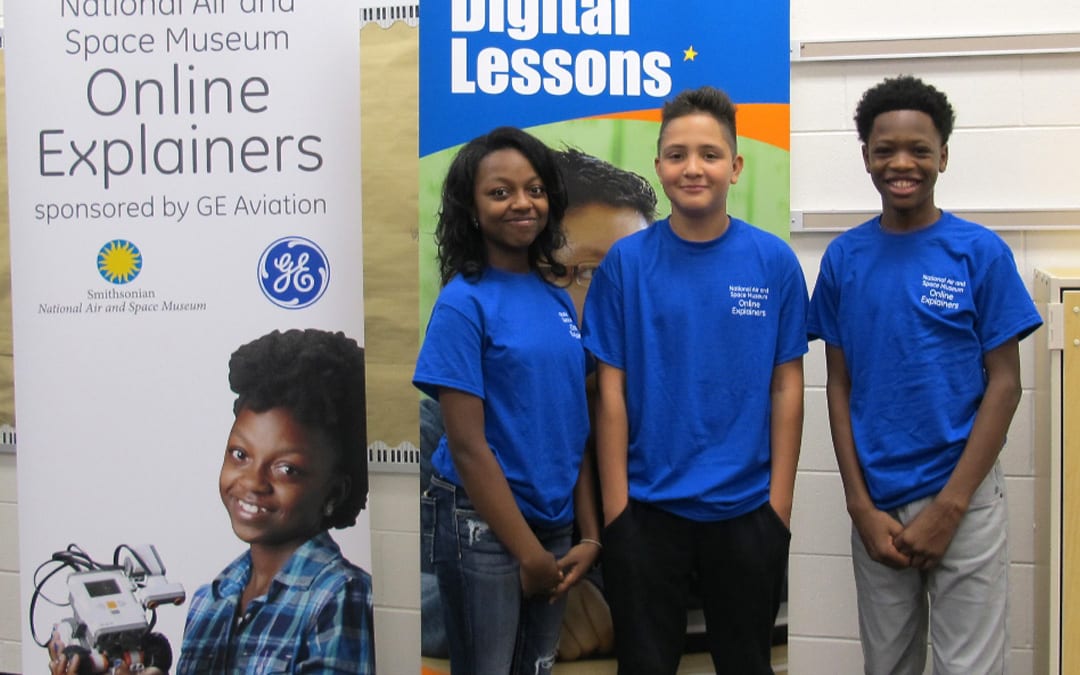
Thanks to a $5 million sponsorship from GE Aviation and a strong partnership with Cincinnati Public Schools, the Smithsonian National Air and Space Museum is using technology to reach classrooms far beyond Washington, D.C.’s beltway.The sponsorship from GE Aviation will expand the Smithsonian’s National Air and Space Museum’s “Explainers” program, taking it online to reach children who may never get the chance to visit the U.S. Capitol. Additionally, GE Aviation has committed $1 million to Cincinnati Public Schools for technology, professional development and curriculum planning for the Online Explainers program.The idea began with the Smithsonian Institution’s vision to make America’s national artifacts accessible beyond its walls. As Chairman of the Board for the Smithsonian National Air and Space Museum (NASM), GE Aviation President and CEO David Joyce led the program exploration between NASM and Cincinnati Public School leadership."This is an important next step for the Explainers program and our work to accelerate STEM education,” said Joyce. “We are using technology to reach schools and kids who may not have the opportunity to come to the museum, and position the National Air and Space Museum as an institutional role model for what a focus on STEM education can really accomplish beyond the walls of the museum. The Explainers are perfect ambassadors for NASM with these kids, and we are excited to sponsor this program.”“Explainers” are high school and college students, employed by the Smithsonian’s National Air and Space Museum, to connect learners to iconic artifacts and stories about the science and technology that make innovation possible. The five-year GE Aviation sponsorship will expand the existing in-museum Explainers program, and launch the new Online Explainers. These Online Explainers are specially trained to conduct live, curriculum-aligned science lessons for students remotely through interactive video conferencing.
The Jet Set: GE Jet Engines Land On Louis Vuitton’s Paris Runway
Jet engines strut across the world’s runways every day, but on October 7, GE engines made their formal debut on an entirely different kind of runway when Louis Vuitton featured the engines during the designer’s Paris fashion show. Louis Vuitton’s creative director, the French designer Nicolas Ghesquière, used fabrics bearing images of jet engines made by GE and its joint-venture partners for his women’s ready-to-wear collection titled “Strange Days.” Engines like the best-selling GEnx, which is powering many planes in the Dreamliner fleet, the CF34, and the GP7200 – built by the Engine Alliance for the A380 double decker – landed on pants, jumpsuits and leather jackets. Ghesquière also wove the shapes of their sinuous composite fan blades and metal exhaust nozzles into handbags and accessories.

Introducing the lab of the future
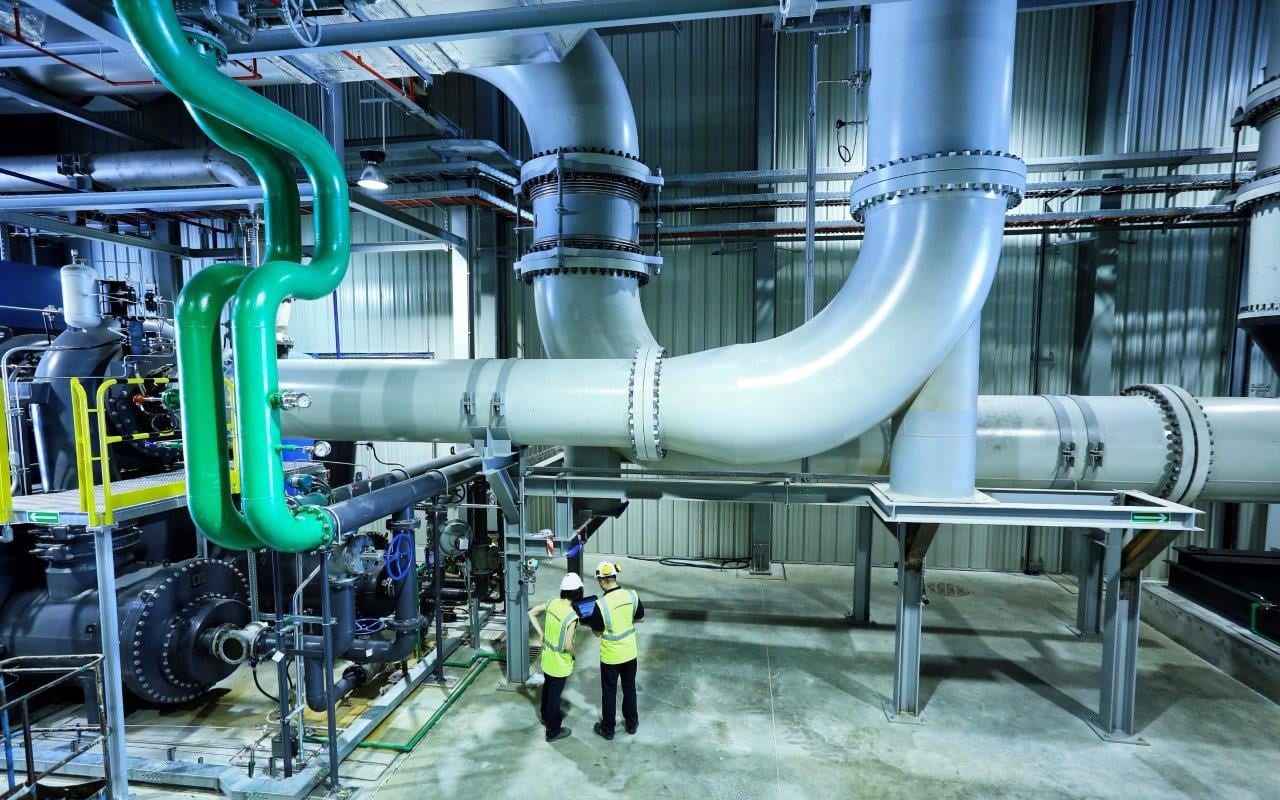
The ribbon has been cut.Earlier today, Polonia Aero announced the official opening of one of the world’s largest and most advanced cold flow turbine test laboratories; a unique example of collaboration between industry and universities, the project combines Polish scientific capabilities and innovation in the aerospace industry.Polonia Aero is a scientific-industrial consortium comprising of Avio Aero and its Polish industrial partners: the Warsaw-based Military Aircraft Works No. 4, the Military University of Technology, and the Warsaw University of Technology. The consortium came to reality through the construction of the brand-new Cold Flow Test Facility in Zielonka (very close to Warsaw, Poland), designed to conduct industrial research and development activities in the aerospace industry, including the testing of low-pressure turbines for aircraft engines.Avio Aero, a GE Aviation business which specializes in the design, production and maintenance of components and systems for the civil and military aviation industry, is the main initiator and project leader of the consortium. The Military University of Technology and the Warsaw University of Technology are involved with their scientific capabilities, professional expertise and technical knowledge in the field of aviation and engineering.Three main goals of the turbine testing are: curtail fuel consumption, reduce pollution and reduce noise emissions.To do so, the aerodynamic conditions of the turbines in the new cold flow facility are similar to those that occur in-flight, but at lower temperatures. The testing mechanism is relatively simple: air drawn from the outside environment is compressed and heated up to 375°C before being thrust at a maximum flow rate of 80 kg/sec towards the low-pressure turbine to be tested. Monitoring the airflow inside the turbine—with meticulously configured and controlled conditions and parameters—enables testers to observe and assess its reactions, validate numeric models and define areas for improvement.The $60 million Cold Flow Test Facility is a strategic asset in enhancing the technological level of low-pressure turbines. In 2016, Polonia Aero will be running tests for the Polish technological program Innolot (which aims to finance scientific research on innovative solutions for the aerospace industry), at the same time testing will be confirming the efficiency level required to reach the Specific Fuel Consumption targets of the GE9X engine program. The GE9X engine is the next generation engine that will power the Boeing 777X, and Avio Aero has primary responsibility for the low-pressure turbine.Enjoy this exclusive virtual tour inside the brand-new facility.
The Industrial Internet needs coders… and a really great podcast
Today's post is courtesy of GE Digital._____________________________Meet Ethan Reese. Twenty-something, sarcastic, unfiltered – and a very talented developer.He’s bored at his job coding tweaks to an online kids game, so he spends off hours hanging out at an incubator focused on the Industrial Internet. And after working on projects using GE Predix, Ethan is dreaming of bigger things.Then a 7.4 magnitude earthquake hits San Francisco and changes everything. Ethan put his moonlighting experience to work in the city’s recovery efforts – and his life takes a new direction.Truth be told, you can’t really meet Ethan. He’s a fictional character in our new Industrial Internet podcast series for developers -- called Pivot. (And obviously, San Francisco is still standing.)But at GE, we’re very eager to connect with actual people like Ethan – developers already working in industrial settings or those currently focused on mobile or Internet of Things consumer apps. (Have you seen our “What’s the matter with Owen?” TV ads?)We think today’s technology professionals are hungry to work on what we like to refer to as the “Internet of really important things” – namely, the industries that build, power, move, and cure the planet. The Industrial Internet.As GE Digital moves toward making our cloud platform for the Industrial Internet available to all in 2016, we are working to spread the word and inspire visionary developers to think about what they’d build with Predix. We didn’t want to wait until developers could sign onto Predix and “kick the tires.” We wanted to start the education and inspiration immediately.This “coming soon” timing is why we created Pivot – a “semi-fictional podcast about very real opportunity.” Like the Predix in Action virtual reality experiences we built around subsea oil & gas pipelines and aviation search & rescue, Pivot highlights the possibilities and opportunities of the new digital industrial era. (And so far, the response has been amazing.)So, give Episode 1 a listen.Binge listen to catch up and subscribe to Pivot for the remaining installments every two weeks. Each segment combines the story of Ethan and his cohort with appearances by real industry and technology leaders appearing as themselves – and even a real crowdsourcing challenge that sparked participation from developers around the world. It’s an engaging mix of entertainment and information, with Predix access and tire kicking just ahead.And like Ethan, don’t be shy about letting us know what you think. Email, tweet, post, blog. We want to hear from you.

Day 1 at the 2015 Dubai Airshow with GE Reports
The 2015 Dubai Air Show opened for business on Sunday. Cities in the United Arab Emirates like Dubai and Abu Dhabi have become major aviation hubs over the last two decades and carriers based in the Middle East including Emirates, Etihad and Qatar Airways have become powerful global players. As a result, the Dubai Air Show, which is held every two years at the Al Makhtoum International Airport located in the desert just outside the city, has become a major industry trade event on par with the Paris and Farnborough airshows.