Team members from GE Aerospace’s Services Technology Acceleration Center (STAC) celebrating their win at the 2026 Laureate Awards, hosted in Washington, D.C., on March 19. Images credit: GE Aerospace
Article
Empowering Manufacturing Engineers with AI, Automation, and Robotics: STAC Wins Laureate Award, Pointing the Way to MRO’s Future
March 23, 2026 | by Chris Norris
For nearly 70 years, Aviation Week’s Laureate Awards have recognized the breakthroughs that redefine aerospace, from record-setting missions to revolutionary aircraft to more holistic advances that transform how the entire industry stays aloft. One of this year’s winners, GE Aerospace’s Services Technology Acceleration Center (STAC), belongs firmly in this last category, leading a fundamental shift in the global maintenance ecosystem in its first year of operation.
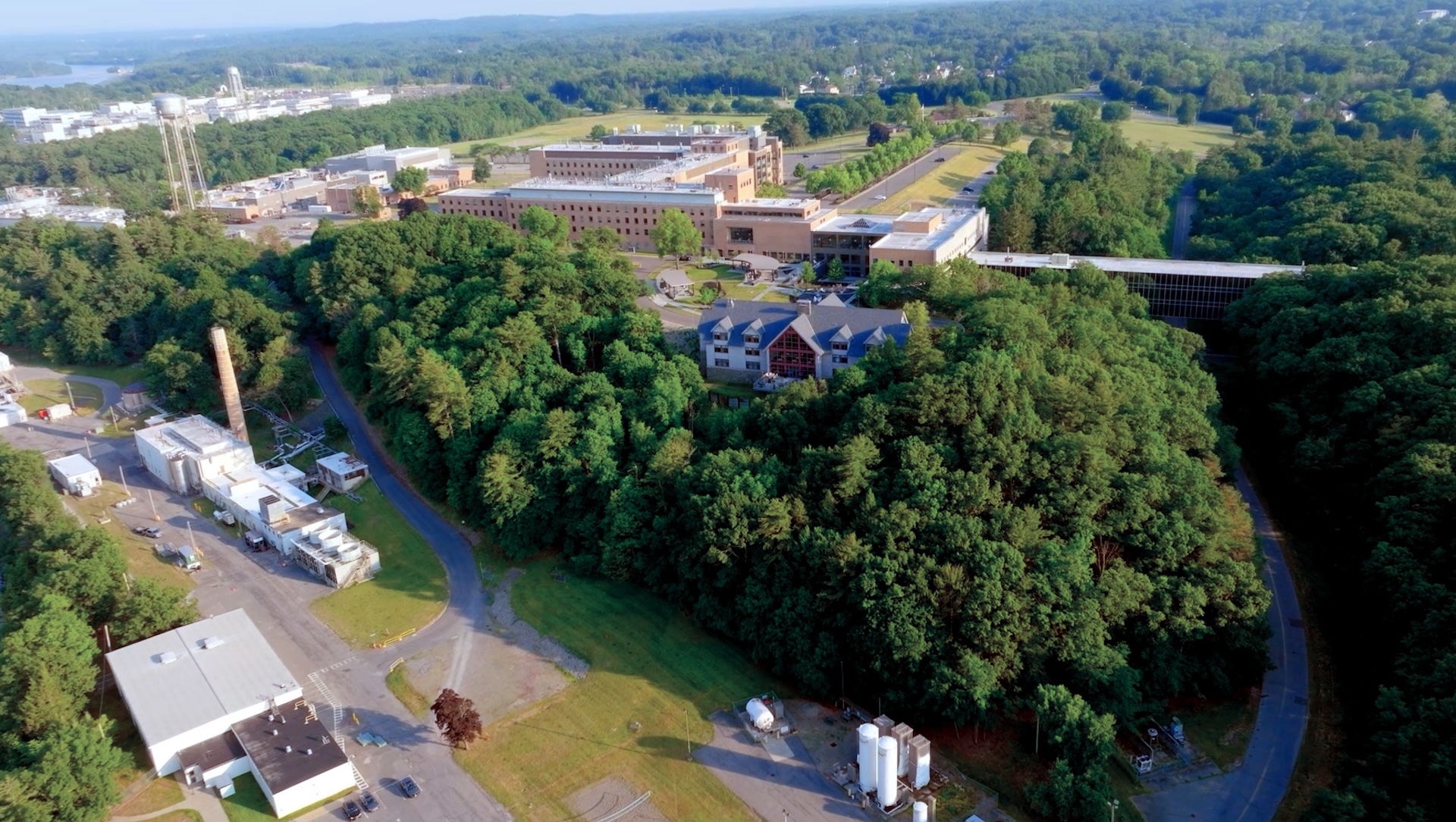
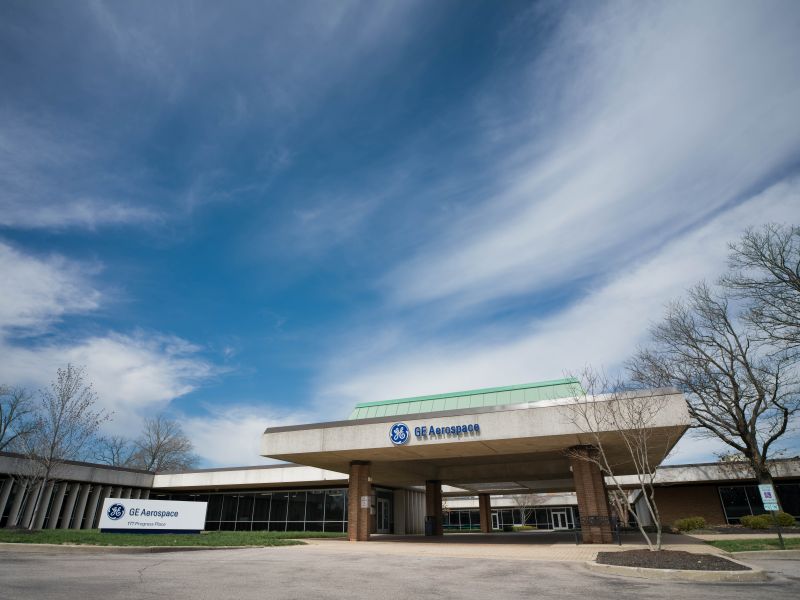
Located near the campus of GE Aerospace’s Cincinnati headquarters, the 67,000-square-foot facility reflects the company’s multi-million-dollar investment in its maintenance, repair, and overhaul (MRO) network to manage the unprecedented volume it will likely handle in the very near future. STAC serves as an incubator of new technology and processes for MRO as a whole. “It really is a breakthrough in that we are specifically developing that new technology that will improve capacity in shops globally,” says Ross Thorpe, STAC’s plant leader. “We’re 100% dedicated to technology development, process improvement, and repair industrialization.”
GE Aerospace initiated the facility in 2022, to help MRO centers meet the tremendous production ramp-up coming with the CFM LEAP* engine, among other platforms. “We need to be developing new technology that not only improves our yield in the shop, but also reduces the training burden and improves technical skills to handle the volume we’re expecting,” Thorpe explains. “This means equipment that’s automated, has robotics and new vision systems, and integrates AI. At STAC, we prove the technology, test it, train with it, and get it right before we scale it out to multiple shops and ask them to do the same.”
To do this, STAC combines new technology with seasoned MRO engineers. “People who are experienced in their processes, and are looking to develop technology that may be adjacent to our industry or completely new,” Thorpe says. He cites recent technology developments that are scaled to shops whose primary focus is applying technology to improve turnaround time (TAT) every day. Thorpe sees STAC as “a bridge to the shop floor.”
Pushing New Solutions to MRO Shops
Since STAC opened at the end of 2024, two of its main points of focus have been white light robot inspection — to help connect the “digital thread” between all facets of production and maintenance — and cold-metal transfer (CMT), a precise gas metal arc welding system that can handle a range of time-consuming, low-yield, and highly repetitive aerospace repairs. In maturing the CMT system for deployment, STAC provided not only the robots but the kind of tested, standardized training that earns buy-in from their human operators.
“When GE Aerospace purchased this system, well before STAC opened, few traditional weld engineers were actually using CMT,” Thorpe says. “So a lot of our work was developing real-world repairs and then flowing them out to the shops.”
In 2025, STAC scaled CMT for Forward Inner Nozzle Support (FINS) on GEnx engines to sites in the U.K. and Hungary. By the end of 2026, STAC’s CMT initiatives will have rapidly improved equipment utilization, adding roughly 1,400 hours of welding capacity. What’s more, over the past year, STAC has trained some 123 people in high-opportunity processes like thermal spray, welding and cleaning, and chemical stripping, improving their foundational technical knowledge and application. STAC has also standardized processes like high-pressure turbine stage 1 disk cleaning and inspection for GEnx engines, improving their process yield across the company’s global MRO network.
Having worked 12 years in a GE Aerospace MRO facility himself, Thorpe is very familiar with the intense daily demands. “When I was working in the shop, one of my biggest pain points was when someone had great idea and we couldn’t test it, because, obviously, production takes priority for customer delivery,” he says. “At STAC we mature ideas and technology to a point where we can provide shops with a complete solution.”
Scaling Technology and Preparing the Workforce
Like Thorpe himself, STAC’s 75 technicians and engineers are process owners with extensive MRO knowledge and experience. “We’re a small organization focusing on some of the most complex technologies and systems for repair and inspection,” he says. “So what we’re looking at is: How do you interconnect all of this information that comes from inspection and from repair to better predict what the next work scope looks like? How do we recover our parts as quickly as possible, to improve our supply chain?”
They are, in other words, driving MRO’s future in real time.
This kind of facility may prove essential in the aerospace industry in the coming years. “The push towards automation, robotics, and new systems for improving inspection and repair is not about replacing the workforce,” Thorpe says. “It’s about doing things exponentially quicker. It’s about preparing the workforce, scaling technology to be adopted quickly enough to meet the demand that’s coming. We need to capitalize on every bit of capacity we have.”
Simply put, as Thorpe sees it, STAC develops technology and repair systems for the unchanging core resource of GE Aerospace’s MRO network: its human workers. “When we industrialize future repairs of a shop, it’s not just a case of hitting ‘go,’” he says. “It’s training operators on systems that we’ve already tested, proven, and matured. Whether the technology is robotic or uses AI, when the next repair comes along, our workers will be better skilled and equipped to handle it on their own.”
*CFM LEAP engines are produced by CFM International, a 50-50 joint company between GE Aerospace and Safran Aircraft Engines.
See other posts
GE Aerospace is a world-leading provider of jet and turboprop engines, as well as integrated systems for commercial, military, business and general aviation aircraft.