Article
GE Aerospace’s Quick Six with James Liu, who Summited Mount Everest
June 8, 2026 | by GE Aerospace Staff
From working parents to military veterans, GE Aerospace would not be the company it is today without its employees. We created “Quick Six” to celebrate our diverse talent by asking employees six questions that uncover the unique ways that they contribute to GE Aerospace and the world.
In our next installment of Quick Six, GE Aerospace sat down with James Liu, Vice President of AVIAGE Systems, a GE Aerospace joint venture, who last month summited Mount Everest, the world’s highest peak.
Liu’s love of traveling led him to explore many of China’s famous mountains and landscapes. Over the years, he has climbed more than a dozen mountains of different difficulty levels, ranging from 5,000 meters to 8,000 meters.
As the highest mountain in the world, Everest is the ultimate peak for mountaineers. He considers summiting Everest a personal milestone in addition to the very qualities that help define GE Aerospace — resilience, discipline and the drive to keep pushing boundaries.
First, congratulations on an enormous physical, mental and emotional achievement. Tell us about the preparation for climbing Everest? How did you balance training with a demanding job?
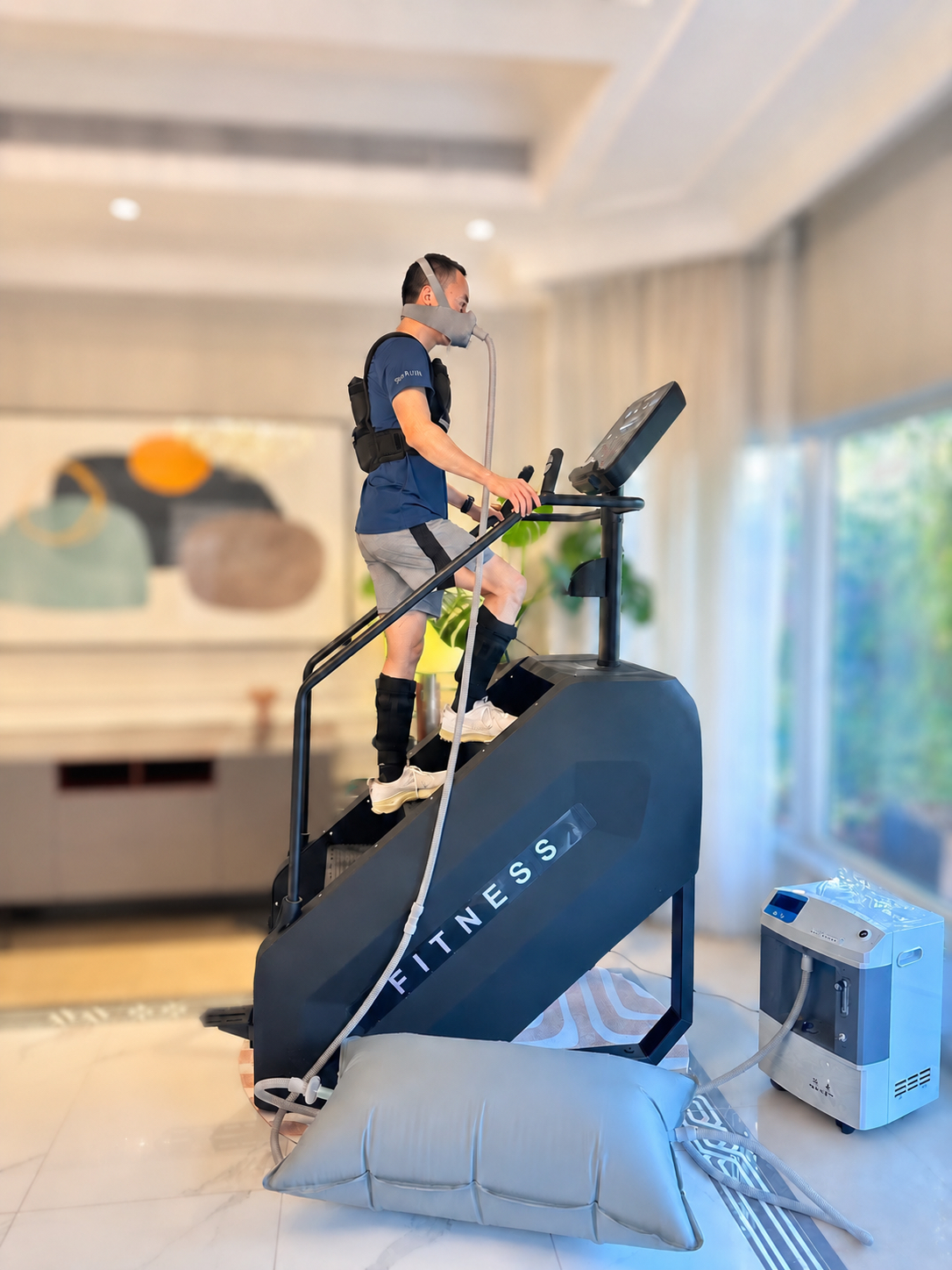
Preparing for Everest requires at least 6 months of intensive, highly systematic, and standardized training. That includes trail running, stair climbing, hypoxic training, load-bearing training, ice climbing, and targeted strength work. I generally trained about 3 hours every workday. On weekends, I would typically do 8 to 10 hours of trail running or weighted hiking each day to stay sharp.
Balancing that with work was not easy. For me, the key was to make my schedule extremely standardized and tightly organized. I usually arrive at the office between 6:00 and 7:00 a.m. to work through emails, documents, and other tasks I could handle myself. Once everyone was in, the day would quickly fill with meetings. At lunchtime, I usually spent about 15 minutes eating a salad, then went straight back to work. In the evening, after training, there were often still calls to take. Once those were done, I went to sleep immediately. I would not scroll on my phone, watch TV, or spend time on short videos, because I needed to get up again after 5:00 the next morning. Sometimes travel or business dinners disrupted the original plan. When that happened, I would adjust quickly and work to get myself back into rhythm.
There is a Chinese saying: “Train for a thousand days, use it for one moment,” and another that says, “The more you sweat in peacetime, the less you bleed in wartime.” Only through hard training can you build the physical reserve needed to handle the danger of climbing above 8,000 meters, where the difference can literally be life or death.
Throughout that process, GE Aerospace’s culture also gave me a great deal of inspiration. Goals have to be translated into daily action, which is very similar to the idea of daily management — not stopping at intention, but driving execution through a steady rhythm. Training itself also reflects the logic of standard work: once a plan is in place, you follow it consistently and rely on long-term accumulation to deliver efficiency and quality. At the same time, you must stay focused on the most important goal and prioritize your limited time, energy, and resources accordingly. In mountaineering, that is not just a training method, it is a way of being accountable to the goal and accountable to safety.
During your Everest journey, was there any person or experience that left a deep impression on you?
One Canadian teammate left a particularly strong impression on me. Last year, he was diagnosed cancer. Even while undergoing chemotherapy, he continued to train and prepare for his dream of summiting Everest. He was incredibly optimistic, almost always smiling. He launched a charity project to raise money for each participating leukemia or lymphoma patient. I asked myself whether, if something similar happened to me, I would still have that determination and positive mindset to attempt Everest. He successfully summited at the end, and I was truly happy for him.
At the Hillary Step, I saw a fallen climber. At that moment, I truly understood that reaching the summit is only half of success. The real goal is to descend safely and make it home alive. In mountaineering, there is a principle “rule of thirds.” You use 1/3 of your strength to climb up, 1/3 to come down, and you must keep 1/3 in reserve for the unknown, such as sudden weather changes, fluctuations in your physical condition, equipment issues and so on.
So why do so much training? The answer is that it gives you more reserve, and more safety when you are on the mountain. Whether in engines, avionics, or mountaineering, safety always comes first.
What was the biggest challenge you faced during the summit push? Was there ever a moment when you wanted to give up?
At about 8,700 meters on the ascent, while I was still in relatively good condition, I suddenly felt that I could not breathe and could no longer move forward. My guide was some distance away and any tugging on the rope or shouting for attention were almost completely swallowed by the fierce wind. In the end, I practically had to crawl across a very dangerous traverse to reach him and have my oxygen mask checked. But after going only a short distance farther, I again felt unable to breathe. “I am dying.” That was exactly what it felt like. My guide advised that we descend, but with the remaining conscious I had, I kept analyzing the situation: if the problem was in the oxygen system rather than my body, then descending with a faulty oxygen mask could also kill me. So, I insisted that he check again. Eventually, we found that the problem was indeed the mask: moisture from my breath had frozen and blocked it. Once it was cleared, my physical condition recovered immediately, and I ultimately made the summit.
The second major challenge came on the descent, before reaching Camp 4. Another climbing team was passing above us, which caused falling rocks that struck my guide. The other Sherpas told me to continue descending while they rescued him, but as I moved down, I realized I was running low on oxygen. At that point, I had to decide whether to keep pushing toward Camp 4, or to slow down and wait for the Sherpas behind me to catch up with spare oxygen. While I was caught in that dilemma, my remaining oxygen was steadily running out, and the mountain was testing my decision-making again. After recalculating, I concluded that with the oxygen I had left, I would not be able to make it to Camp 4. So, I slowed my pace, tried to minimize oxygen consumption, and hoped the Sherpas behind me would catch up soon with another bottle. Of course, I was anxious, because if my judgment had been wrong, the risk would have been enormous. Eventually, another Sherpa did catch up from behind, and I made it safely back to Camp 4.
Giving up on the summit — or choosing to descend — was always one of my options. Safety is always the first priority. When I look back on those two moments, I feel both grateful and uneasy: grateful that I made the right decisions under extreme pressure, and uneasy because if I had not trusted my judgment, I might not have made it back safely. Both moments reinforced one truth for me: in critical moments, the ability to make the right decision quickly — and to make the safest possible judgment — is essential. That is true in mountaineering, and it is equally true in aviation.
What was your first feeling when you reached Mount Everest? What does summiting Everest mean to you? And where is your “next peak”?
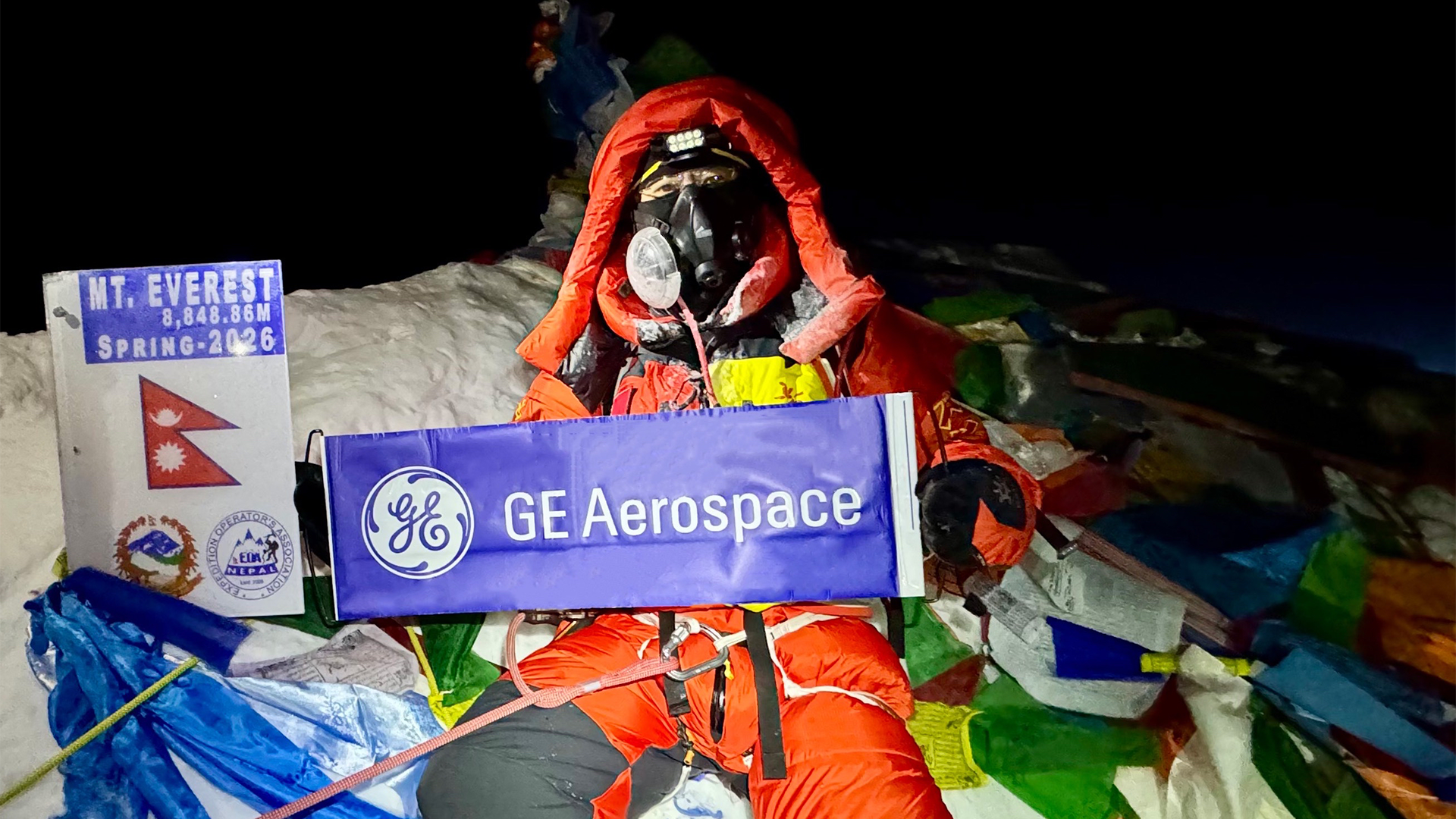
To be honest, I was not very joyful in the moment reaching the summit. More precisely, it felt like the mission had been completed, but the job was not yet done. On Everest, the summit is never the end. What really matters is whether you can descend safely afterward. So, my first reaction was to quickly take out the flags bearing the GE Aerospace trademark, take photos, and prepare to descend ASAP. I am proud of working at GE Aerospace. Being able to carry the company’s flags to the highest point on Earth was deeply meaningful to me.
For me, mountaineering has three major meanings. First, through long-term training, it has significantly improved my physical condition. Second, it constantly pushes me to discover more of my potential and strengthen my willpower. When you return to work, it gives you greater confidence and resilience. In addition, mountaineering allows me to reconnect with nature and with myself. And when I return to work and everyday life, I will have a different perspective and an even greater appreciation for how full and meaningful life can be.
I believe a person’s life journey is made up of different chapters, different highs and lows. Summiting Everest may be one highlight in my life, but it is already in the past. Looking ahead, I want to continue taking on new and unknown “peaks.” Those peaks may not be physical mountains like Everest. They may be major projects or ambitions in work or in life — for example, the Advanced Air Mobility (AAM) business I am currently engaged in, or the breakthroughs and innovations needed across GE Aerospace as a whole. Having gone through the challenge of Everest, I now feel more confident to embrace challenges in the future with greater wisdom and resilience.
Back at work, what lessons and insights have mountaineering given you? And what would you like to say to colleagues?
Mountaineering and work have many things in common. First, safety is the priority. In mountaineering, reaching the summit is not the final goal, returning safely is. The same is true in aviation: every innovation, and every delivery must ultimately be built on a foundation of safety.
Second, build your foundation and prepare thoroughly. It will directly determine whether you can stay steady at critical moments. Third, standard work. Training depends on day-by-day standardized planning and execution. What matters is whether you can hold to long-term thinking and consistently carry through on rhythm, methods, and execution. Finally, when the critical moment comes, you need to make right decisions. Whether on the mountain or at work, there will always be moments when information is incomplete, time is short, the workload is heavy, and the pressure is intense. Only by staying calm can you make the right decision quickly.
What I would like to say to my colleagues is: always keep your passion for work and for life. Keep challenging yourself and keep innovating. Over the past 20-plus years, I have grown from an Experienced Commercial Leadership Program trainee at GE Aerospace, from the aircraft engine business, to leading avionics work for the COMAC C919 program, to guiding my team in exploring new growth opportunities in the advanced air mobility industry. Throughout that journey, I have always believed: You own your career. Second, understand yourself, accept yourself, and cultivate one or two positive hobbies in life that you can genuinely stick with. Enjoy the nourishment those passions can bring to both your work and your life.
Previously, when climbing another 8,000-meter mountain, I met a Japanese woman in her seventies who was still climbing, carrying her own load and continuing toward higher camp. Many people, by the time they are in their forties or fifties, feel that life has already been shaped. But at any age, you can start again and challenge yourself with new goals. I believe everyone has an “Everest” in their heart. I hope each of us can find it and try to climb it.
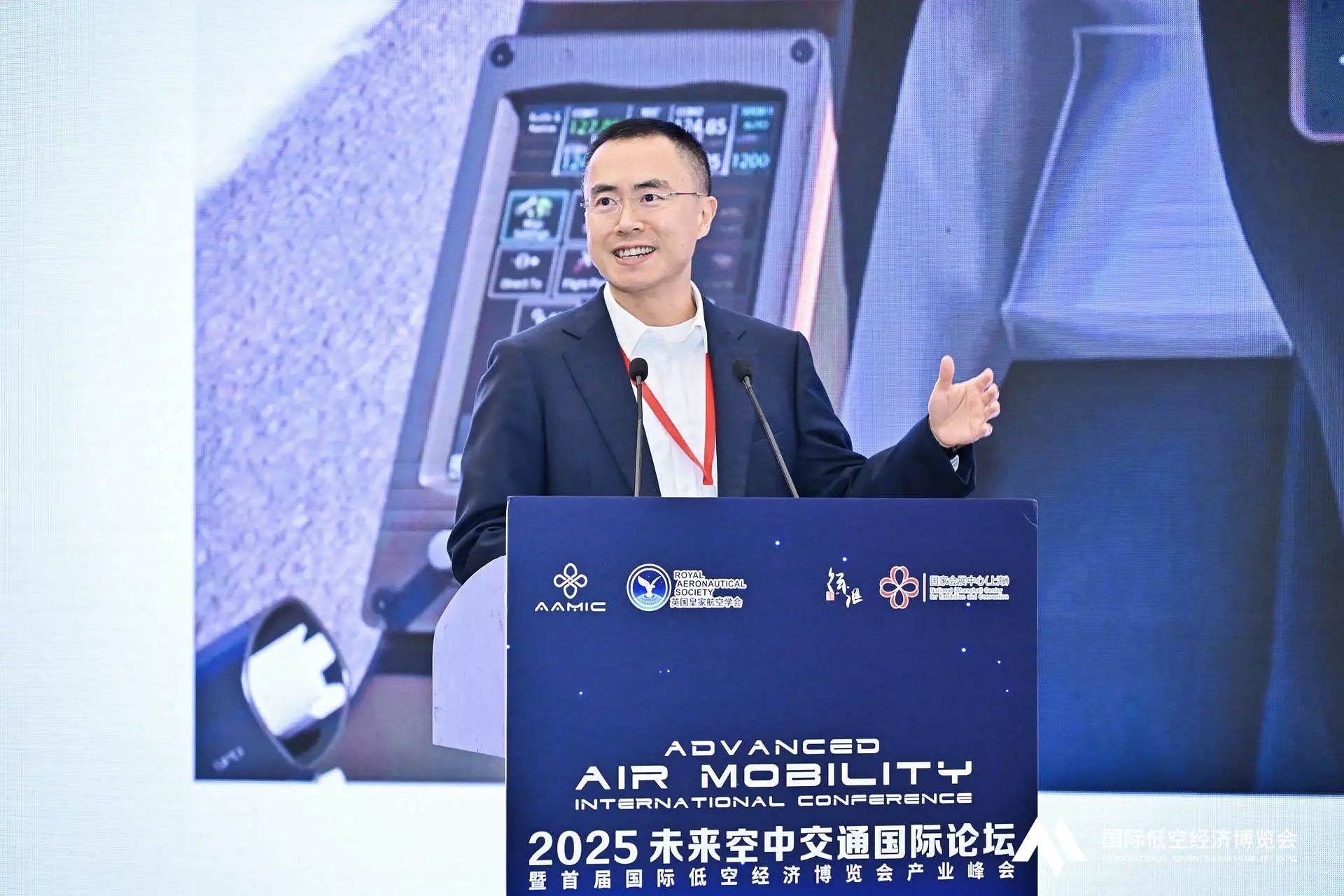
Do you think GE Aerospace’s culture has helped shape the person you are today and the way you pursue your goals?
Yes, absolutely. Over the years, my experience at GE Aerospace has made me feel that the company truly values its people and is willing to support their growth and help them breakthrough limits. It creates an environment that encourages you to challenge yourself to reach higher goals — not only in your work, but also in your mindset.
For me, that influence is reflected not only in career development, but also in the standards I hold myself to and in the way I approach my work. That is why bringing the GE Aerospace flag to the summit of Everest felt like a natural thing to do. I identify with this company, and I treasure my 20+ years here. In a sense, this climb was a personal achievement. But at the same time, it also carried my sense of identification with the company and my sense of belonging.
See other posts
GE Aerospace is a world-leading provider of jet and turboprop engines, as well as integrated systems for commercial, military, business and general aviation aircraft.