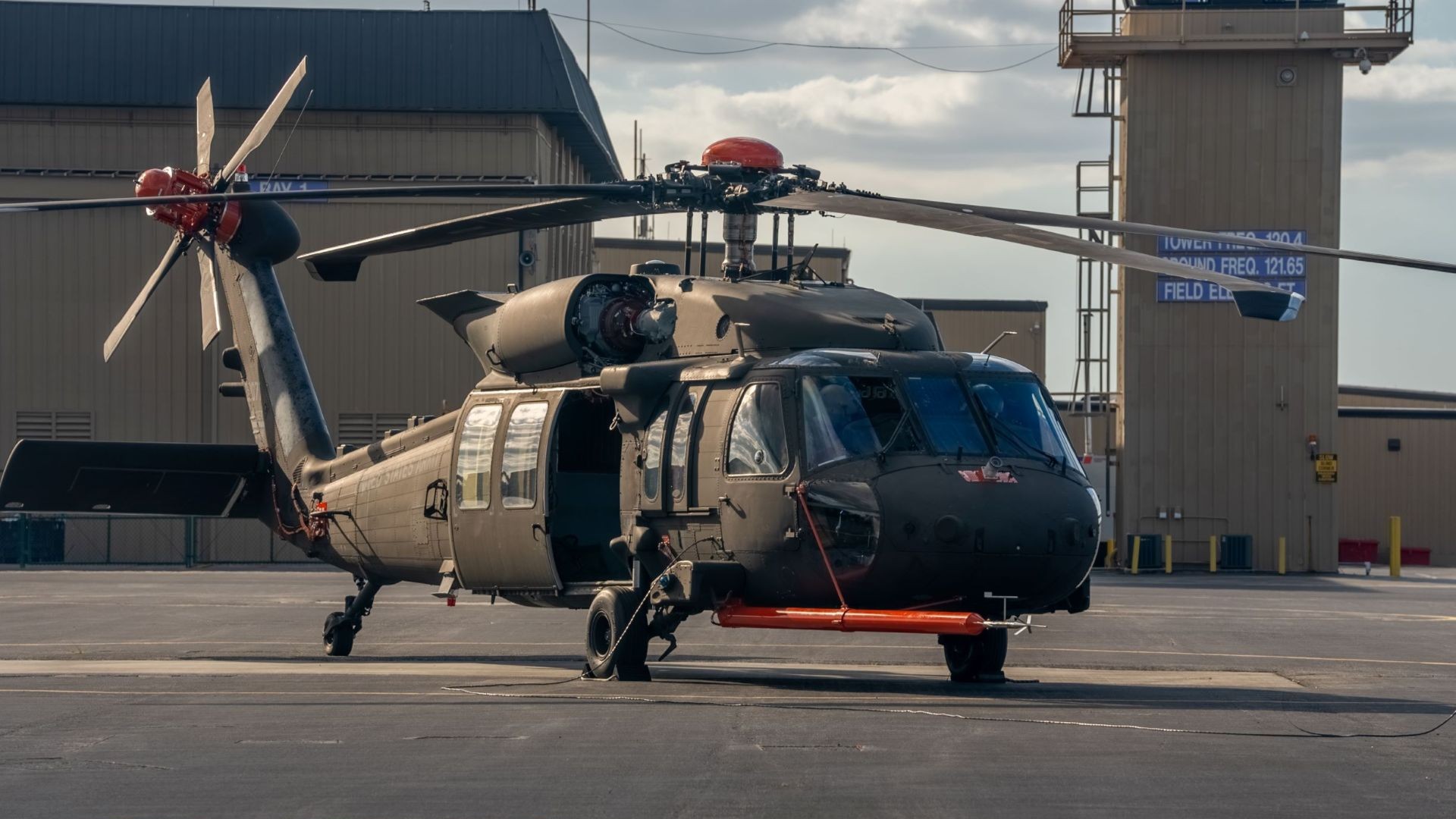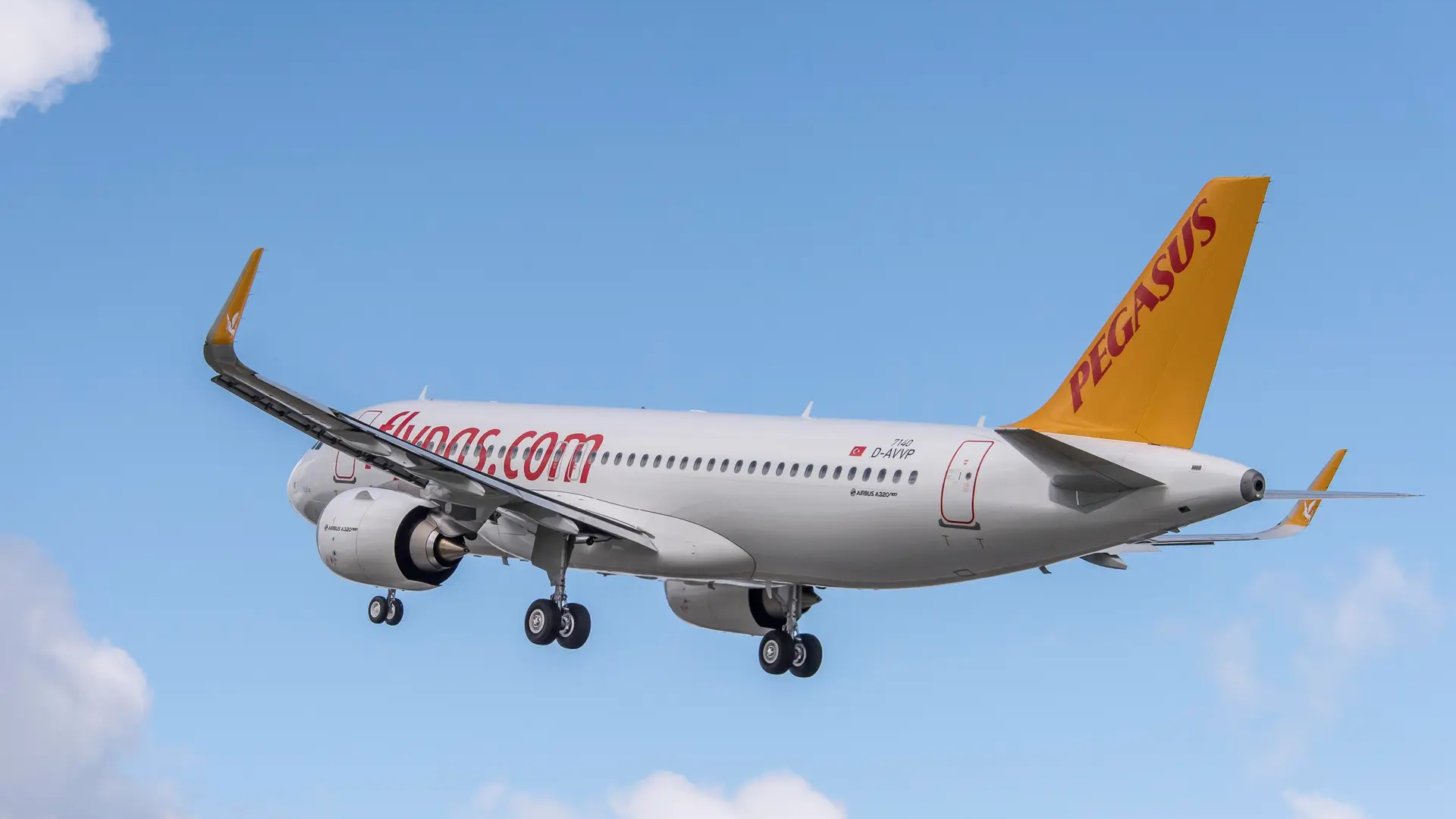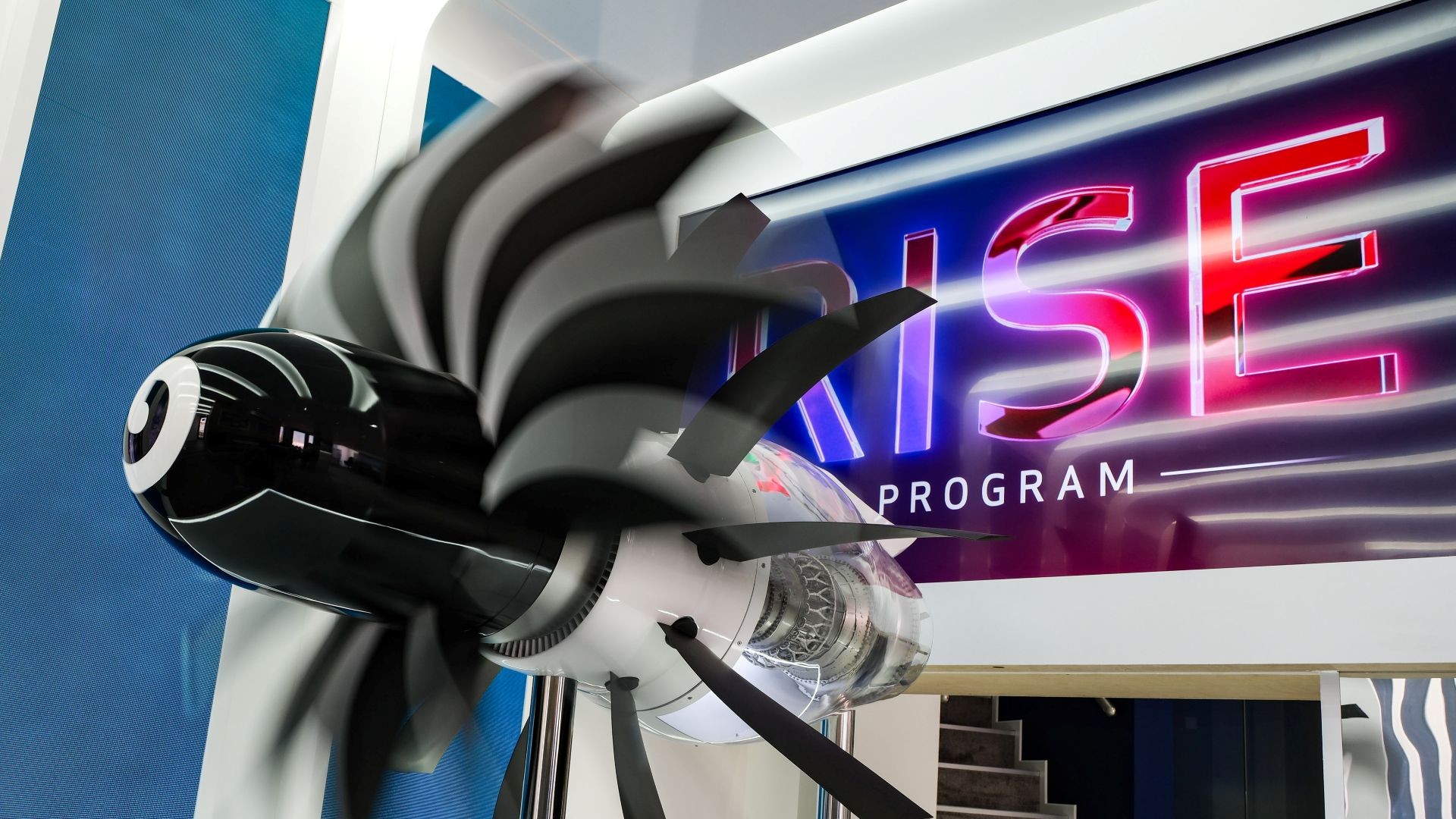
A model of the RISE program's Open Fan demonstration engine, which is aiming for 20% better fuel efficiency and improved durability. Images credit: GE Aerospace
Article
Open Fan Engine Technology Aims for Epic Efficiency. It Also Has Major Durability Potential.
July 13, 2026 | by Chris Noon
The Open Fan engine, the distinctive architecture that could power the next generation of single-aisle aircraft, targets a significant step change in efficiency for the aerospace industry. A quick primer: Shedding the ducts that traditionally enclose the engine allows for a much larger fan and greater bypass ratio with less drag, yielding improved propulsive output. The projected result is 20% better fuel efficiency for customers than traditional turbofan engines.
Efficiency isn’t the only advantage of the Open Fan engine architecture, which is part of the RISE* technology demonstration program of CFM International, a 50-50 joint company between GE Aerospace and Safran Aircraft Engines. It is also being designed for enhanced durability, with its unique fan blade system, aerodynamic design, and adaptive cycle engine capability, which could significantly reduce the engine’s dust ingestion — a boon for hot and harsh environments.
Engineers are now pushing the Open Fan technology even further. They’ve already completed more than 350 tests and 3,000 endurance cycles of components for the engine’s core. This includes the earliest-ever dust ingestion testing for any CFM program, following the “test early, test often” philosophy. Along with the intense testing regime, they’re also applying various program updates that bolster the durability of the next-generation engine’s architecture. The various measures will boost the Open Fan engine’s reliability and time on wing, further advancing the future of narrowbody flight.
RISE: Baked-in Durability
The unique aerodynamic design of the Open Fan engine is a win-win-win for the engine’s propulsive and thermal efficiency, as well as its durability. The engine’s large fan blades harness more air than the blades on next-generationducted engines. They also allow a greater proportion of that air to flow around, or “bypass,” the engine’s core, where combustion and high-pressure processing occur. The goal? Less drag, a cooler core, and reduced dust ingestion.
“CFM’s objective is to actually get hot and harsh operators to experience the same durability levels that today’s operators in more neutral environments enjoy,” said Arjan Hegeman, vice president of future of flight at GE Aerospace, in a recent Financial Times webinar about the RISE program.
The Open Fan architecture’s adaptive cycle engine capability also boosts its durability. Also known as variable bypass architecture, the adaptive technology optimizes engine performance at every stage of a flight, such as allowing more thrust during a takeoff or climb, and more bypass air in a cruise-type environment. Those cycles create additional airstreams for dust to exit the engine, leading to less part erosion and deposit buildup in the engine’s combustor and high-pressure turbine. (In fact, working with the U.S. Air Force through the Adaptive Engine Transition Program (AETP), GE Aerospace has completed testing on the XA100, the world’s first flight-weight, three-stream adaptive cycle engine.)
“The value proposition of the RISE program’s Open Fan is that you get double-digit fuel efficiency coming out of the propulsive system,” Hegeman added. “Which means you don’t need to stress and tax the hot part of the engine as much to get to that 20% [efficiency] number.”
Pierre Cottenceau, vice president of engineering, research and technology at Safran Aircraft Engines, concurs. “We are trying to achieve improvements in fuel burn, and to achieve that we have to have a light engine,” he said in the FT Live webinar. “Materials play a key role in keeping the engine light and making it durable despite the harsh conditions that it has to operate in. There has been a lot of work on the CFM side, [and with] both partners, to develop new materials and apply them to this engine architecture.”
The benefits of Open Fan architecture are evident to airframers. “Evaluating a radical architecture like the Open Fan requires a completely integrated approach between airframer and engine designers,” said Frank Haselbach, senior vice president of propulsion engineering at Airbus, in the same webinar. “The technological potential of the Open Fan is huge, and this demonstrator allows us to jointly mature the architecture and see how it behaves in flight.”
Test, Rinse, Repeat
Relentless testing is enhancing the engine’s durability credentials. The RISE program places safety and reliability at the center of each innovation cycle, and its engineers are now testing every aspect of Open Fan architecture, from materials selection to cycle design. They’re leveraging decades of engine development learnings. “With the RISE technology demonstration program, we’re pursuing durability and efficiency improvements with equal focus,” said Hegeman.
“We probably have 30 to 50 tests running continuously,” he noted. “We started with component tests, and we’re now looking at modules and more system-level-type testing, including the durability testing. And that then matures eventually to full engine testing on the ground, and then a flight testing.”
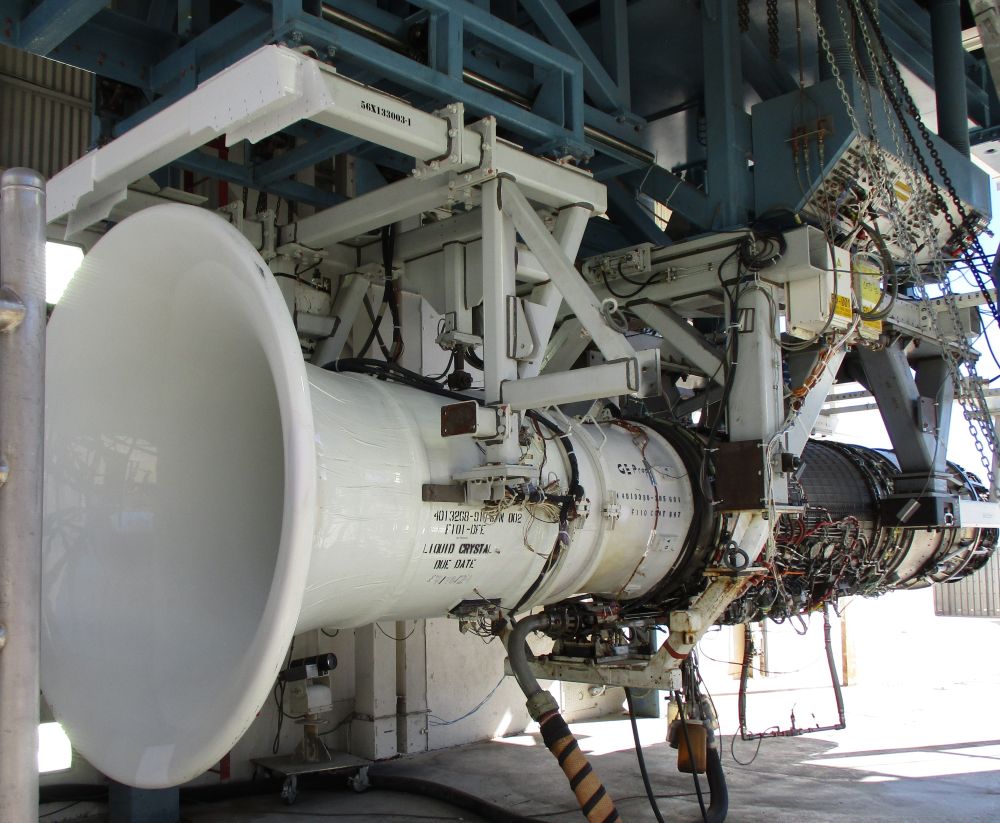
Hegeman explained the exact science of dust ingestion tests. “We spent a lot of time getting the right dust, the right operating conditions, the right simulation in a test environment that we can exactly replicate all the learnings that we have in our current suite,” he said. “This [rigorous testing] incorporates lessons from the flying fleet today to inform our future engine products.”
Durability: Always Front of Mind
CFM continues to push forward with the RISE program. It is collaborating with Airbus on an Open Fan flight demonstration, which is planned for later this decade, and actively working with the airframe manufacturer to optimize the engine-to-aircraft integration. Flight tests are important to advance understanding of engine performance, safety, noise, and aerodynamics in real operating scenarios — a key step before launching an engine product. “We have already achieved more than 300 hours of Open Fan blade testing in a wind tunnel at ONERA,” the French National Aerospace Research Center, noted Cottenceau. “That gives us a lot of test evidence that we can achieve the future levels of noise emissions.”
In collaboration with NASA, RISE program engineers recently announced completion of ground tests of a narrowbody hybrid electric engine system, demonstrating on a test stand the integration and controls of electric motors in a high-bypass commercial turbofan to supplement power during different phases of operation. A hybrid electric engine with integrated electric motor/generators can optimize engine performance by creating a system that can work with or without energy storage, like batteries. The ground tests pave the way for flight testing and could help accelerate the introduction of hybrid electric technologies for commercial aviation prior to large-scale energy storage solutions being fully matured.
Haselbach is optimistic about the future of Open Fan architecture. In the FT Live webinar, he explained that the world would need around 40,000 new commercial aircraft in the next 20 years, with single-aisle aircraft making up around 75% of that number. “They’re the backbone of the industry,” he said. The Airbus executive is also upbeat about CFM’s capacity to define the future of narrowbody flight. “You have several thousand engineers working today on the RISE, and we’re all committed to this program, making the investments in the tools to make it happen and do it faster,” he added. “We know how important it is to deliver on safety, fuel efficiency, and durability.”
* Revolutionary Innovation for Sustainable Engines (RISE) is a technology demonstration program of CFM International, a 50-50 joint company between GE Aerospace and Safran Aircraft Engines. It is not a product offered for commercial sale.
See other posts
GE Aerospace is a world-leading provider of jet and turboprop engines, as well as integrated systems for commercial, military, business and general aviation aircraft.