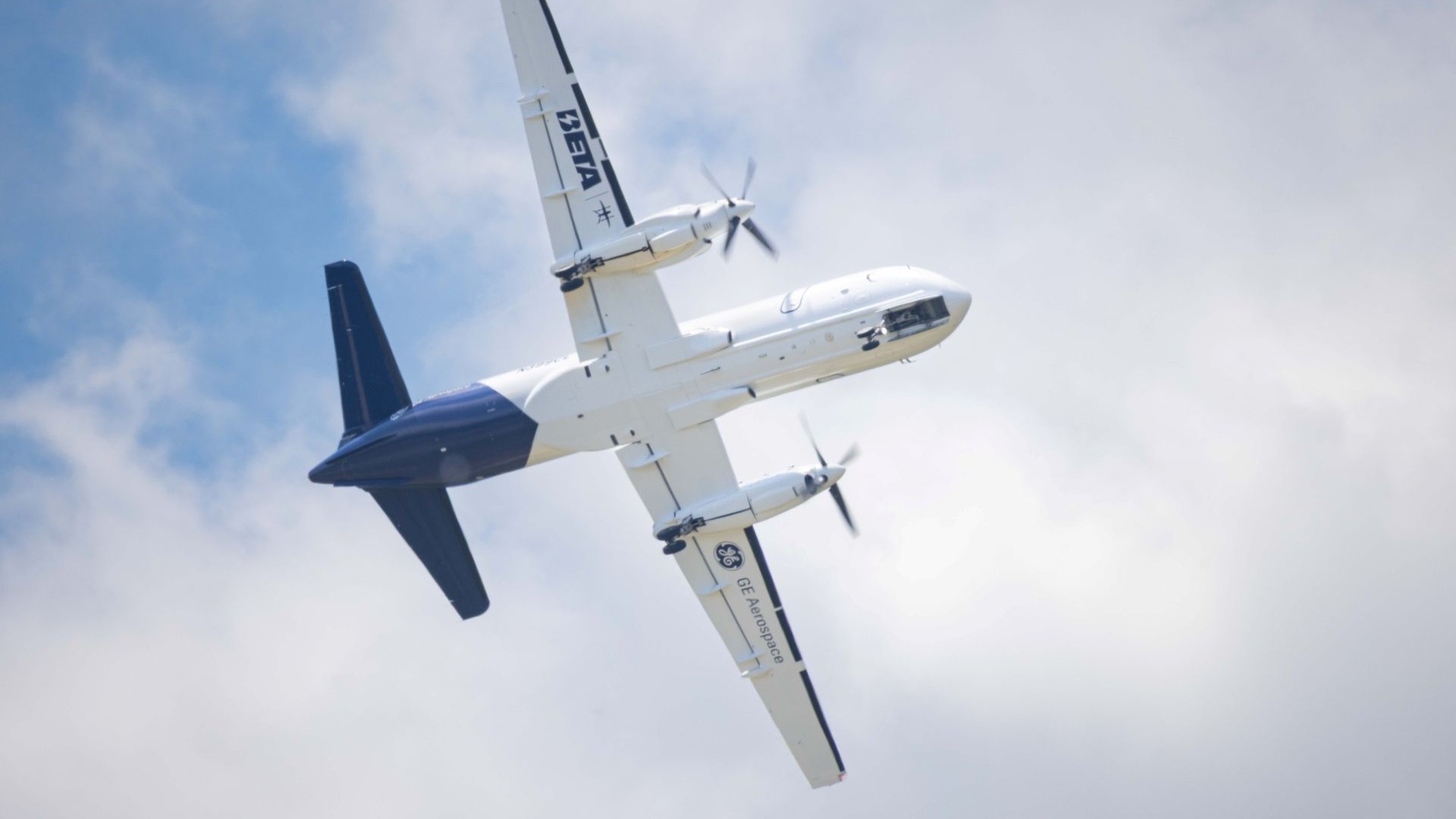
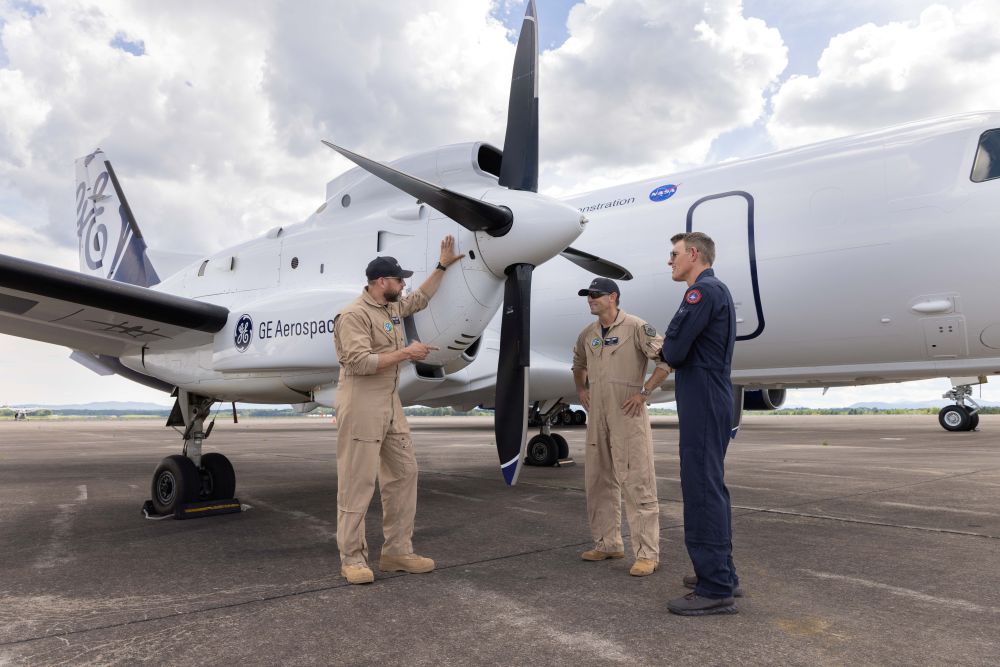
This Saab 340B aircraft has been modified for use in NASA’s Electrified Powertrain Flight Demonstration (EPFD) program, part of GE Aerospace’s partnership with NASA, BETA Technologies, and Boeing to complete the world’s first high-altitude hybrid electric flight. Images credit: GE Aerospace
Article
Switched On: Scenes from the World’s First High-Altitude Hybrid Electric Flight
“We are proud to say: ‘We did it,’” said Mohamed Ali, GE Aerospace’s president and CEO of Commercial Engines & Services, at the Farnborough International Airshow this past summer.
Ali was referring to a new chapter in aviation history. GE Aerospace was announcing to the world that it had partnered with NASA, BETA Technologies, and Boeing to complete the world’s first high-altitude hybrid electric flight — reaching altitude levels above 30,000 feet — during flight tests over Plattsburgh, New York, in May 2026.
“This is not a lab experiment or a one-off prototype,” Ali went on to note, referring to the Saab 340B aircraft that had been modified for use in NASA’s Electrified Powertrain Flight Demonstration (EPFD) project. “It’s a meaningful step forward for future propulsion, and it helps validate hybrid electric technology as a credible path for the next-generation engine.”
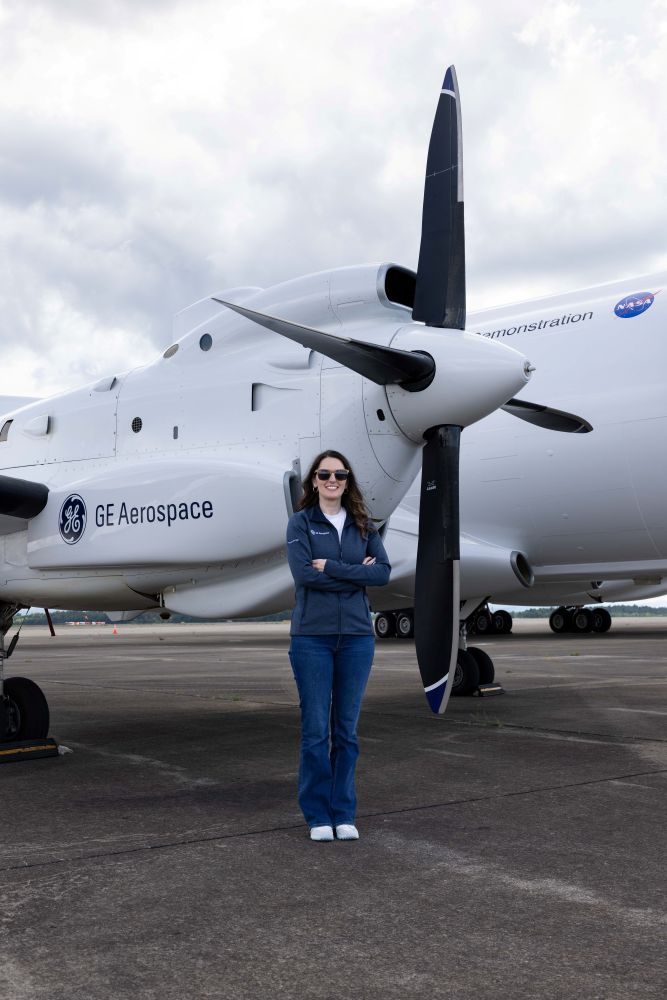
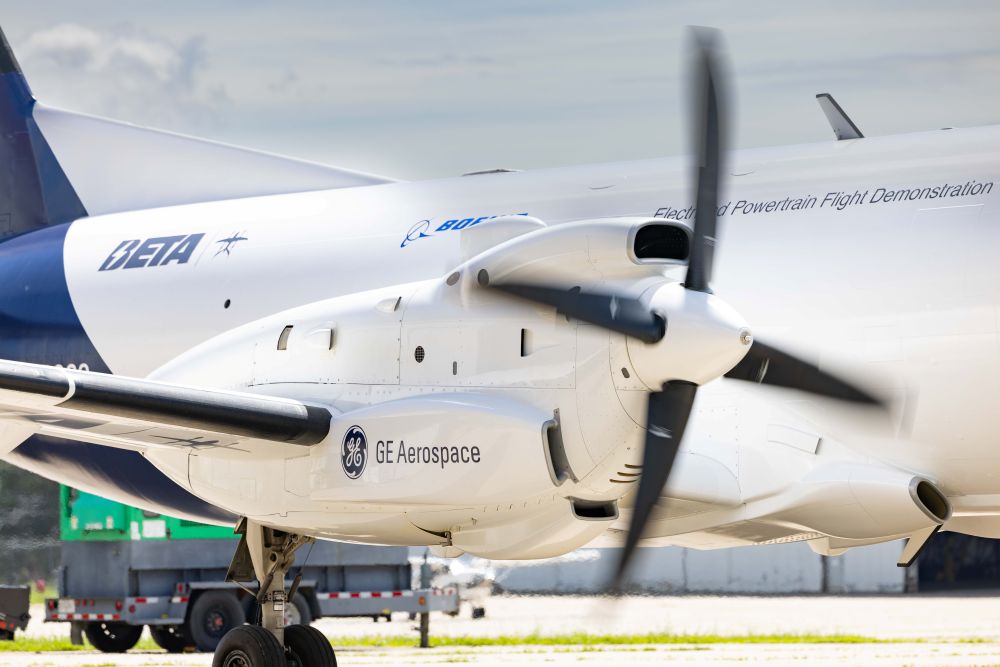
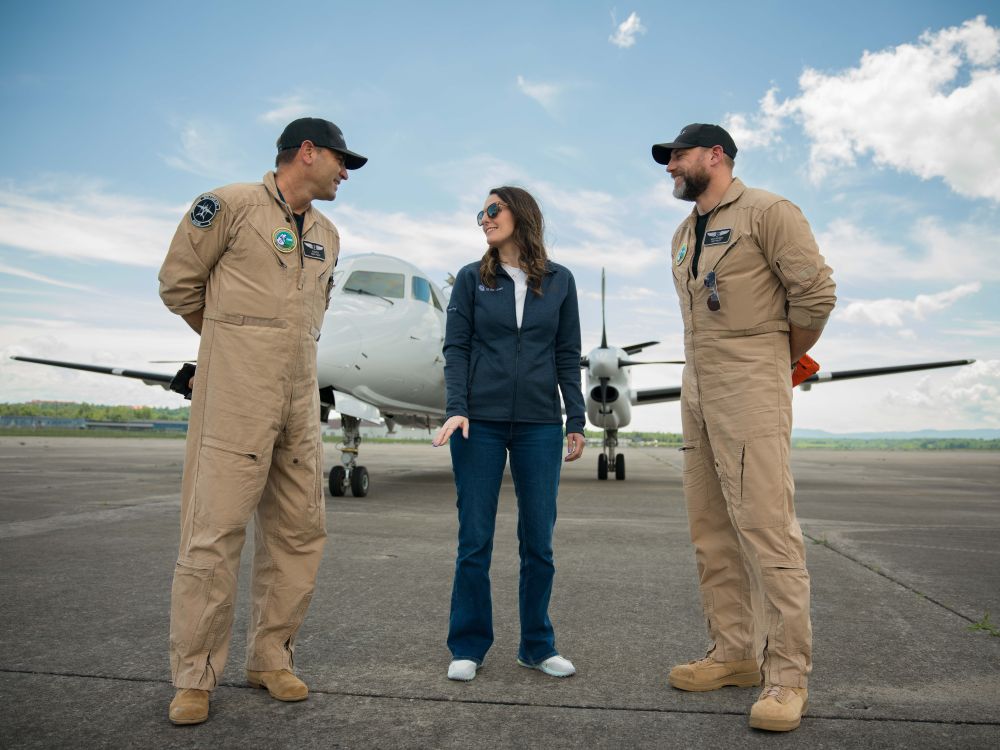
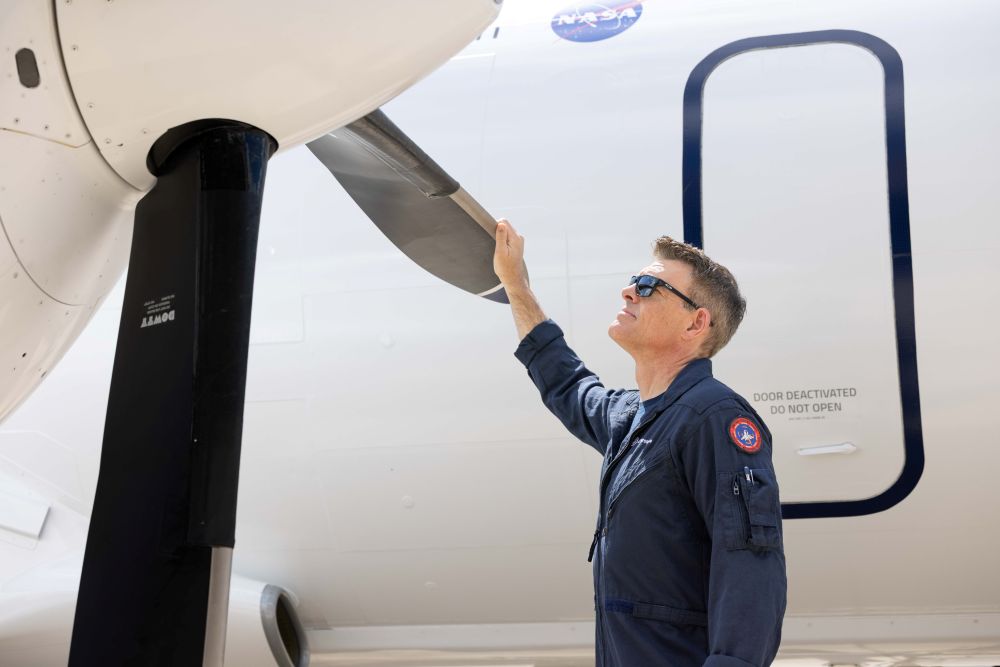
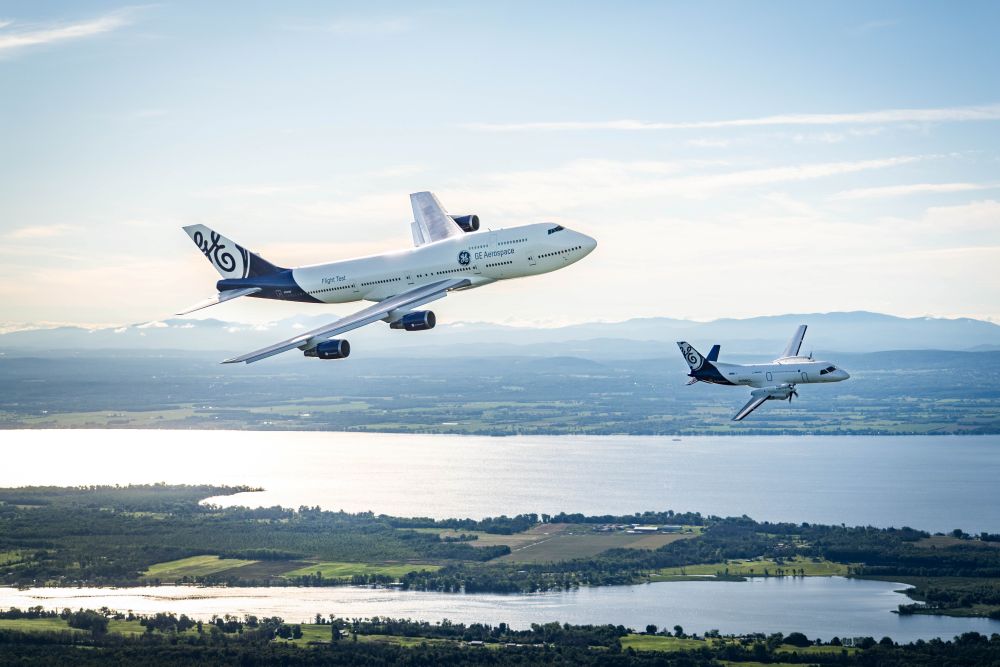
These photos show the EPFD aircraft on the ground and in flight, along with the GE Aerospace and BETA Technologies teams in action.
While hybrid electric vehicles are now a common sight on roads around the world, sustained hybrid electric flight has been elusive. For the past five years, Christine Andrews has been leading a team at GE Aerospace that aimed to prove out a high-performing, scalable hybrid electric propulsion solution. The data they’ve amassed, along with the test records, show that hybrid electric flight is well on its way to becoming a reality. And they’re getting closer to a point where the technology can be scaled across engine architectures. “I think most people would love to say they were part of a team that achieved a world first in their field,” says Andrews, GE Aerospace’s executive hybrid electric systems leader. “We’re doing it consistently. We’ve got a team that has really built a strong bond and has a relentless prioritization and focus on advancing hybrid electric technology.”
The right side of the EPFD aircraft was modified for flight tests with a hybrid electric system that fits inside an inverted nacelle, providing extra ventilation. The system includes GE Aerospace-developed motor/generators, power converters and inverters, controllers, Avio Aero* gearboxes, Dowty* propellers, Unison* heat exchangers, torque sensing, and engine harnesses, and a CT7 turboprop engine. BAE Systems provided the batteries used for the test flight and Boeing subsidiary Aurora Flight Sciences supplied the complete nacelle.
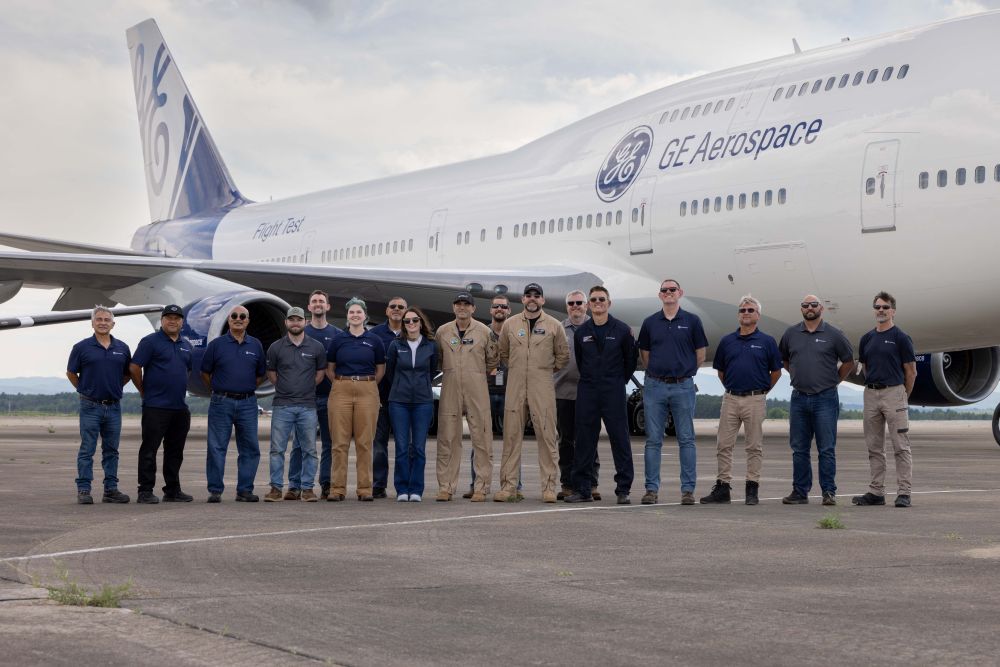
Andrews’ team is mapping out uncharted aviation territory each time they do hybrid electric testing at a higher altitude or for a longer duration. They successfully completed ground tests of a megawatt-class hybrid electric engine system earlier this year at Peebles Test Operation in southwestern Ohio as part of NASA’s EPFD project. The ground tests simulated various flight phases (such as taxi, takeoff, climb, and cruise) and yielded higher power output and higher voltage than competing hybrid electric offerings. During the flight test campaign, the modified aircraft flew for more than two hours in a single flight, one of the aviation industry’s longest hybrid electric flights to date. “It’s been exhilarating for us,” says Andrews, standing at center with team members from BETA Technologies and GE Aerospace. The company’s 747 Flying Test Bed (FTB) is parked behind the group on the tarmac.
GE Aerospace took one of its first major steps in the development of hybrid electric flight in 2013 when it opened its Electrical Power Integrated Systems Center (EPISCenter) with the University of Dayton, where it has made great strides in testing and simulated power transfers. In 2022, the EPFD project successfully demonstrated a multi-kilovolt, megawatt-power-class power transfer at a simulated altitude of 45,000 feet at the NASA Electric Aircraft Testbed facility near Sandusky, Ohio. “This proves that we are altitude ready,” Ali said at the time. “Next is to prove that we are flight ready.” That proof finally came this May with the help of (from left) Nick Wilson, chief engineer of the advanced system team and test pilot at BETA Technologies; Chris Caputo, head of flight operations and test pilot at BETA Technologies; and Jon Ohman, chief test pilot at GE Aerospace.
The hybrid electric engine system in the EPFD aircraft combines an electric powertrain with a traditional gas turbine to optimize power management during different phases of operation. Hybrid electric systems are highly compatible with different fuel types and advanced aircraft engine architectures like Open Fan, which GE Aerospace is developing through CFM International’s RISE program.** “The EPFD program is the first and only program of its type to fly at commercial grade altitudes in hybrid mode,” says Andrews, standing here with (from left) BETA Technologies test pilots Chris Caputo and Nick Wilson. “We’re able to pull power off of the batteries as well as recharge the batteries in flight.” “It allows us to do more with the aircraft,” adds Wilson. “It changes the way we operate the aircraft. It allows us to be more efficient.”
From his seat at the controls of GE Aerospace’s 747 Flying Test Bed, Jon Ohman has helped test a variety of engines, including the CFM LEAP***, GEnx, GE9X, and Passport. Throughout the EPFD campaign, the FTB has served as a “logistics enabler,” Ohman says, helping to provide guidance and support during its test flight, as well as transport team members and equipment as the EPFD completed the world’s first hybrid electric flight across the Atlantic Ocean to the Farnborough International Airshow in July. “The FTB demonstrates, along with the Saab 340B, GE Aerospace’s commitment to furthering the technological development of the next generation of turbofan engines,” he adds. “The FTB is critical to the safe operation of our engines in operation. That’s because when we put a developmental engine on the FTB, we put them through their paces in all conditions of operability to ensure that we don’t find any surprises when that engine is on a commercial air flight with the paying public on board.”
The 747 Flying Test Bed is based at GE Aerospace’s Flight Test Operations facility in Victorville, California, where the Flight Test Operations (FTO) team has worked closely with Andrews’ team on the integration of hybrid electric technology into the modified Saab 340B aircraft. In preparation for the hybrid electric test flight in May, the engineering and test teams addressed heat management, lower atmospheric pressures, and power density using flightworthy components that meet higher safety and reliability requirements than typical test hardware. During the flight tests, the electric powertrain helped successfully power the propeller and generated power to the battery. “When we look back at history, all hybrid beginnings will have started with proving this very first hybrid electric flight at commercial grade altitudes,” says Andrews.
* Avio Aero, Dowty, and Unison are GE Aerospace companies.
** Revolutionary Innovation for Sustainable Engines (RISE) is a technology demonstration program of CFM International, a 50-50 joint company between GE Aerospace and Safran Aircraft Engines. It is not a product offered for commercial sale.
*** The CFM LEAP engine is produced by CFM International.
See other posts
GE Aerospace is a world-leading provider of jet and turboprop engines, as well as integrated systems for commercial, military, business and general aviation aircraft.