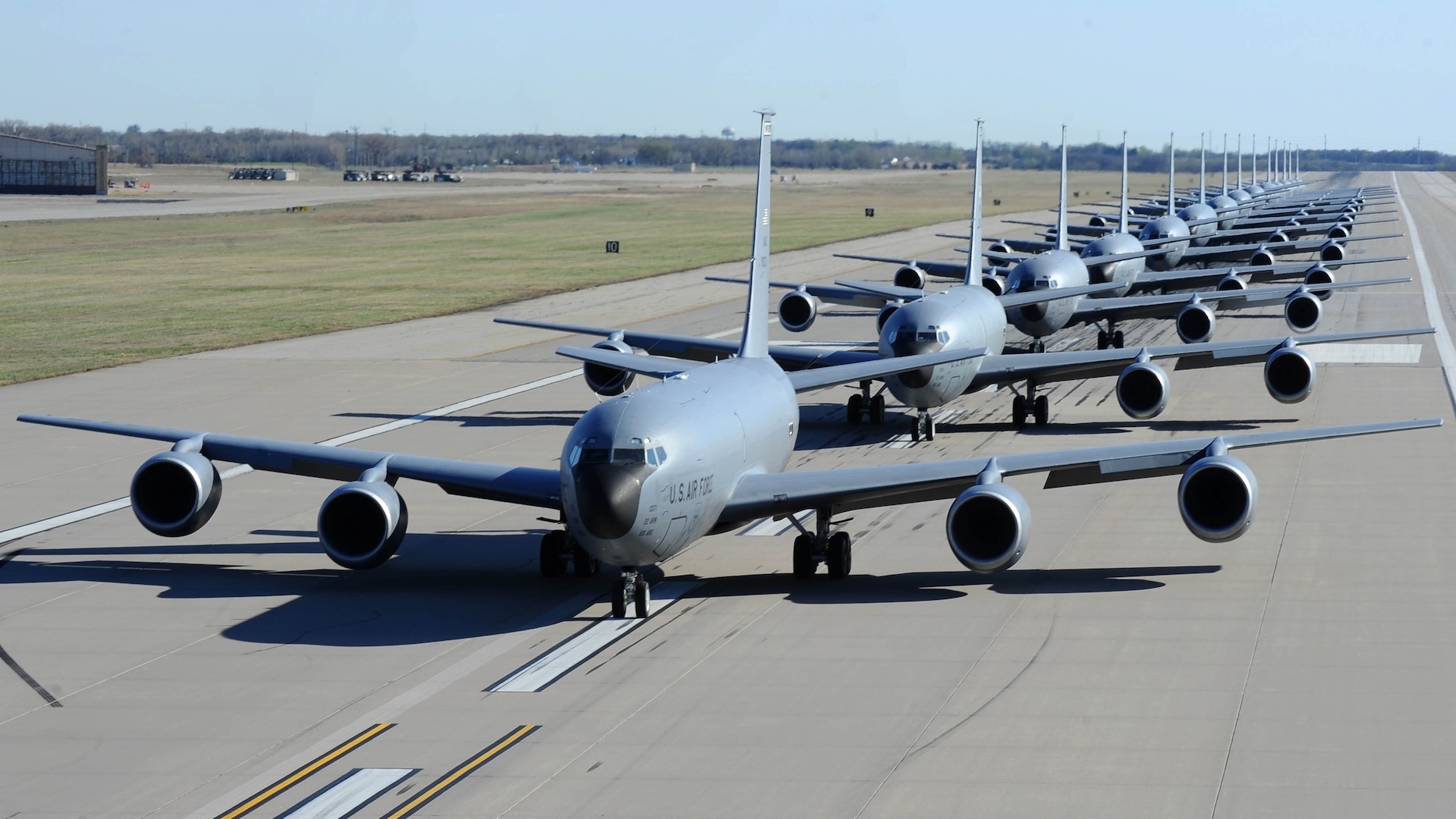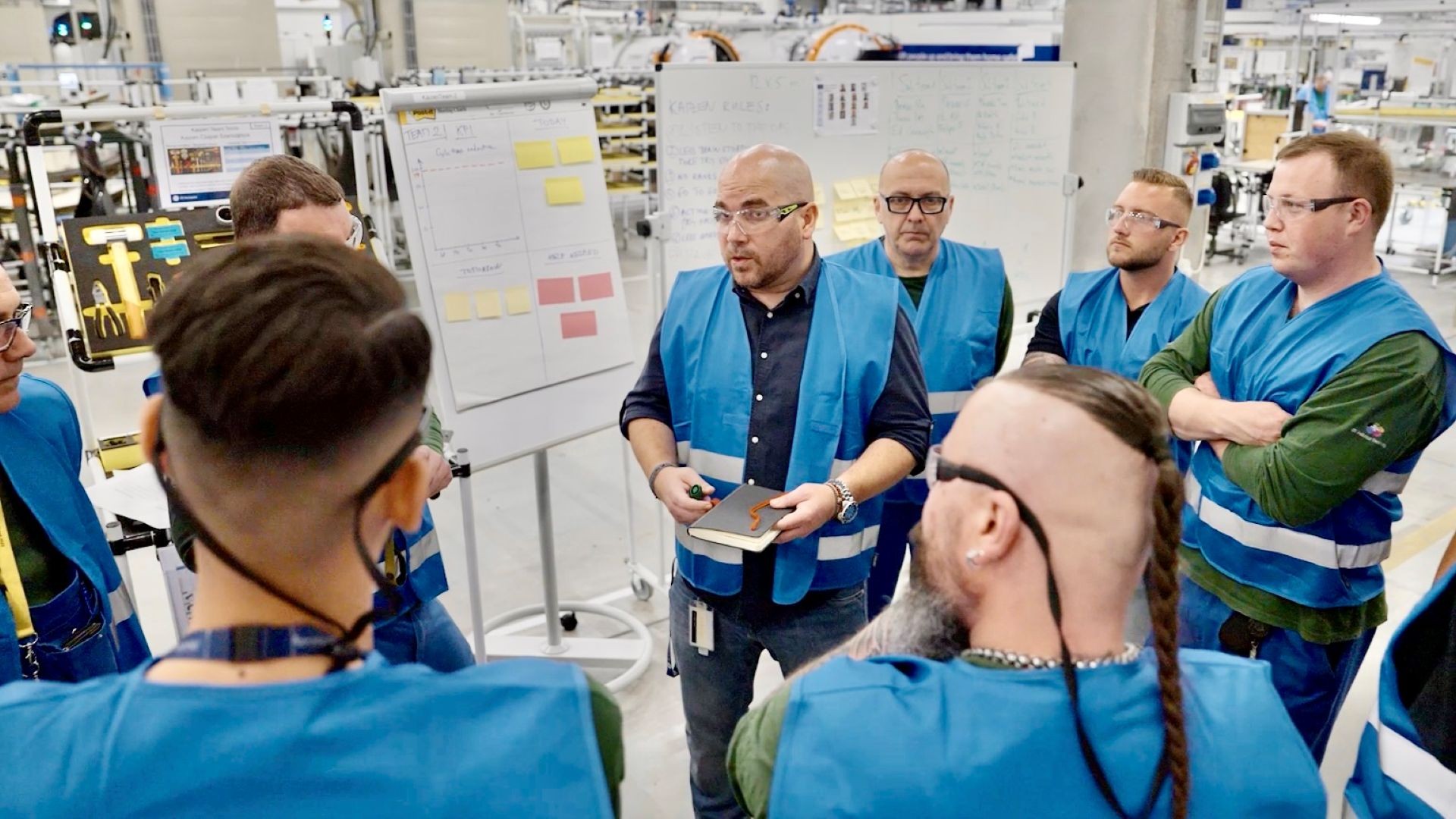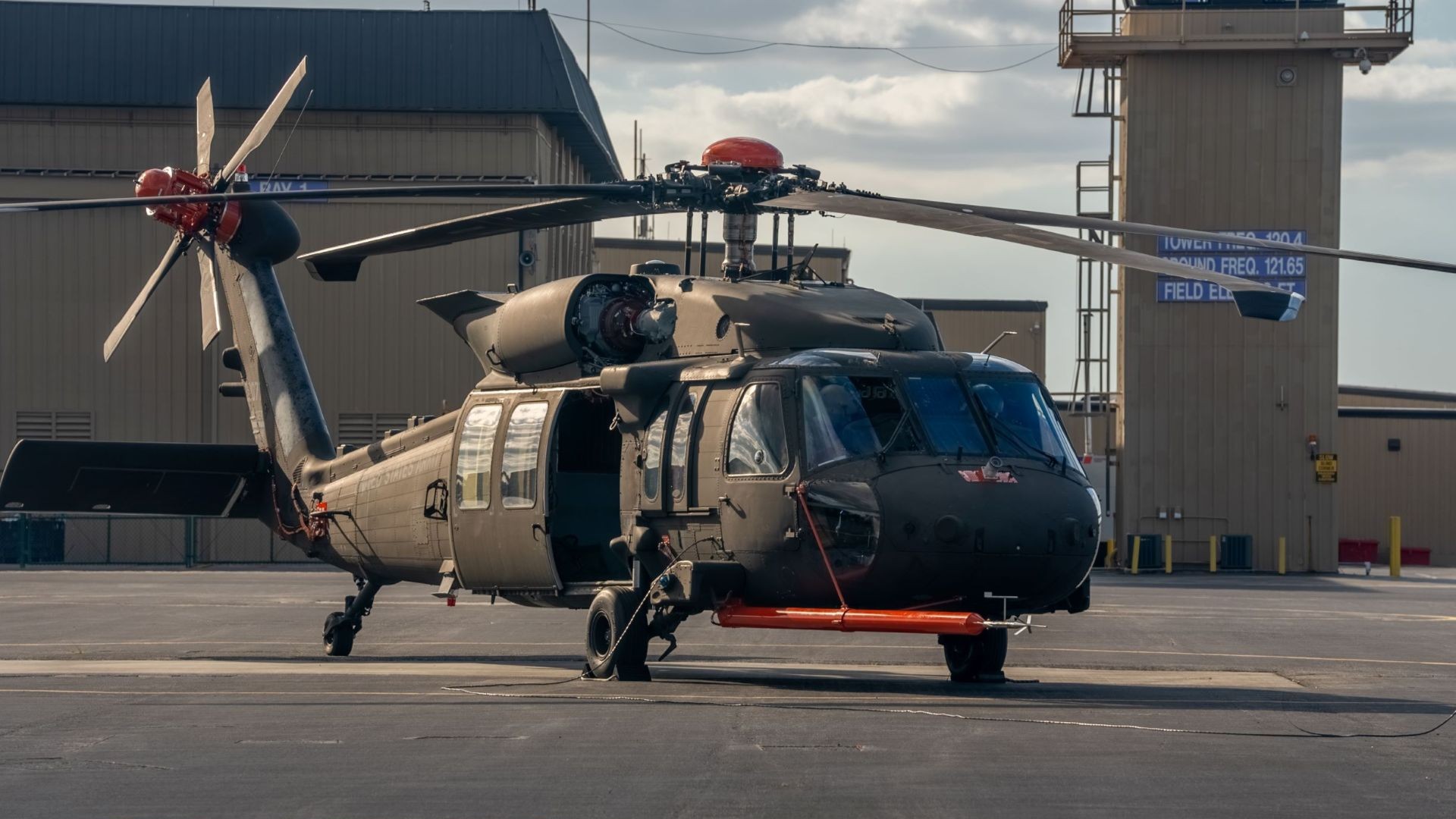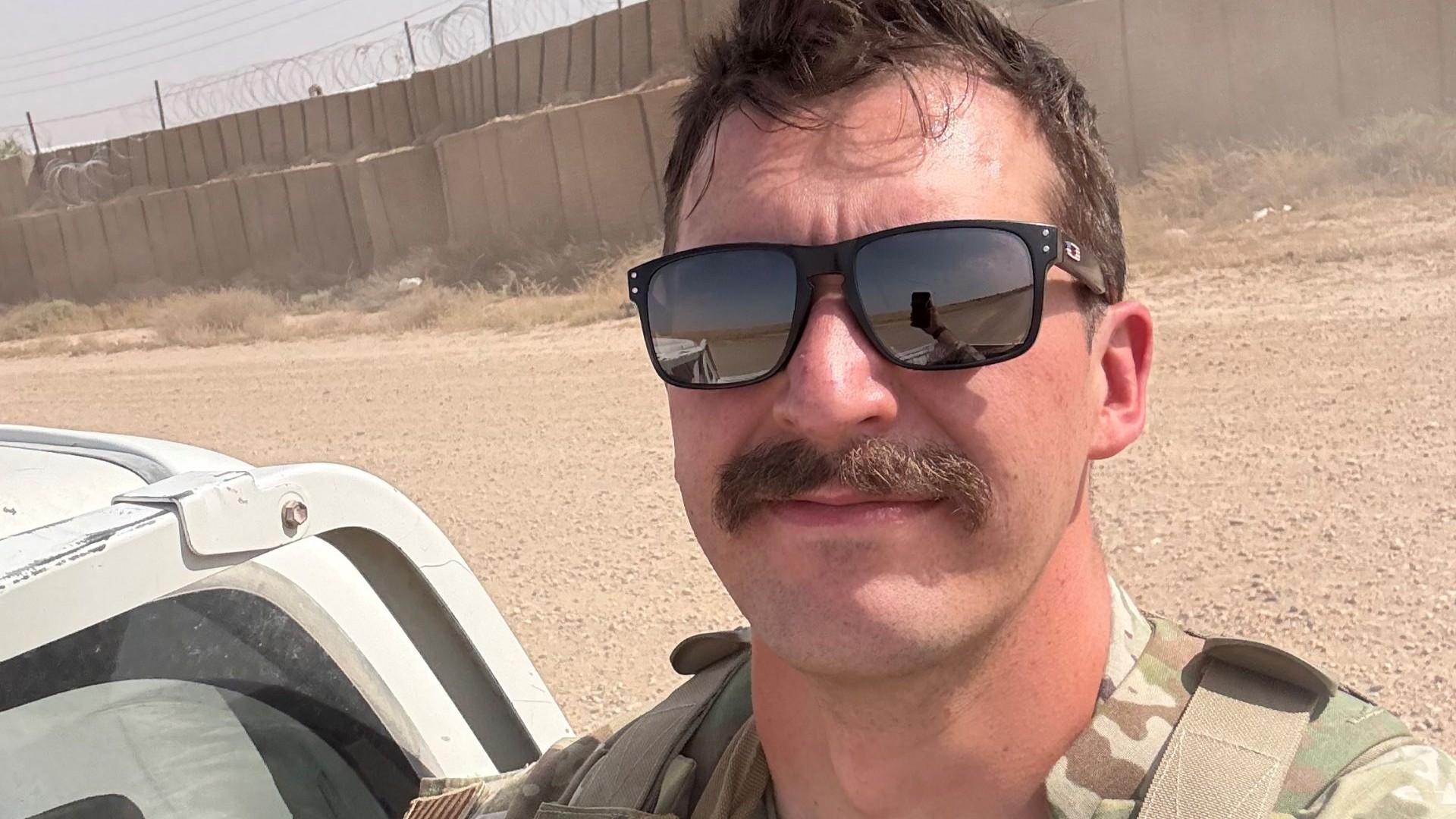
Master Sergeant Daniel Rogers of the U.S. Air National Guard is driven to figure things out no matter the situation — a philosophy that helps him both on deployment and as a senior manager at GE Aerospace. Images courtesy of Daniel Rogers
Article
Lessons in Leadership: Bronze Star Recipient Daniel Rogers Builds on Battlefield Experience
November 6, 2026 | by Dianna Delling
Master Sergeant Daniel Rogers, a battlefield command and control specialist in the U.S. Air National Guard, had gotten used to running for cover. It was the summer of 2025, and enemy fire wasn’t unusual at the Middle East location where he’d deployed to support counterterrorism operations with an Army Special Forces group.
On August 11, though, Rogers scrambled into a bunker and dashed right out again, despite the 107-millimeter rockets and small arms fire exploding nearby. A critical command and control network had just gone down, leaving commanders unable to direct their forces or track planes during the attack. Rogers and his squadron mate had set up the network, and now it was their job to fix it.
“Just make things work,” he told himself as he sprinted some 60 yards to a modest shelter that shielded the malfunctioning electronic equipment from sand and sun. Once he got there, his years of stateside training and battlefront experiences — what he calls “tribal knowledge” — took over.
“You might be able to troubleshoot something by the book, but what happens when you can’t get to the book?” Rogers says. “At that point, it’s go time. You don’t have time to fail; you just have to figure it out. That meant asking, What steps have I been through before? Why am I seeing this now? Then taking the correct troubleshooting actions to the point where we saw the [network] data links go green.”
In roughly two and a half minutes, he and his fellow squad member had restored the system, Rogers says. “And then we were like, Cool. Let’s get the hell out of here.”
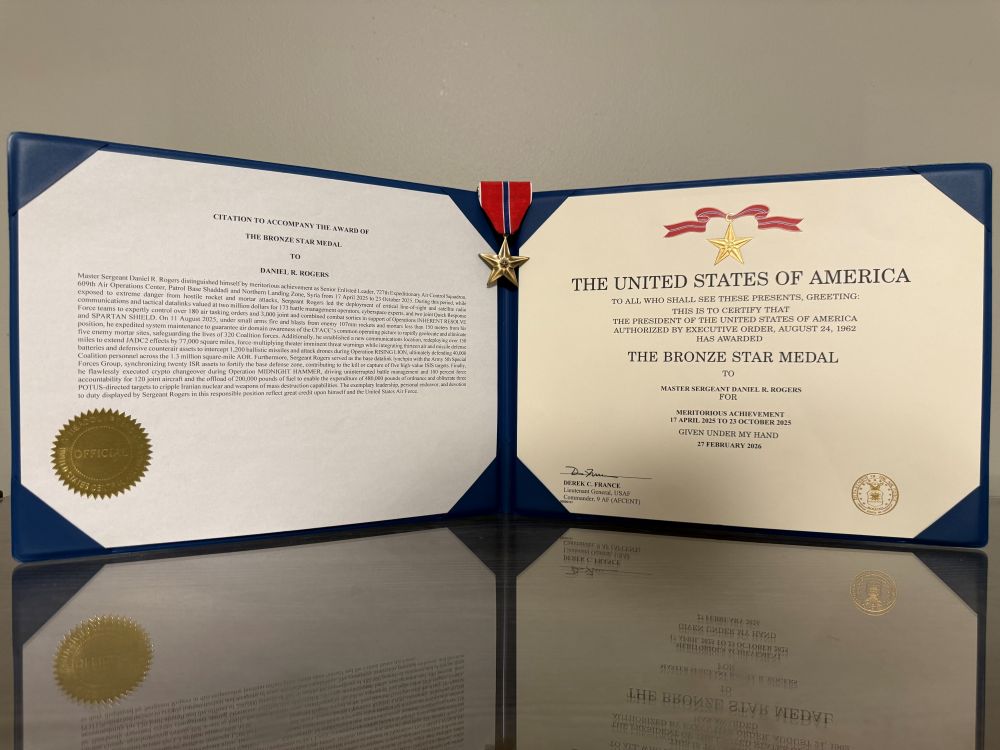
Rogers’s actions are credited with safeguarding more than 320 coalition personnel during an enemy attack. Combined with a critical role in the execution of Operation Midnight Hammer earlier that summer, along with other significant actions during his seven-month deployment in several Middle East locations, his efforts earned him one of the U.S. military’s highest honors. This past August, Rogers took a day off from work at GE Aerospace’s headquarters in Evendale, Ohio, where he manages test infrastructure for aeroderivative engines, to attend a military ceremony at the nearby Blue Ash Air National Guard Station, where he was awarded a Bronze Star.
Figuring It Out No Matter What
Having deployed three times over the past decade, Rogers has learned to be comfortable in extremely high-risk situations. But public attention, the kind that’s hard to avoid when you receive a Bronze Star, makes him uneasy. He stood in the spotlight reluctantly as 300 fellow Guard members gave him a standing ovation at the medal ceremony, but aside from his closest family, he told few people about it. Work colleagues learned of the achievement only after Marcel Alvarez, Rogers’s former manager and the global operating leader of the GE Aerospace Veterans Network, got wind of it through his military connections.
“Marcel was like, ‘You’re not going to tell me you got a Bronze Star?’” Rogers recalls. “I didn’t know how to accept it. I would tell people what I did, but the whole award situation, I pushed it to the side.”
Rogers joined the Air National Guard in 2016, at the encouragement of his best friend. He’d grown up in Wilmington, Ohio, about an hour northeast of Cincinnati, and at that time was driving trucks for a package-shipping company while pondering a longer-term career path. After basic training and initial technical training in electronics and radio transmission systems, he took a job supporting electronics systems at L3Harris Technologies before joining GE Aerospace in 2022.
Alvarez provided mentorship from the start. He helped Rogers see that the military experiences and skills on his résumé made him an excellent candidate for a project manager role on the Aeroderivative Engine Operations team, working on marine and other industrial applications. Alvarez also assured Rogers that the company would support his ongoing military responsibilities, including future deployments.
The 123rd Air Control Squadron, where as a master sergeant Rogers is a senior enlisted leader, provides ground-based battle management systems that are vital in combat situations. The nature of these duties means working near the front lines, typically on forward operating bases. But last summer, Rogers was selected for deployment at a patrol base, a tiny outpost for Army Special Forces or infantry units. “It’s bug-eater stuff,” he says, using military slang to describe austere conditions where resources are scarce.
Rogers was responsible for setting up and maintaining communications systems in hot zones, for the most part using supplies he carried with him. “[Communications networks at] these sites are usually run with 15 to 20 people, and here it was me and one other person,” he says. “If I needed a spare part, it would take six to eight weeks to ship it.”
It gave him a new appreciation for making things work, no matter what. “That was my big mantra coming home from this trip,” he adds. “It doesn’t matter if you don’t have the resources. You’re going to have to figure out a way.”
Learning to Lead
Rogers returned home from deployment in December, and to GE Aerospace soon after. His role has expanded since he was promoted from project manager to senior manager, and he’s now leading the engineering team that supports engine test operations. “We support operations to get all of the engines through the test cells,” he says. “If we have problems, I manage a team that tackles them.”
On a personal level, Rogers has deeply appreciated the encouragement he’s received from colleagues, including fellow members of the Veterans Network, while navigating the challenges of reintegration — that is, returning to “normal” life after experiencing combat environments. “I’ve received a lot of support, and I had that support while I was gone too,” he says. “People saying, ‘We heard things were rough, and we want to know about your experiences.’ They’re genuinely interested, which is really cool.”
Among the lessons he brought back to Ohio is that leadership doesn’t always come with a title. Watching fellow soldiers react bravely and decisively in the face of danger, again and again, inspired him to take the lead — to literally step out of the bunker — when it was his turn to do so. “Everybody is willing to put their foot forward and do something,” says Rogers. “It’s never ‘not my job.’”
See other posts
GE Aerospace is a world-leading provider of jet and turboprop engines, as well as integrated systems for commercial, military, business and general aviation aircraft.