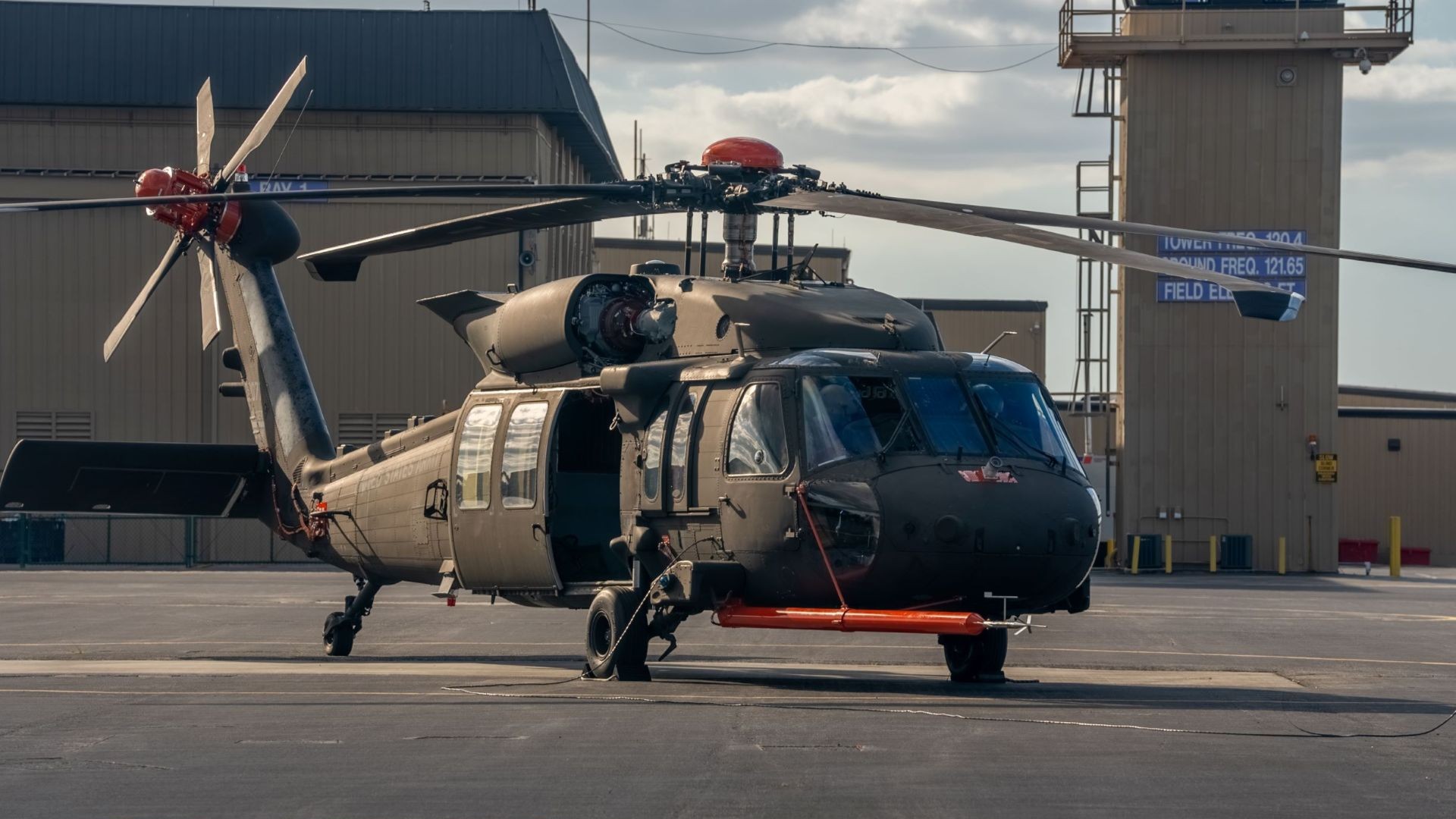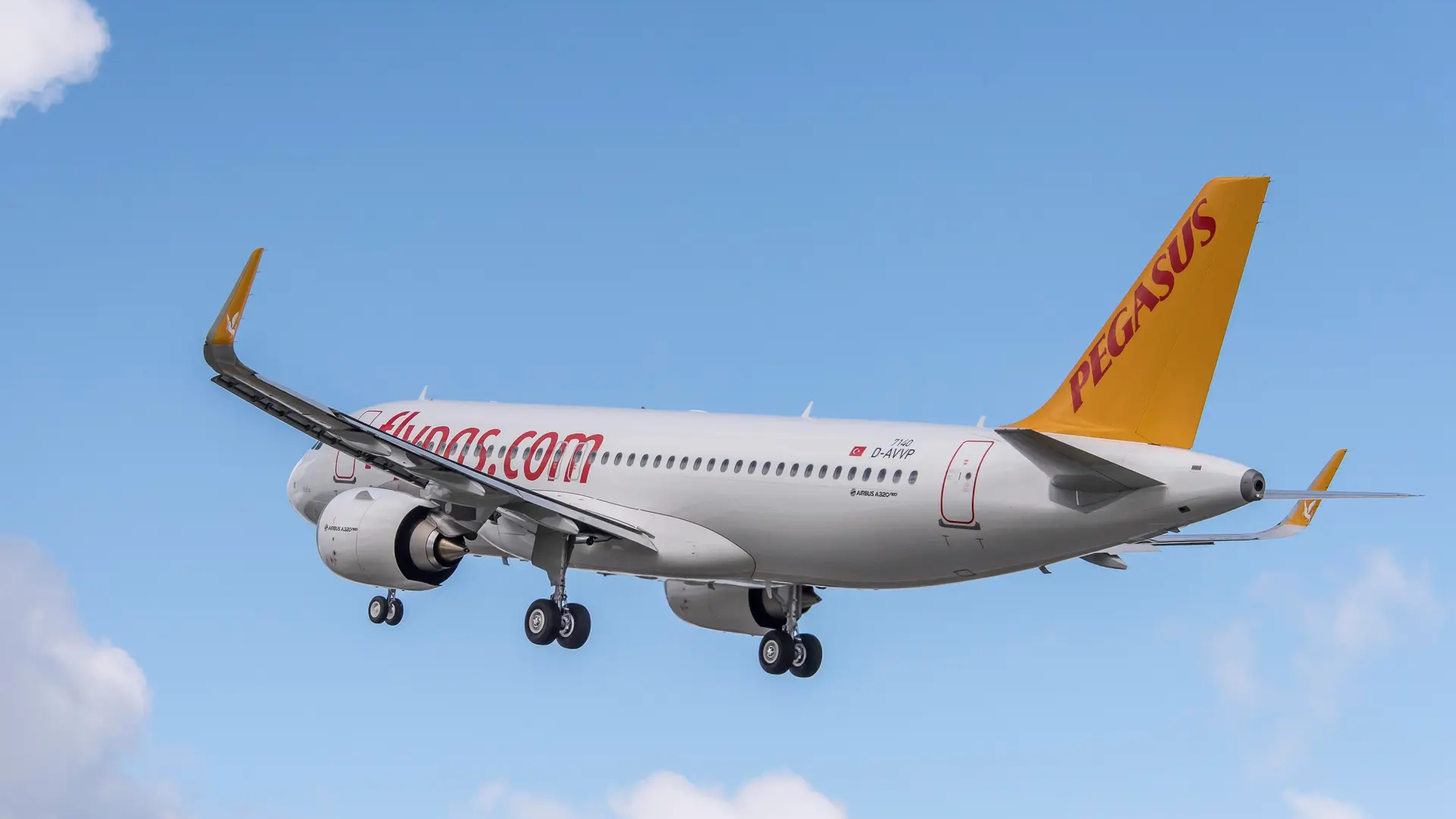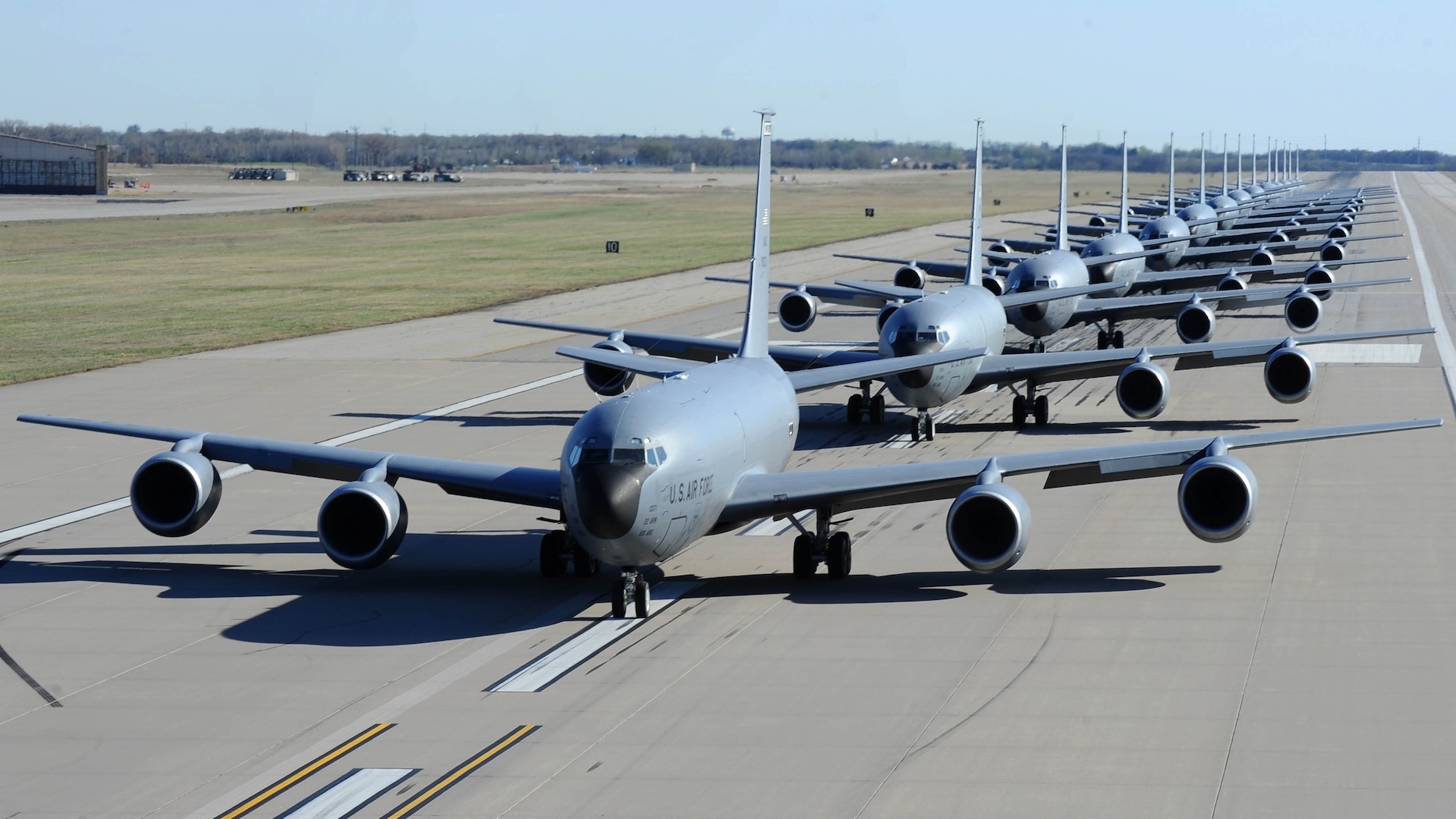
The CFM56-2 engine, known as the F108 in military applications, powers several aircraft, including KC-135 Stratotankers operated by the U.S. Air Force. Image credit: GE Aerospace
Article
Enabling the Mission: Powering the Mobility Fleet of Today and Tomorrow
November 4, 2026 | by Deborah Case
Tankers and transport aircraft are a critical part of today’s military air power, extending the reach, flexibility, and readiness of fleets around the world. At the heart of that mission is propulsion: Today’s air forces require engines that deliver reliability, efficiency, durability, and a strong support network over the long service lives of these aircraft.
“Starting with the TF39 engine that was the world’s first high-bypass engine on the C-5A Galaxy, GE Aerospace’s engines have played an important role in tanker and transport operations for more than half a century,” says Asha Belarski, general manager of Mobility Engines and Marine at GE Aerospace. Among the more prolific examples is the CF6 engine, which was derived from the TF39 and a proven commercial-derivative engine family with a long history of dependable service. From its start powering the U.S. Air Force’s dual-use tanker/transport KC-10s with CF6-50 engines in the early 1980s to the re-engining of the C-5M Galaxy with the CF6-80C2 engine in the early 2000s, the CF6 engine family has been a mainstay of U.S. Air Force mobility. Internationally, the CF6 family powers the Italian Air Force’s KC-767, Japan’s Air Self-Defense Force’s C-2, and the A330 MRTT for the Royal Saudi Air Force, the Royal Australian Air Force, and the Spanish Air Force.
CFM International, a 50-50 joint company between GE Aerospace and Safran Aircraft Engines, also has a prominent position powering tankers and transport aircraft around the world. The CFM56-2, known as the F108 in military applications, powers several aircraft, including KC-135 Stratotankers operated by the U.S. Air Force and the Turkish Air Force, E-3 Airborne Early Warning & Control (AEW&C) aircraft flown by the Royal Saudi Air Force, the French Air Force, and the Chilean Air Force, and the U.S. Navy’s E-6B TACAMO, just to name a few. The newer CFM56-7 engine has also made its mark on military aircraft, such as the U.S. Air Force and Navy’s C-40, used for VIP transport, as well as the widely popular P-8 Poseidon for anti-submarine warfare and the E-7 Wedgetail AEW&C. “The U.S. Air Force is the largest CFM56 operator, thanks to the exceptional performance of these engines on its tankers, transport, and special mission aircraft,” says Belarski.
During the past 15 years, GE Aerospace and CFM have introduced several new engines that are well positioned to power tankers and transport aircraft. “This generation of commercial engines has achieved industry-leading performance and reliability in airline service, which positions them to bring even greater capabilities to current and future military aircraft,” adds Belarski. Among these new engines is the GEnx engine, which will power the new Survivable Airborne Operations Center (SAOC). The GEnx engine boasts a 99.98% dispatch reliability rate and stays on wing up to three times longer than competing engines, making it an ideal candidate for military aircraft service. With 1.4% better specific fuel consumption than other engines in its thrust class, the GEnx has surpassed the 50-million-flight-hour mark in just over 14 years, the fastest rate ever for a GE Aerospace commercial widebody engine. For military operators, that combination of efficiency and durability can mean longer range, more time on station, and higher aircraft availability.
Another newer engine that is well suited for military transport aircraft is CFM’s LEAP engine. “With world-class performance, reliability, and utilization rates, the LEAP engine has proven itself as the engine of choice for narrowbody commercial aircraft and offers similar performance benefits for military aircraft,” says Belarski. In the 10 years since LEAP engines entered service, CFM has delivered more than 10,000 engines that have accumulated over 100 million flight hours. CFM continues to upgrade the LEAP fleet with a high-pressure turbine durability kit to extend time on wing, which enhances aircraft availability.
Looking further ahead, CFM International’s RISE technology demonstration program could redefine efficiency for future military aircraft. A central feature of the CFM RISE program is an Open Fan engine architecture, which “offers a step change in efficiency, aiming to achieve 20% better fuel efficiency than today’s commercial engines,” says Belarski. For tanker and transport missions, gains of that scale could translate into greater range, more fuel to offload, and lower operating costs. The technologies being developed for the CFM RISE program continue to be tested, with components in the engine’s core accumulating more than 10,000 durability cycles, including endurance and dust ingestion testing and more than 500 total tests so far.
Over the past half century, GE Aerospace’s propulsion legacy has grown alongside the tanker and transport mission itself. The next era will ask more of engines than ever before: greater range and fuel offload, lower life-cycle cost, and readiness that holds up in a changing threat environment. “Our customers count on these aircraft to be ready every day,” says Belarski. “The same commercial technology and support network that keep the world’s airlines flying put us in a strong position to deliver that readiness for the next generation of military aircraft.”
See other posts
GE Aerospace is a world-leading provider of jet and turboprop engines, as well as integrated systems for commercial, military, business and general aviation aircraft.