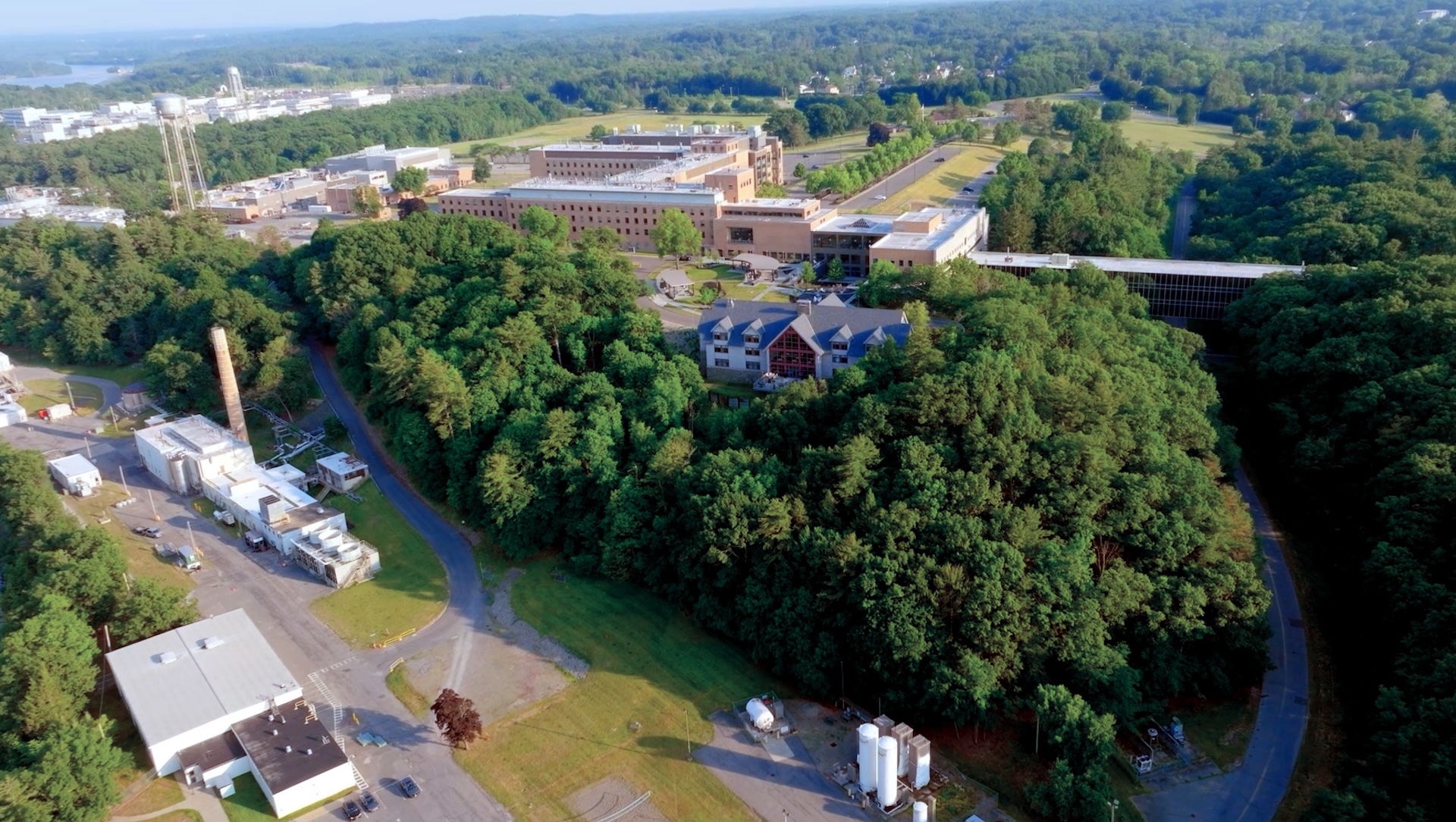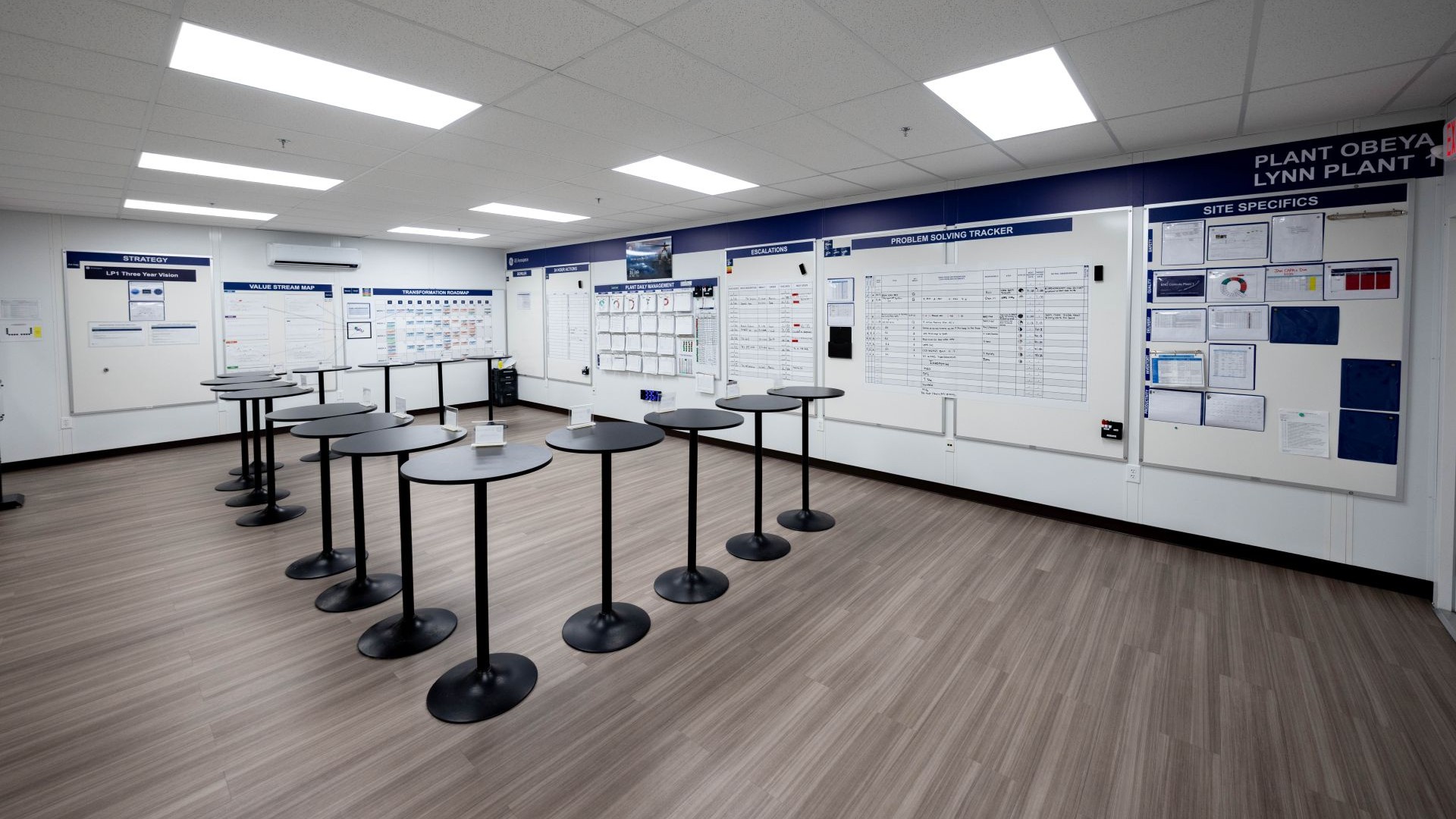
Lynn Plant 1’s obeya room is a dedicated space in a central area that uses lean principles to improve efficiency and morale. Images credit: GE Aerospace
Article
Big Room, Big Progress: How a New Obeya Room Is Helping Lynn Win the Day
May 26, 2026 | by Chris Norris
When Joe Micozzi decided to build an obeya room in Lynn Plant 1 (LP1) — the vast rotating engine parts assembly area he oversees on GE Aerospace’s even larger campus in Lynn, Massachusetts — it seemed like a logical next step. The term obeya, Japanese for “big room,” comes from the lean management principles that inspired FLIGHT DECK, the company’s proprietary lean operating model. Micozzi was already running daily management meetings “way, way down in the back of the plant, off in the middle of nowhere,” he says. He figured that a dedicated space in a more central area might improve efficiency and morale. But he didn’t fully imagine the scale of transformation that comes from casting FLIGHT DECK in three dimensions.
Seven months later, Micozzi stands at the center of the clean, white, airy, window-lined obeya room that greets people soon after they enter LP1. Since creating this centralized structure, he has been able to tie daily management of LP1 to overall GE Aerospace strategy — an alignment visible on the walls all around him.
The Most Important Meeting of the Day
Across one wall, a chart labeled “LP1: 3-Year Vision” flows into a value stream map that displays current operations — with metrics for safety, quality, delivery, and cost — and ambitions for what these might look like in the future. This in turn flows into a bubble chart of best opportunities, action planning, and escalations, and then into a transformation road map aiming for improvements across every parameter.
But a separate chart titled “2026” is where most of the room’s daily action takes place. “I’ve been a plant leader for a long time, and we always used to focus on yesterday,” Micozzi says. “We looked at what happened and kind of dwelled on fixing this and that.” FLIGHT DECK instills a reorientation in time and focus that Micozzi summarizes as “how to win the day.”
“We still talk about yesterday — for about 5% of the time,” he says. “The other 95% we focus on how we’re winning today, across all these areas of our operations.”
He waves to the array of tools and guides that fill the walls: charts, maps, and diagrams that render core FLIGHT DECK mechanisms in bold, legible, color-coded letters and symbols. Most of these are hand-written, per FLIGHT DECK specs that an obeya room be strictly analog. “If we’re doing it all by hand, we’re thinking about it, processing it,” Micozzi says. “Also, doing it analog brings every leader from both buildings here, to problem solve together.”
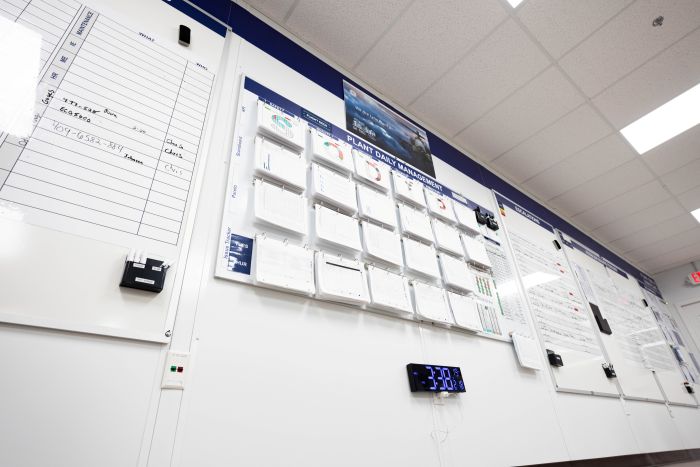
Sixteen high tables of the sort you might find at a chic nightclub or bar stand in a long semi-circle, bearing placeholders for roles such as Plant Manager, Plant Executive, EHS, Quality, Maintenance, Engineering FLIGHT DECK Leader, and representatives from the five businesses that LP1 serves. The tables face the rear wall where all the information lives and, to an extent, each other, an arrangement that has produced a new dynamic that improves communication in management meetings.
Micozzi used to talk throughout most of these meetings. “Now,” he says, “each leader comes in at 8:45 a.m., updates the information on these walls, and then we have our Level Four — which is the plant meeting — where each business leader goes through all the metrics. Now, I’m not talking, the businesses are talking.”
The geography exerts a gentle pressure toward courteous attention. “Everybody’s looking at me or each other so it’s pretty hard to pull out your phone and start texting,” Micozzi says. “The room itself tells everyone, ‘Hey, this is the most important meeting of the day — pay attention.’ And right after the tables were installed, we really started to problem-solve as a team.”
“What Happens in Here Matters”
Part of an obeya room’s role is to give a clear view of plant strategy and daily management execution. “I’ve been to a lot of different sites, all over the world, and not many have meeting rooms like this, dead center in the shop,” Micozzi says. “But one of the reasons it succeeds is that it looks like investment. It tells everyone that what happens in here matters.”
GE Aerospace’s investment in this space — coupled with a constant focus on safety, quality, delivery, inventory, and productivity (SQDIP) — has helped move LP1 from frequently pacing behind (or in manufacturing terms, being “in the red”) to successfully hitting nearly every target. Over the last year, LP1 has increased output by 15 percent and decreased defects by 20 percent. This means the plant better serves both internal and external customers — such as the Lynn Assembly & Test Operations (LATO) team, which needs LP1-produced parts to meet delivery goals for military and commercial customers.
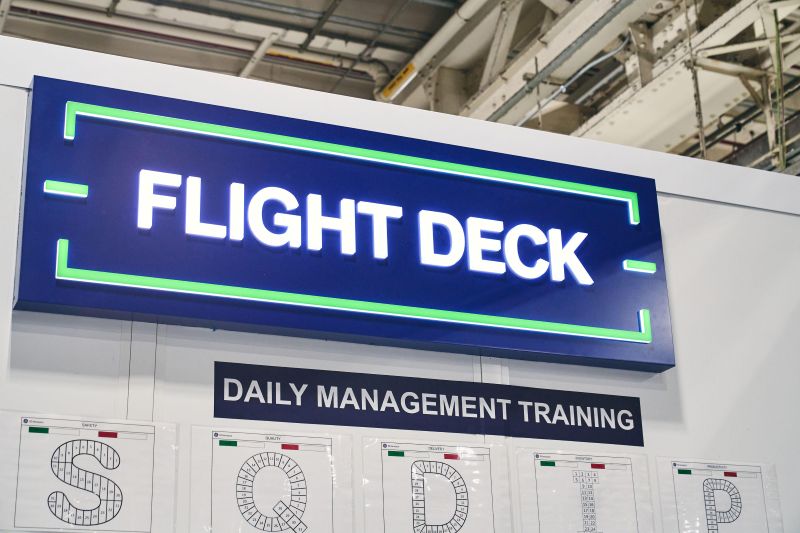
The productivity improvements that come out of daily management meetings in the LP1 obeya room play a critical role in helping improve output for many other functions down the line at Lynn.
“All the leaders of the various businesses come to these meetings,” says Brendan Nemes, the LP1 manager. “And each one comes as the customer, saying, ‘I need help to make sure I can win the day.’ When we step in to address those issues, everyone — design, engineering, finance, HR, maintenance — everyone knows that we’re supporting them to make sure they get the parts out the door.”
The LP1 obeya room has caught the attention of many across GE Aerospace and beyond.
“We get so many visitors now that we had to put in a special area where they can stand,” says Micozzi, pointing to a 10-by-15 foot section to the far right of the tables. Many of the spectators come from sites across GE Aerospace, inspired to build a “big room” of their own.
“That’s when it really sank in just how much progress we were making,” he adds. “We’ve become the gold standard.”
See other posts
GE Aerospace is a world-leading provider of jet and turboprop engines, as well as integrated systems for commercial, military, business and general aviation aircraft.