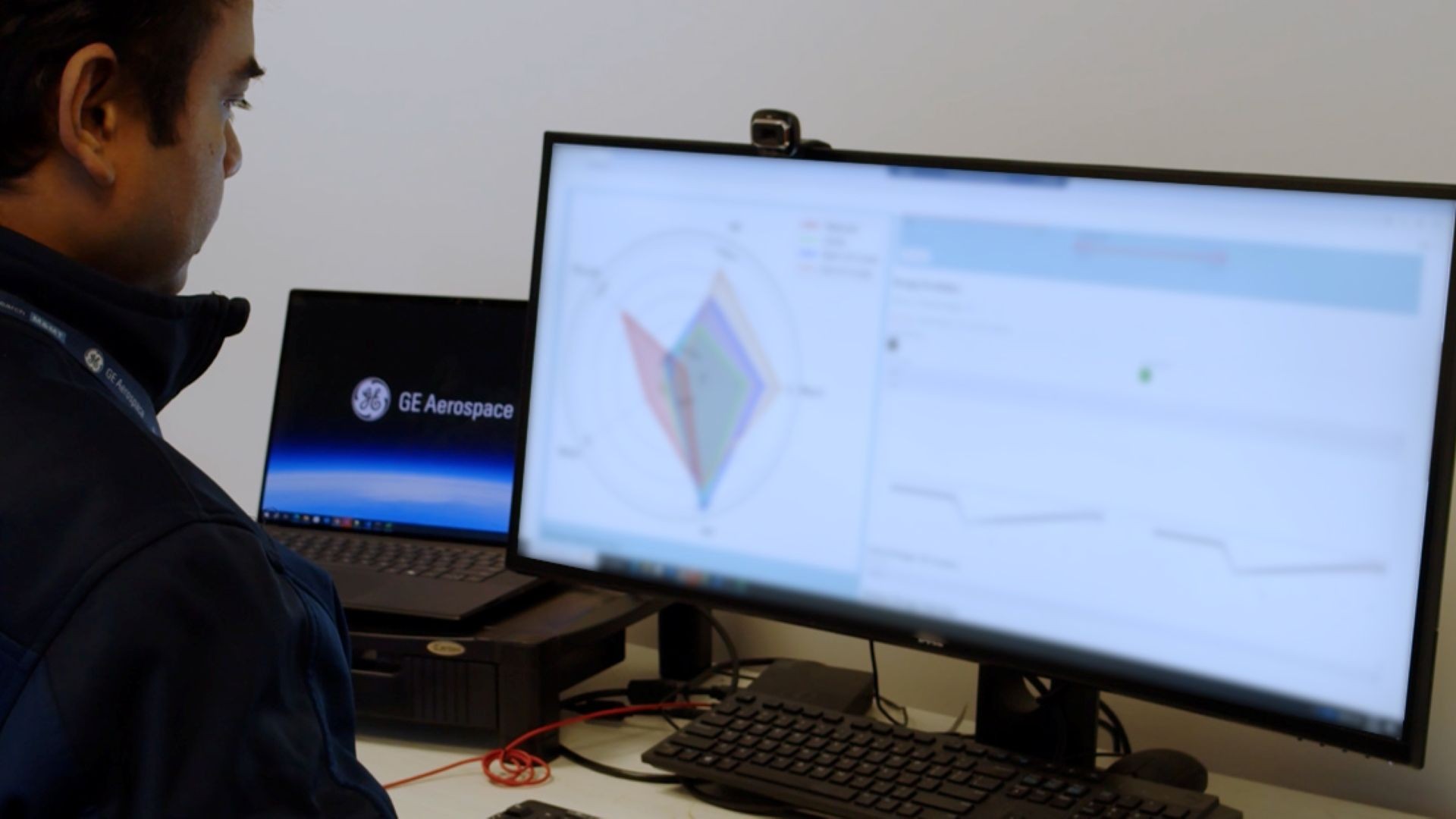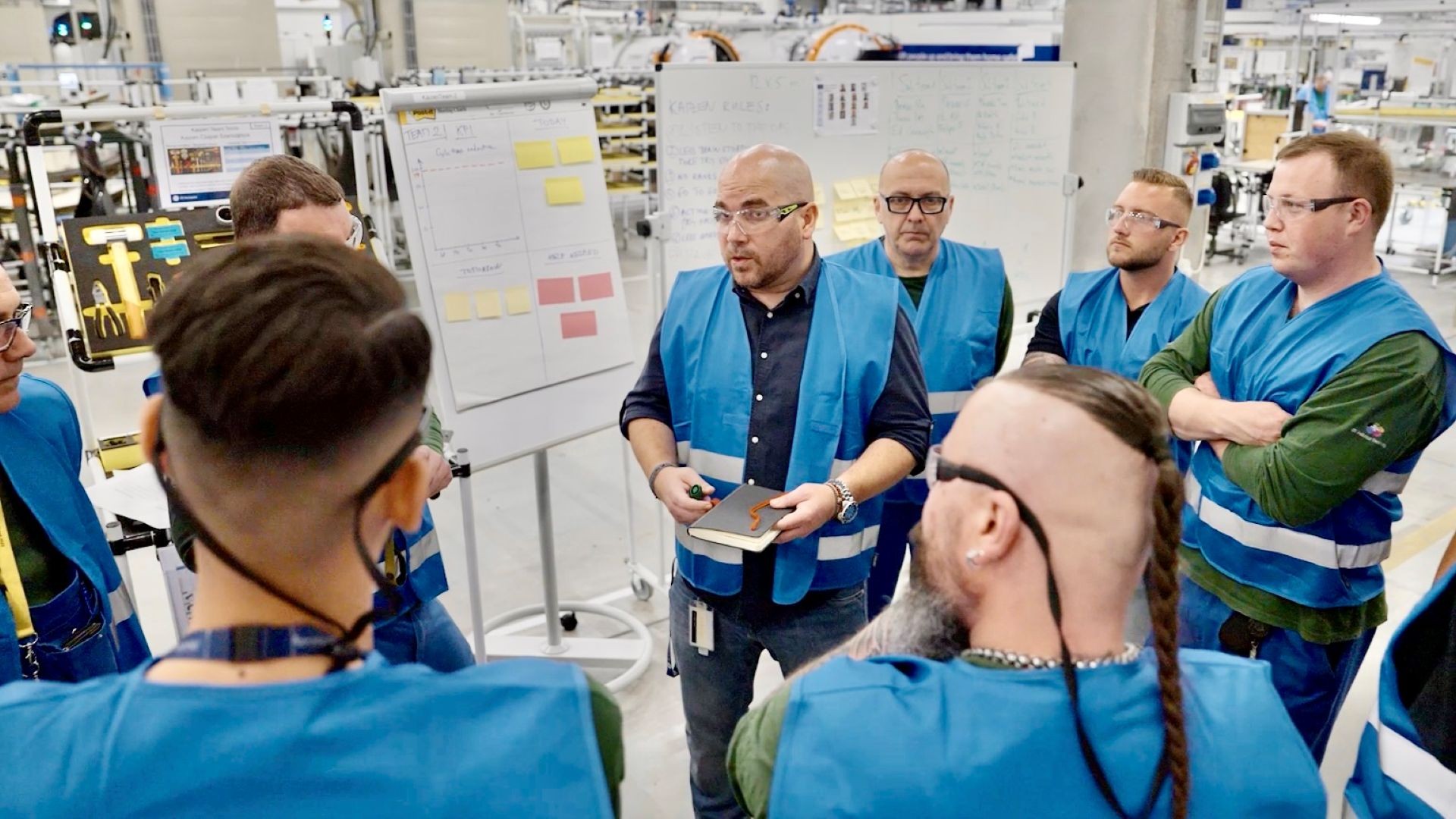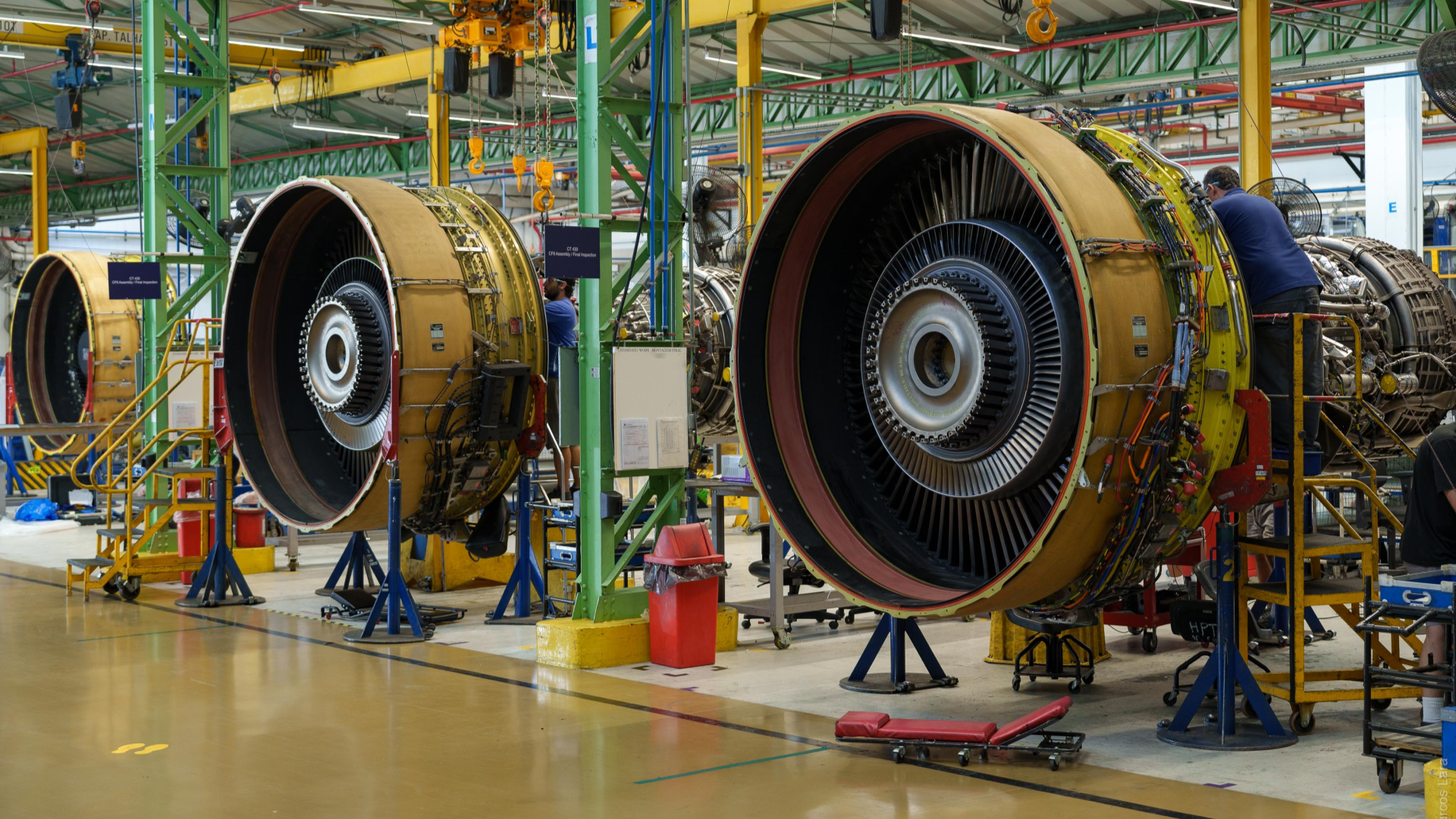
Since GE Aerospace’s team in Celma, Brazil, introduced the AI Materials Assistant (AIMA), they've managed their parts supply more efficiently, which has helped to reduce turnaround time. Image credit: GE Aerospace
Article
Celma Accelerates with AI: Faster Parts and Turnaround Time
November 24, 2026 | by Chris Norris
GE Aerospace’s team in Celma, Brazil, is a high-volume maintenance, repair, and overhaul (MRO) shop, servicing a wide range of the company’s commercial engine lines, including CFM LEAP,* GEnx, CF6, and CF34. Because of its distance from many U.S. suppliers, reducing turnaround time (TAT) is critical.
Recently, in an effort to increase capacity to service LEAP engines, site leaders zeroed in on material supply. Parts availability can lead planners to substitute or wait for certain parts during engine processing, creating delays that can affect engine redelivery and constrain overall shop throughput.
To take a more proactive approach to parts planning, the team in Celma needed better visibility into potential material needs and emerging issues. Which is how they became a pilot site for a new AI tool designed to help address this challenge.
Helping Fulfillment Teams Get Ahead of Need
To build this new AI-enabled materials planning tool, leaders from GE Aerospace’s Maintenance, Technology and Operations organization, working with the Digital Technology and Data Science teams, integrated data from multiple sources, conducted technical analyses, and collaborated across functions to develop a prototype.
“We took all the field information that we could glean — about engine operation, engine configuration, prior shop-visit history, predicted shop-visit work,” says Michael Eriksen, an executive technology leader for digital transformation at GE Aerospace who helped lead MRO innovation at the Celma site. “We put it all through an AI model, and it calculated a probability of when parts would be needed.”
The prototype, called the AI Materials Assistant (AIMA), was introduced to leaders like Igor Monteiro, who oversees MRO materials for the LEAP engine line at Celma. Monteiro helped shape how this application could support earlier planning for selected parts, enabling fulfillment teams to respond more proactively to material needs.
“It has really helped us with the material constraints,” Monteiro reports. “Because it takes into consideration not only historic demand, inventory levels, and so forth, but also technical data that informs us on the work scope. We are able to receive these signals prior to the engine’s induction.”
The team combined AI with FLIGHT DECK, GE Aerospace’s proprietary lean operating model, to establish standard processes and develop an application that connects with the company’s enterprise systems to automate selected materials-planning activities.
Using problem-solving and daily and visual management, two FLIGHT DECK fundamentals, the team identified challenges in materials flow and their root causes. Team members then spent three months at GE Aerospace’s primary LEAP MRO sites in Lafayette, Indiana; Subang, Malaysia; and Celma, Brazil, studying the process from engine arrival through redelivery.
That work helped identify a wide range of opportunities for improvement. Through pattern analysis, the team determined that material planning offered the greatest potential impact by helping ensure the right parts are available at the right time in the right place while balancing inventory and TAT.
“For a single engine, teams may need to manage orders for hundreds of parts, each with its own workflow,” Eriksen explains. AIMA “considers current inventory and a range of other inputs and puts in orders earlier, which for some engines makes a big difference. According to feedback from planners, the approach has reduced parts-ordering effort by as much as 38 hours per month in some cases.”
Eriksen adds that earlier planning can be especially valuable when logistics lead times are longer. “The AI model evaluates a broad set of engine-related inputs,” he says. “So with each engine that enters the shop, the AI model evaluates around 300 parameters, connecting the dots not only on an engine level but also on a fleet level. It draws on patterns from prior activity to help anticipate likely parts requirements, putting an immense amount of intelligence into ordering.”
Improving Visibility to Reduce TAT
Celma has seen great success through AIMA’s pilot program with the LEAP engine line, where they’ve reported a 24% increase in on-time material orders, a 25% improvement in ordering within catalog lead time, and a 13% increase in on-time material delivery — helping support faster return of engines to service.
“During a recent LEAP engine visit at our Lafayette shop, inspection found worn turbine components that needed replacing three and a half weeks in,” says Eriksen. “Those parts normally take a month to arrive, which would have added up to six days of delay to the engine’s TAT. Because AIMA had predicted the demand, the parts were already on the shelf and the engine stayed on schedule.”
In bringing consistent improvements to the Celma, Lafayette, and Malaysia facilities, AIMA is a clear example of FLIGHT DECK’s lean principles at work. Leaders expect customer benefits to grow and plan to deploy AIMA and other AI models for GEnx, CFM56, and CF34 engines, as well as other product lines.
“Making our shops more efficient and more proactive is helping our customers by enabling our people to solve problems faster and more efficiently,” Eriksen says. “Improving visibility and reducing manual work helps teams spot issues earlier, solve them at the root, and spend more of their time and expertise on higher-value work.”
* LEAP engines are products of CFM International, a 50-50 joint company between GE Aerospace and Safran Aircraft Engines.
See other posts
GE Aerospace is a world-leading provider of jet and turboprop engines, as well as integrated systems for commercial, military, business and general aviation aircraft.