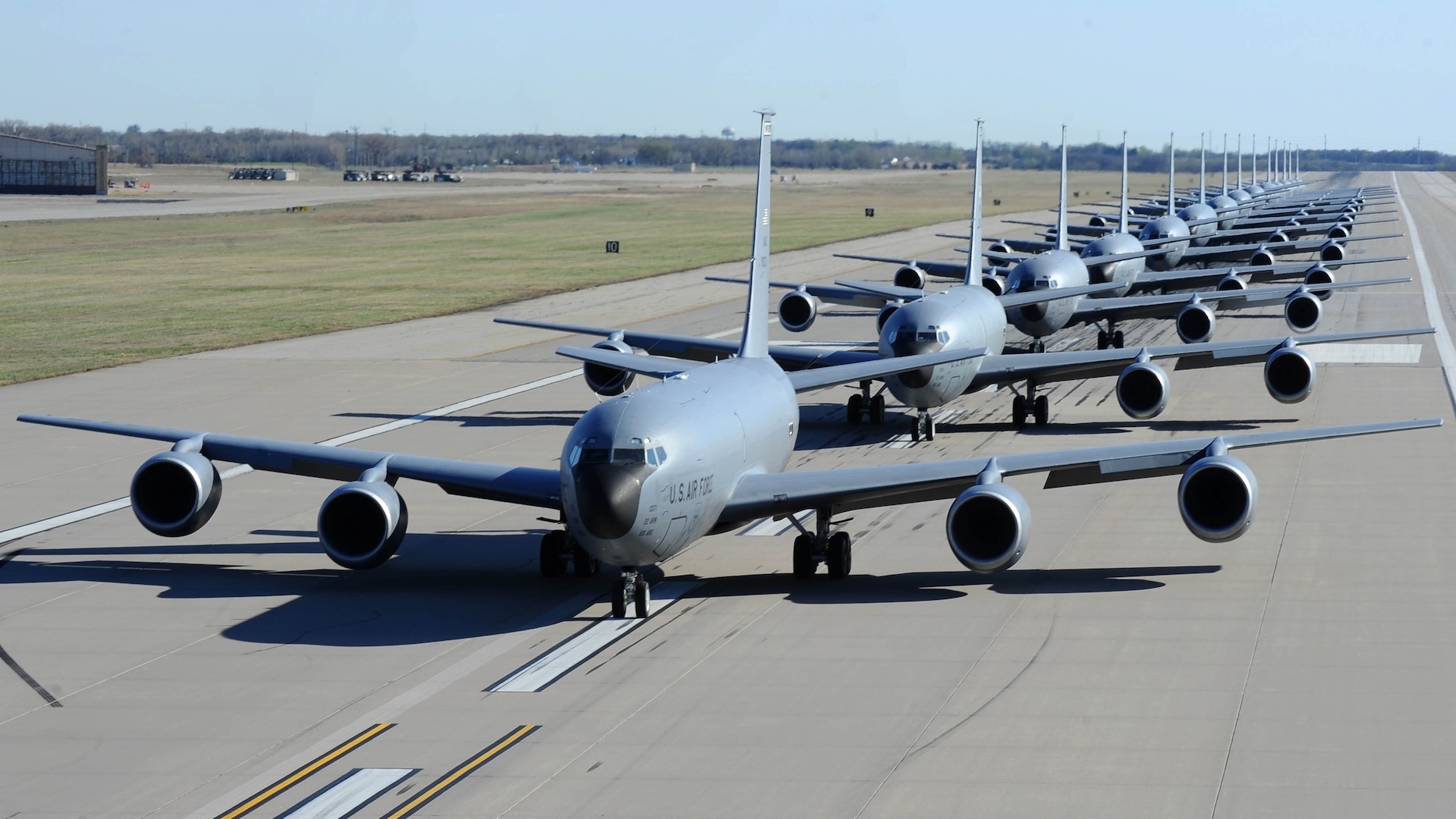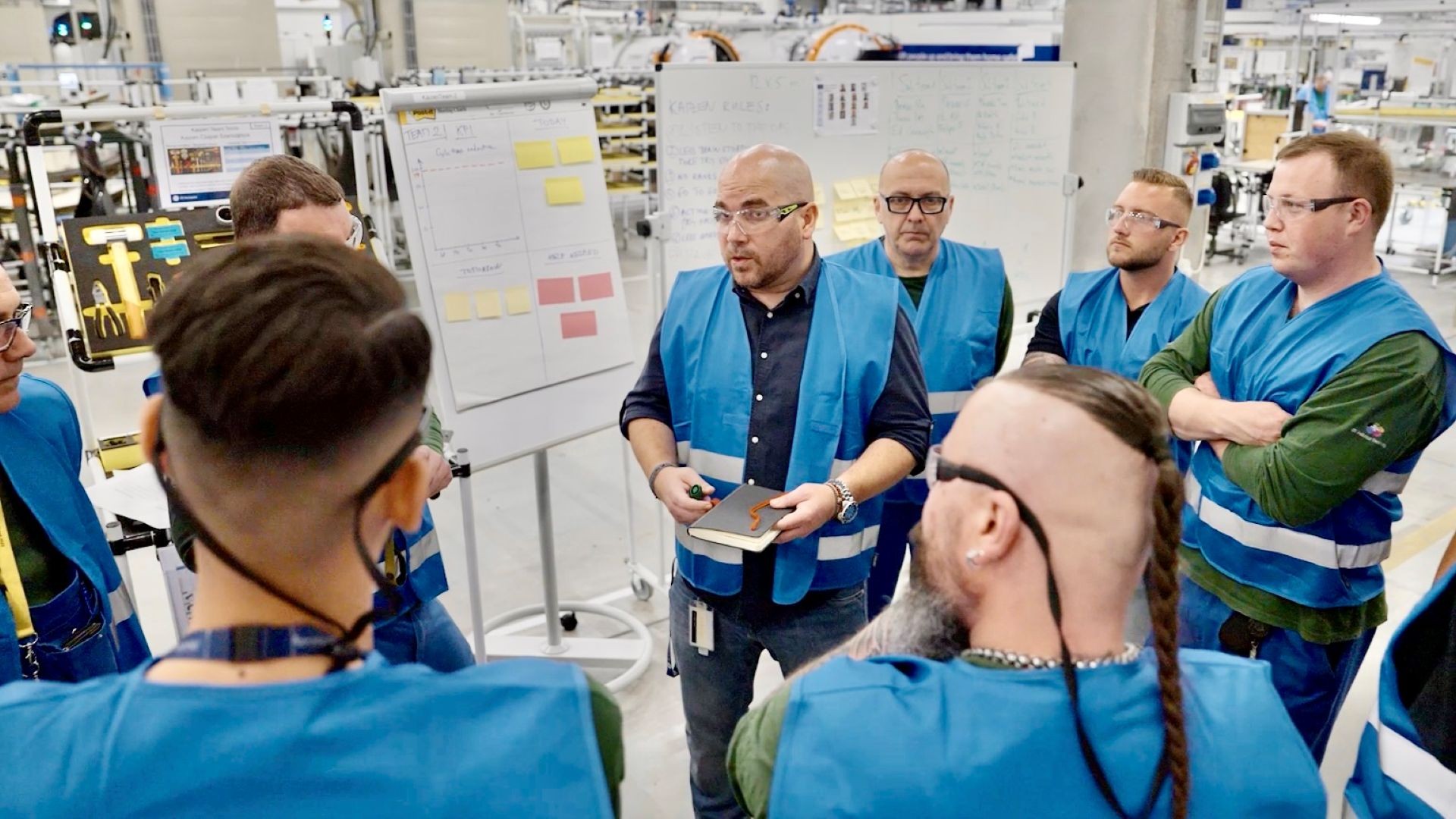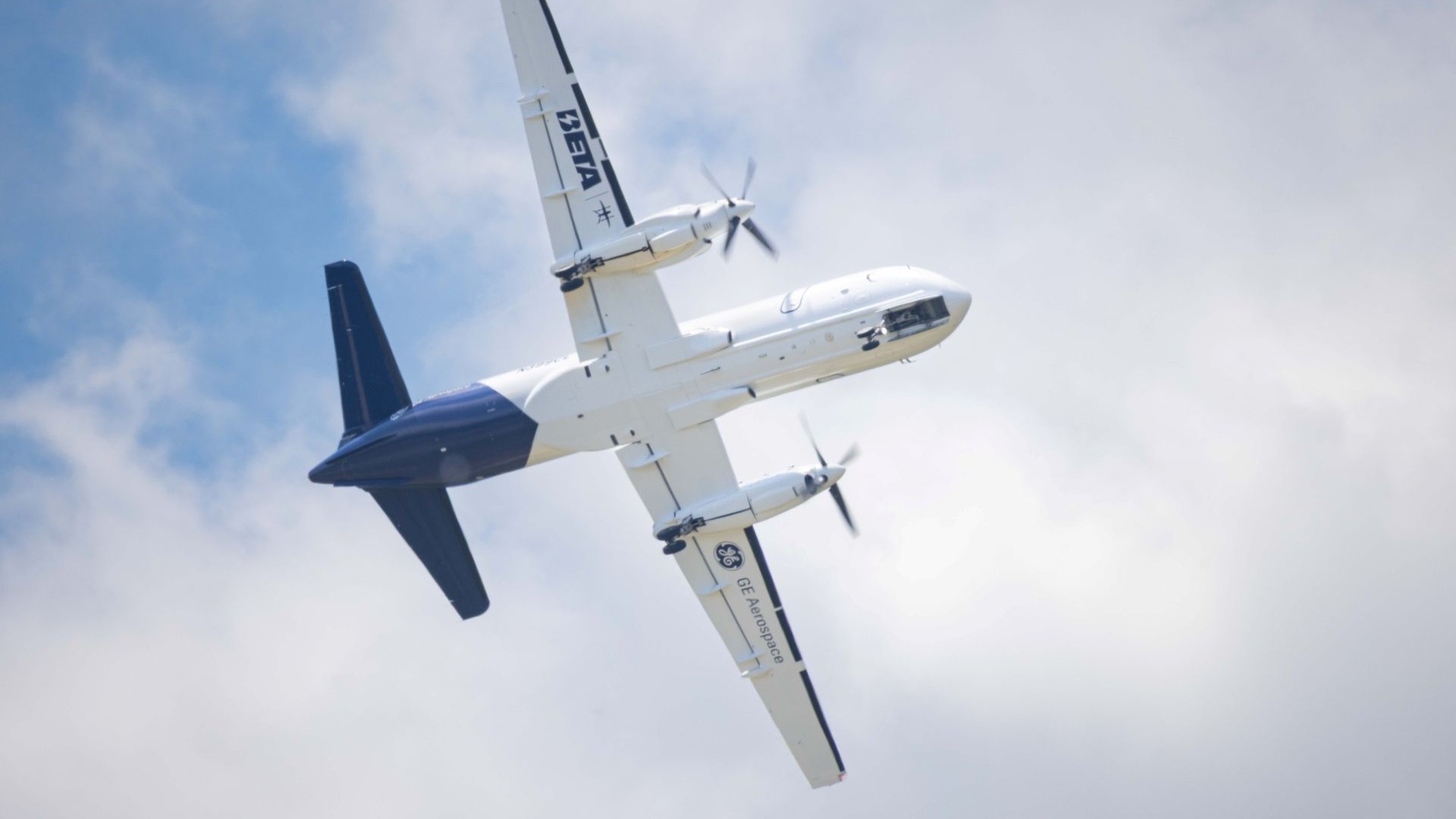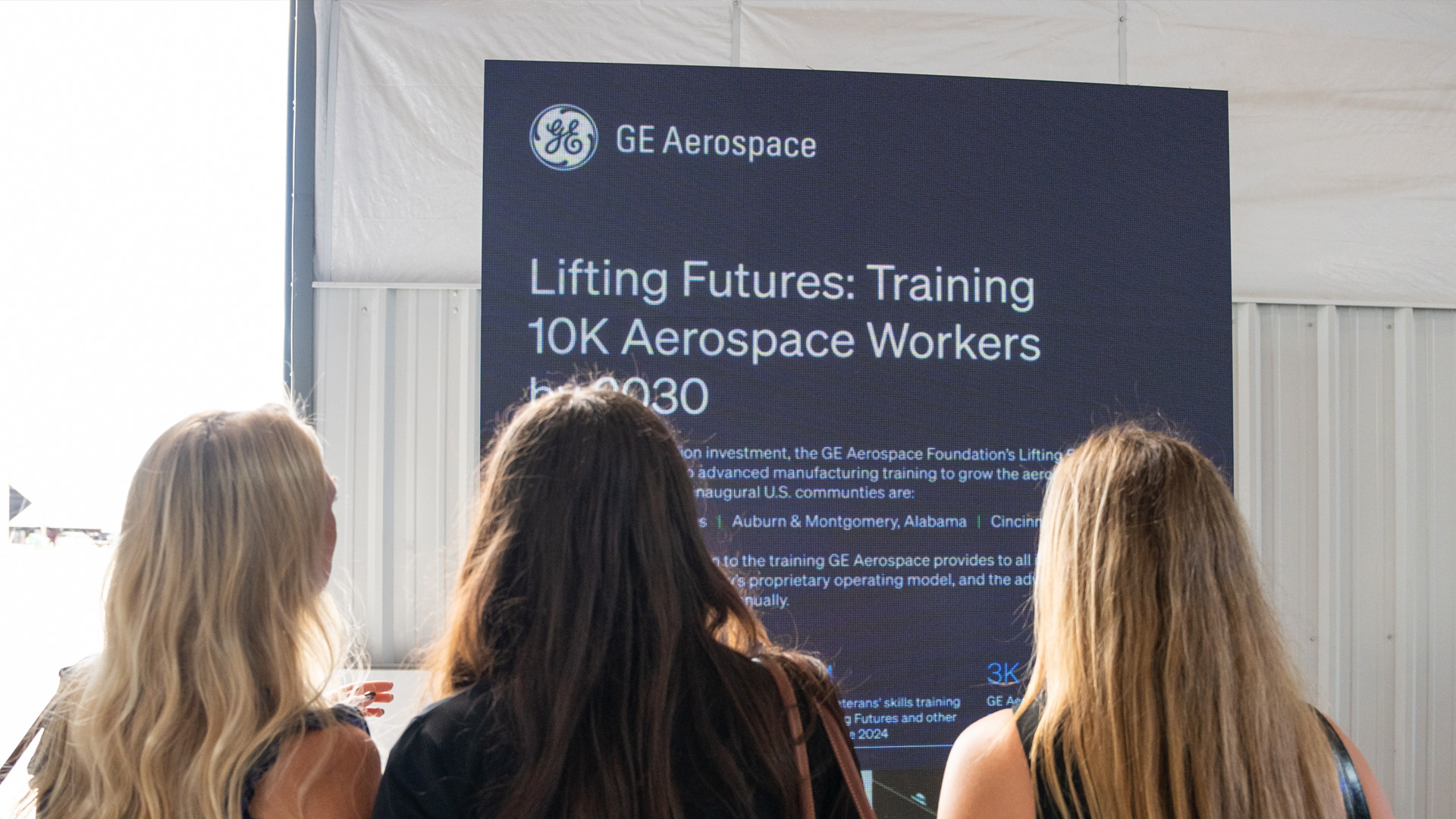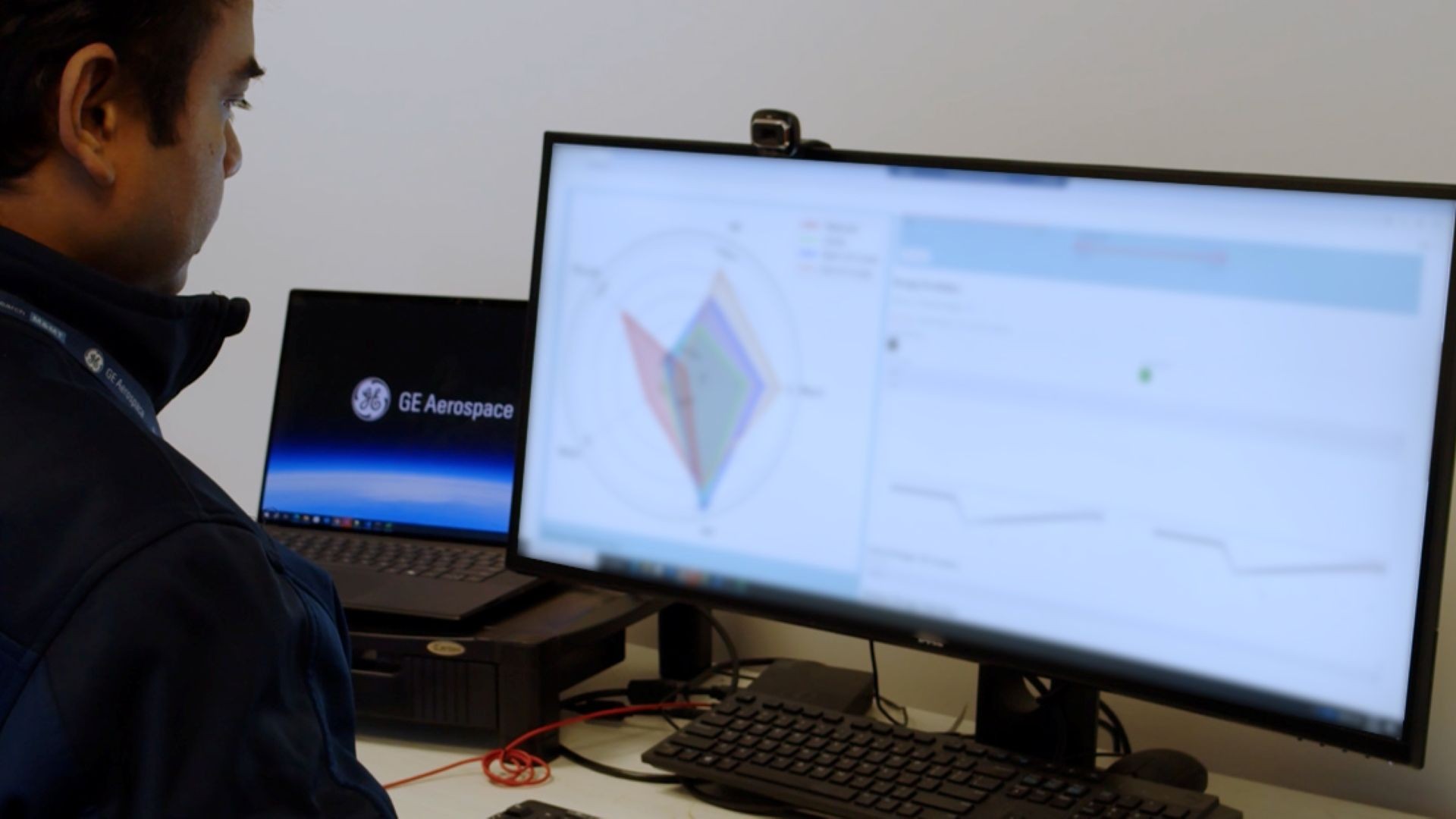
Among other advances in the use of artificial intelligence, GE Aerospace has developed a generative AI-powered app that produced a preliminary design layout for a hypersonic ramjet engine in seconds, rather than days or weeks. Images credit: GE Aerospace
Article
Anton Groom, GE Aerospace’s New Chief Data and AI Officer, Is Looking for a Few Good Problems to Solve
November 17, 2026 | by Chris Norris
Anton Groom grew up on a farm in South Africa near the ocean, where he switched between three spoken languages (Zulu was his first) and paid close attention to the weather. “I got fascinated with the concept of probability and uncertainty,” he says. “To understand, if not control, how things in the world worked.”
At the University of KwaZulu-Natal, Groom developed models that turned rainfall data into predictions of floods and droughts using an early version of AI that we’d now call a neural network. “The experience of using this very abstract thing — basically, stochastic prediction through a neural network — to predict something in the physical world, that was probably the real beginning for me,” he says. “It made me think: What else can machine learning, or AI, do?”
For one thing, it could improve the safety and experience of the average shopper at Walmart, whose digital transformation Groom led from 2014. For another, it could accelerate drug discovery and efficiency at the pharmaceutical giant Merck, which Groom spearheaded from 2022. And now, as GE Aerospace’s first-ever chief data and artificial intelligence officer, Groom is set to build out the foundational data ecosystem to enable it to safely scale AI applications across the entire company.
GE Aerospace Reports: How did you go from Walmart to Merck?
Anton Groom: I was happy at Walmart, but Merck was looking to leverage AI to automate their business more efficiently and effectively. This was during COVID, when pharma was obviously right in the social consciousness. Merck was pretty advanced in the AI work they were doing. But the goal was to take the AI that we had and merge it with automation. At Merck, the technology isn’t just chatbots that employees can use for a better work experience; it’s a way to potentially accelerate clinical trials, to get drugs to market quicker. The one thing that always stayed with me was the fact that, with each day that we can get to the market sooner, that’s someone’s life you’re potentially saving.
So big pharma to big aviation? Explain.
Merck was exciting. It was a domain where the frontier AI labs were actively involved, looking to discover the next wonder drug. But also, safety was paramount there, since a pharma company asks the public to trust us with a product they put in their bodies. We applied rigorous safety standards to everything we created, which required very precise, high-quality data.
It’s really the same in aerospace; data and safety are interconnected. We have to make sure that the data we use to make critical decisions about new products, new technology, and maintenance — any kind of data we’re asking AI to consume — has the highest level of quality and reliability. So, for me, it was just a continuation of that same mindset: Data quality equates to safety of the product.

What attracted you to GE Aerospace specifically?
It was the importance of a company like GE Aerospace, both to the U.S. and to the global economy. Here’s a company that really matters and that everyone needs to be successful. So much in this industry is critically important, whether it’s in defense or in the commercial engines that carry millions of people at any given time who depend on our technology to take them home safely. And on a personal level, I liked the idea of getting to work back in the engineering space, from growing up on a farm and being in and around machinery as a kid.
What’s your first priority since coming aboard?
At GE Aerospace, the goal is to have one fully transparent platform that manages all of the AI we’ve deployed that lets anyone see how it was created, how it was tested, and who’s accountable for it.
So building out this platform is one of my top priorities. Getting that plumbing done — building a single platform and consolidating our AI landscape to enable us to operate in an effective and responsible manner.
What concrete AI wins has GE Aerospace already had?
Quite a few, from the generative AI design app and quality-inspection automation to the AI-enabled blade inspection tool and a customer response tool that allows the sales teams to put together deal proposals with higher quality and greater speed that’s more responsive to customers. That’s a great example of using this technology not only to reduce the amount of human effort that goes into a goal but to actually get better quality for our customers.
How do you get buy-in from employees across GE Aerospace when it comes to AI?
AI is an accelerator, but our people are the secret ingredient. So one of the things we have to do is provide employees with a degree of comfort with AI tools. The more people get their hands on them and understand what AI looks and feels like, the more comfort they’ll have with the technology, and the more they’ll know what its boundaries are — what it’s good at and not good at. Which means getting comfortable with the occasional failure. If we want people to explore and experiment, we can’t expect every single effort to always be a roaring success. When it doesn’t work, you learn from that experience and get better the next time around.
How does AI fit in with the lean principles of FLIGHT DECK?
AI will only amplify and accelerate what FLIGHT DECK is already doing in its problem-solving and solutions-driving. Ultimately, we’re going to start building more AI capabilities into some FLIGHT DECK tools.
Our data scientists have built very good models that can look at piles and piles of data to give good sales predictions, say, or maintenance needs for next month. You don’t want to just throw piles of data at a large language model and inundate it with a lot of noise. You need to be able to point the language model at well-trained, accurate, and proven machine-learning models we’ve built, to give it a very concise and more useful piece of data to use in its own process, making the AI more reliable and accurate as it solves complex problems.
Where are the biggest future AI opportunities at GE Aerospace?
Oh man, there are just so many. If you look at the intersection of where the frontier labs are going and where the opportunities are in our world, that Venn diagram has huge overlap. Those labs are moving AI into the physical design world: getting these agents to understand CAD drawings and how their designs manifest in the physical world; building physical simulations and allowing models to truly understand what their results mean. As those labs start to do that work, that will be a real opportunity for us, positioning us to take advantage of all the years of manufacturing experience and scientific innovation that is native to our company.
What do you do when you’re not managing AI for a massive aerospace company?
I mess with AI on my personal stuff. [Laughs] I’ve got a basement full of servers doing all sorts of different things, like writing an autonomous program to auto-launch my drone so that it can check out the trail by my house to see if it’s a good time to go running — how busy it is, what the conditions are — and come back to give a report. I was reflecting recently that I used to write a lot of code, and I used to think I enjoyed writing code. But now that I can have AI write the code for me, I realized I just like understanding things and solving problems in different ways.
See other posts
GE Aerospace is a world-leading provider of jet and turboprop engines, as well as integrated systems for commercial, military, business and general aviation aircraft.