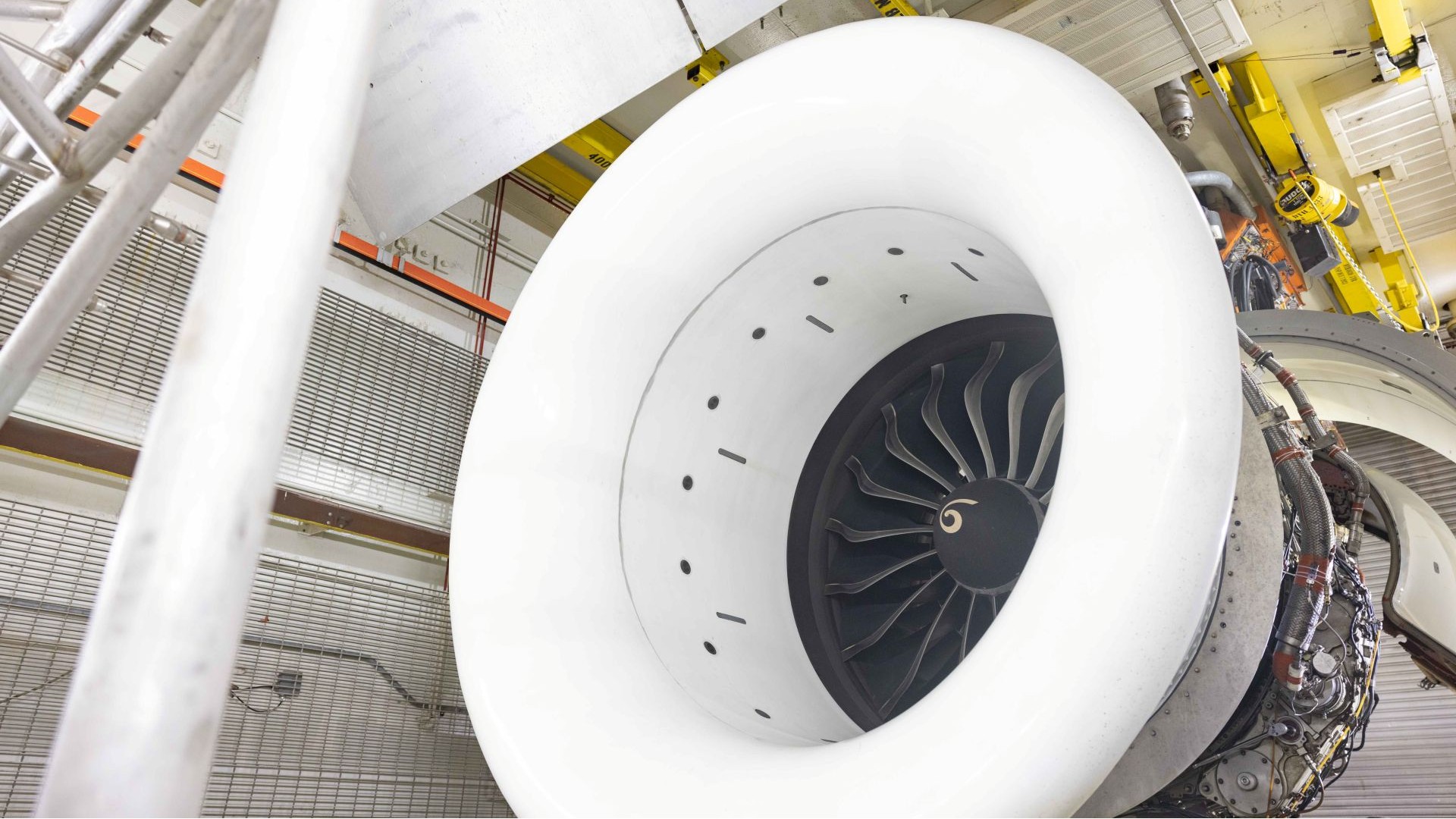
A CFM LEAP engine in the midst of a dust ingestion test. “Dust ingestion tests can last up to six months,” says Senior Test Engineer Mike Mutchler, “so our testing hardware, along with the engines, really needs durability.” Images credit: GE Aerospace
Article
Out of Thin Air: How GE Aerospace’s Dr. Dust Co-Invented a Next-Generation Engine Testing Rig
May 26, 2026 | by Chris Noon
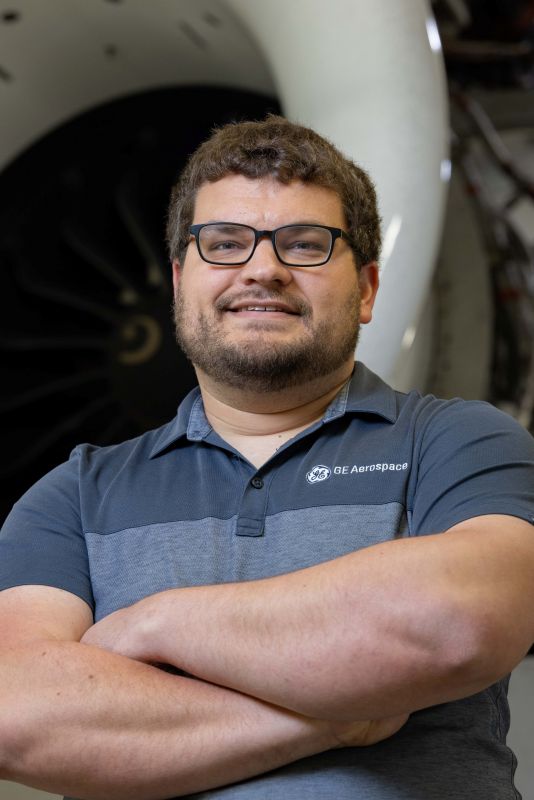
Michael Mutchler, a senior test engineer at GE Aerospace, forgets who first called him “Doctor Dust,” but he knows how he got his nickname. In the summer of 2021, Mutchler was on a special testing mission at GE Aerospace’s Global Research Center in Niskayuna, New York, when he encountered some turbulence. Not in an engine, but in the testing rig itself.
“We noticed that the old testing equipment was mechanically excited,” he says. “In fact, it was kind of tearing itself apart.” Left unaddressed, the shakes and shudders would reduce the lifespan of the sophisticated machinery — such as the metering rig, the component that delivers an exact dose of dust into the jet engines, simulating the harsh, real-world environments of desert take-offs and volcanic ash encounters. “That was a big problem,” explains the engineer. “Dust ingestion tests can last up to six months, so our testing hardware — along with the engines — really needs durability.”
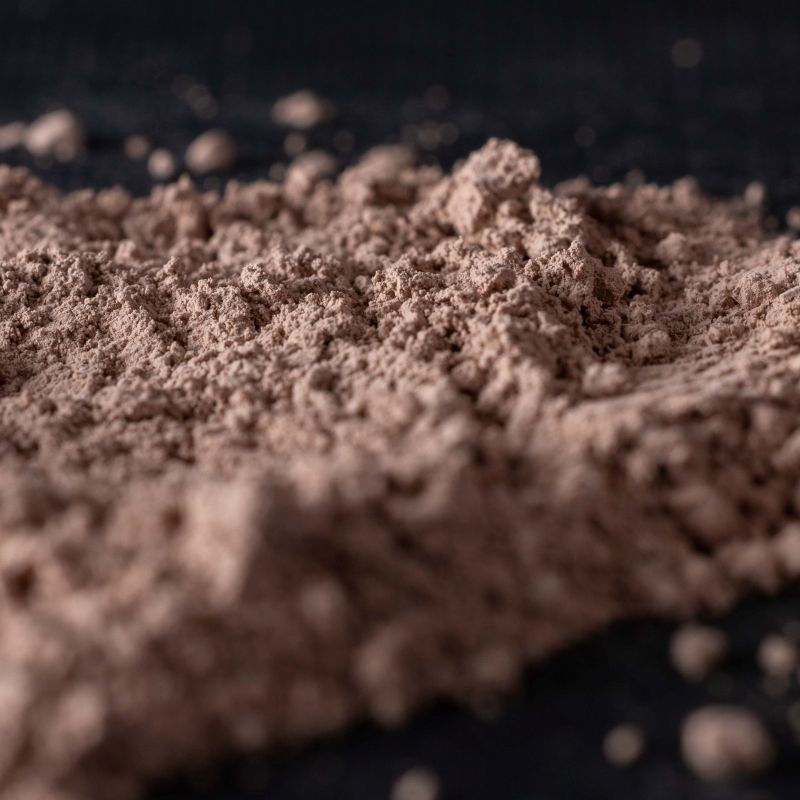
The would-be Dr. Dust also identified a mental barrier blocking a potential solution. “We were still thinking about dust as just a solid substance,” says Mutchler. “But it’s actually an aerosol, and can act like a solid and a gas at the same time.” So, he urged his engineering colleagues to focus on dust as an aerosol as they experimented with special particle sampling probes and complex, multi-phase throttle cycles. Dr. Dust’s orders paid off. Within weeks, the Niskayuna team had unlocked new handling techniques that relieved the mechanical stress on the testing hardware.
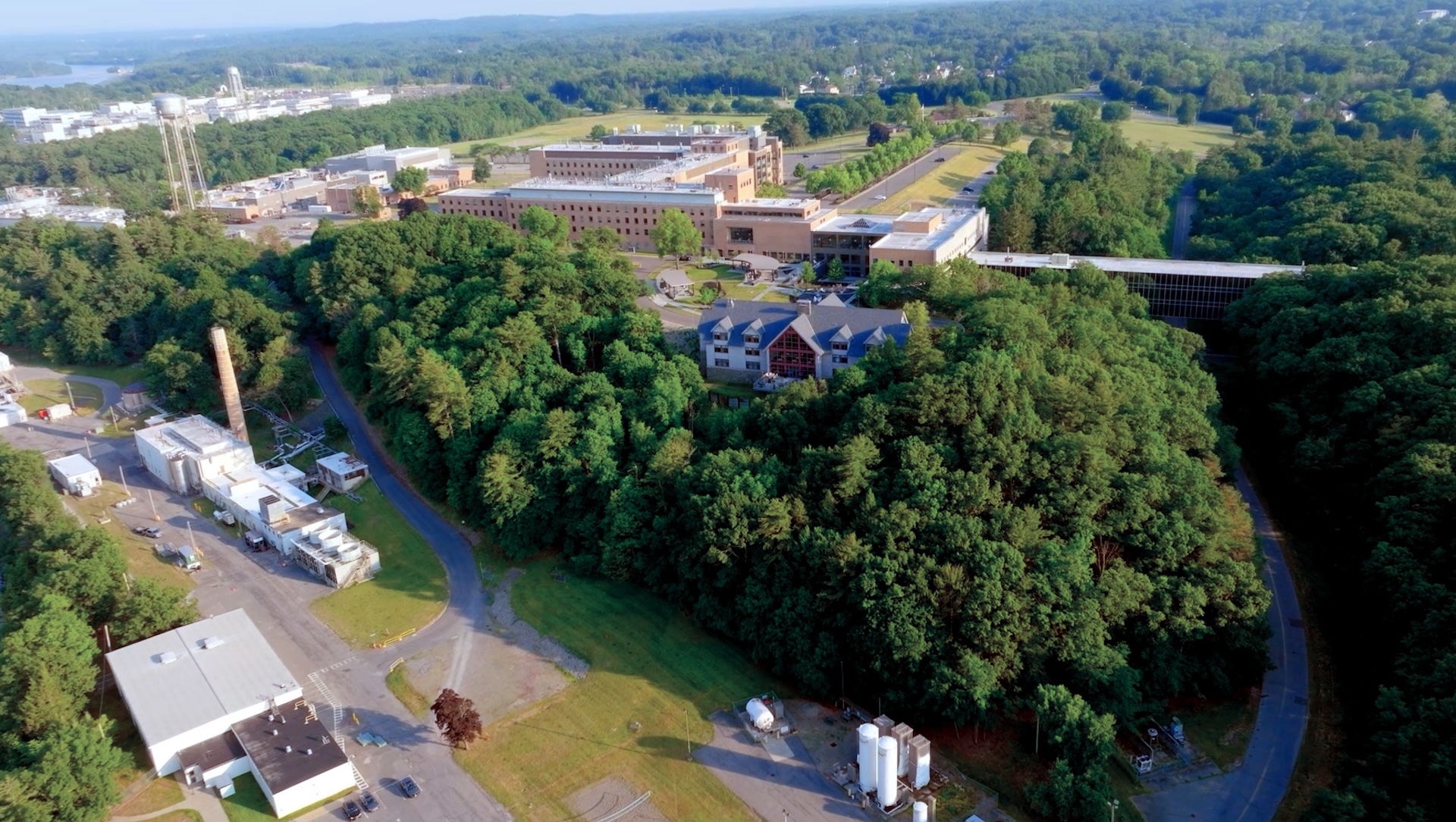
The new rig is now in place on the company’s Evendale campus and at the Peebles Test Operation, the 7,000-acre facility in southern Ohio that serves as a grueling boot camp for its jet engines, including the iconic GE90, GEnx, GE9X, and CFM LEAP* engine lines. It’s a durability machine, like the engines themselves. But getting there took some doing. “It’s been a full-circle moment,” Mutchler says. “These tests don’t just prove out our engine hardware, they’re also proving out our test capability.”
A Self-Proclaimed Test-Cell Rat
Mutchler caught the testing bug as a University of Cincinnati student during his final engineering co-op with GE Aerospace in Peebles. On graduating in 2015, he began full-time work at the Ohio facility, already boasting heaps of testing know-how. “I am a self-proclaimed test-cell rat,” he says. “I’d consumed all of the expertise from the former dust team.”
He’d call on all that knowledge in the years ahead. Amid booming jet engine demand from the Middle East, GE Aerospace has been determined to establish Peebles as a center of dust ingestion testing excellence. But it’s been a steep learning curve. “The first tests we ran during my time as a Peebles test engineer were very rudimentary,” says Mutchler. “There were so many problems with reliability — not from the engines, but from the test hardware.”
Before he dove into fixing the hardware, Mutchler had to earn his testing spurs. He remembers his maiden dust ingestion test like it was yesterday. (“A GE90-115B engine,” he says). Shortly afterwards, he chalked off his first testing campaigns on the CFM LEAP, the high-efficiency turbofan engine produced by CFM International. Mutchler didn’t just kick up dust storms; he added inclement weather and other airborne objects to his testing repertoire. “I now come into play if anything other than air gets into an engine,” he says, reeling off a list. “Ice, rain, hail, birds.”
Mutchler quickly learned that the testing cycle for dust is different. A standard icing test point lasts just two hours or less, and engineers can discover within minutes if an engine has been compromised. But the testing cycle for dust can last several months, and any dust-related engine failure is gradual. Dust ingestion is not classified as a certification test, but “it’s still one of the most important tests for producing a safe, high-quality product,” he says.
This ups the ante for dust ingestion testing hardware. “If you’re a month into the test, and find [an equipment problem], you’ll have ruined an entire month’s worth of data,” says Mutchler.
One thing was clear: If Peebles was to be the proving ground for the planet’s most dust-durable jet engines, then it would need the world’s best dust ingestion testing rig.
Squad Goals
That’s how Mutchler found himself in Niskayuna in the summer of 2022, as part of a select dust squad that included Daniel Ellestad, a senior engineer who Mutchler calls “the father of the modern-day testing rig.” Like Mutchler, Ellestad served his time on the test stand, starting out as a throttle operator at Peebles, and ticking off certifications for engine programs including the GEnx-1B and -2B, the LEAP-1A, -1B and -1C, and the GE9X.
The “dust is an aerosol” mantra helped to focus minds. “If you see a plume of dust going into an engine, then I’ve failed at my job,” says Mutchler. “We’re trying to replicate a real-life environment in somewhere like Dubai, where there are microscopic amounts of particles suspended in the air that enter the engine over the course of years of its service life.”
Assisted by specialists from GE Aerospace’s engineering center in Bengaluru, India, and expert geologists and chemists, Mutchler, Ellestad, and the Niskayuna team fine-tuned the formula for their sparse aerosol. Meanwhile, mechanical and electrical teams redesigned the testing equipment, including the all-important metering rig, the motor-driven apparatus that uses high-pressure air to propel a consistent, controlled amount of dust into an engine’s flow path.
“We got really good at turning on the problem, or simulating the issue on the ground, building our models and analytics around that, then iterating designs until we’ve turned off the problem,” says Mutchler, describing how GE Aerospace conducts it engine durability testing. “Then we went and validated.”
The team took a similar approach to designing the new dust testing equipment. Within weeks, they’d built their next-generation dust ingestion testing rig. The new hardware at Peebles and Evendale is now as smooth, accurate, and durable as the engines on the stand. “It’s not quite set and forget,” he says, “but it’s been improved to the point where test cell teams are in control of their own destiny.” With some simple nozzle modifications, engineers can use the testing rig for all GE Aerospace engine lines, including the CFM RISE program**, a suite of demonstrator technologies aimed at producing better durability and at least a 20% improvement in fuel efficiency compared with today’s commercial engines. Last year CFM initiated dust ingestion testing on the RISE program’s core technologies, the earliest it has ever conducted such testing in a technology demonstration program.
Dr. Dust is delighted that the CFM RISE program’s development of an Open Fan engine design is pushing GE Aerospace ahead of the curve. “We’re allowing the company to think about durability for an engine that’s still a tech demonstrator, because we create that environment for them on the ground and don’t have to wait for flight test,” says Mutchler. “That’s such a big win for my team.”
* CFM LEAP engines are produced by CFM International, a 50-50 joint company between GE Aerospace and Safran Aircraft Engines.
** RISE is a technology development program. It is not a product offered for commercial sale.
See other posts
GE Aerospace is a world-leading provider of jet and turboprop engines, as well as integrated systems for commercial, military, business and general aviation aircraft.