Article
Powering Pegasus: CFM LEAP engines support a decade of airline growth
October 14, 2026 | by GE Aerospace Staff
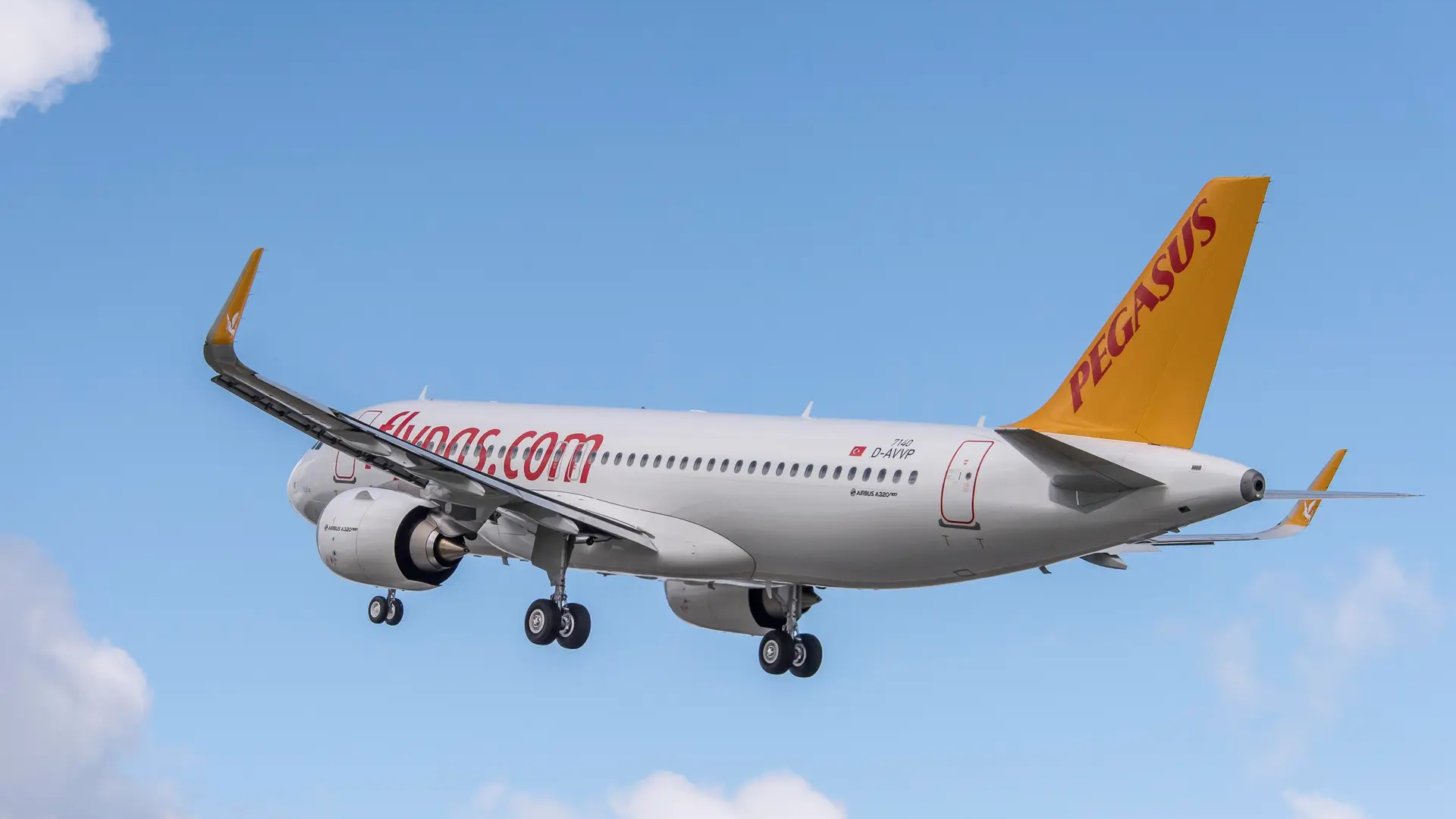
Antalya is one of the most popular destinations in Türkiye – and the largest tourism hub in the Mediterranean. It’s perhaps no surprise that when Pegasus Airlines made history on August 2, 2016, by bringing *CFM International’s LEAP engines into commercial service, it was on the Istanbul-Antalya route.
That flight was the first time an Airbus A320neo aircraft with powered by CFM LEAP-1A engines flew airline passengers. Ten years later, Tamer Yüzüak, Pegasus Group Director of Finance and Fleet Management, reflects on the engines’ role in its growth, and Pegasus’ experience of introducing and operating a new generation of engines. He also shares lessons learned through this collaboration, while focusing on the airline’s growth in partnership with CFM.
“Over the past decade, LEAP-1A engines have played a central role in Pegasus’ transition to a new-generation fleet and growth journey,” said Yüzüak. During that time, the airline grew from 82 aircraft supporting 101 destinations in 2016 to nearly 130 aircraft flying to 160 destinations in 2026.
“LEAP technology has delivered the fuel savings and emissions reductions targeted at the outset, allowing us to expand our network, lower operating costs, and carry millions of passengers more efficiently ,” Yüzüak said.
Pegasus’ first commercial flight also marked the beginning of the LEAP program’s rapid global expansion. More than 10,000 LEAP engines have been delivered to more than 150 CFM operators worldwide, accumulating more than 100 million flight hours and representing the fastest ramp-up in commercial aviation history. The CFM LEAP family includes LEAP-1A engines, which power the Airbus A320neo family, and LEAP-1B engines, which power the Boeing 737 MAX family. Customers worldwide have benefited from the 15% lower fuel and CO₂ emissions delivered by LEAP engines, compared with prior-generation CFM56 engines.
“We are proud to celebrate this milestone with Pegasus and appreciate the trust and collaborative spirit we have shared throughout our relationship,” said Gaël Méheust, President and CEO of CFM International. “Reaching this milestone is a testament to the partnership we’ve been building together.”

Learning and improving together
Being the launch customer also gave Pegasus first-hand experience of introducing new engine technology at scale. Yüzüak spoke candidly about challenges related to durability, maintenance capacity, and engine availability in the early phase, as well as how he has appreciated CFM’s cooperative approach and responsiveness.
“We appreciate the efforts CFM has made to address these challenges through hardware improvements, increased repair capabilities, and closer collaboration with operators,” he said. “While we have seen steady progress, we believe continued focus on time-on-wing improvement and engine availability remains critical to fully unlock the potential of the LEAP fleet.”
CFM continues to incorporate operator feedback into improvements across the engine and its support network. 40% of the LEAP-1A fleet is now flying with a high-pressure turbine (HPT) durability kit to extend time on wing, while 70% of the fleet is operating with a reverse bleed system (RBS) to lower airline maintenance burden.
“Maturing a new engine program at this scale is a continuous effort. We are focused on delivering high engine availability through exceptional MRO performance and competitive cost of ownership, with the benefits of expanding aftermarket competition, capacity, and capabilities through our open MRO ecosystem,” Méheust said.
The next chapter
In December 2025, Pegasus and CFM expanded that relationship with an agreement for up to 300 LEAP-1B engines to power the airline’s future fleet of Boeing 737 MAX 10 aircraft.
“We expect reliability, durability, and maintenance efficiency to continue improving,” Yüzüak said. “Pegasus looks forward to introducing LEAP-1B engines – which incorporate the best practices and improvements developed across the LEAP family to date, alongside our LEAP-1A engines – and we see this as the next chapter in a trust-based partnership with CFM that spans more than 35 years, from the CFM56-3, CFM56-5B, and CFM56-7B through today’s LEAP family.”
Ten years on, Pegasus is proud to have been the CFM LEAP launch customer, to have overcome challenges through close collaboration, and to have helped advance quieter, more efficient aviation, with lower emissions.
“Together, we have supported the introduction of a new generation of aircraft and engines and look forward to building on this partnership for many years to come,” Yüzüak added.
From the first CFM LEAP-powered commercial flight in 2016 to a future fleet that will include both LEAP-1A and LEAP-1B engines, the relationship demonstrates the value of working closely throughout the lifecycle of new technology: introducing it, learning from real-world operations, and continuing to improve it together.
*CFM International is a 50-50 joint venture between GE Aerospace and Safran Aircraft Engines
See other posts
GE Aerospace is a world-leading provider of jet and turboprop engines, as well as integrated systems for commercial, military, business and general aviation aircraft.