Article
45 Years in the Making: The People Behind GE Aerospace’s Component Repair Site in Singapore
October 5, 2026 | by GE Aerospace Staff
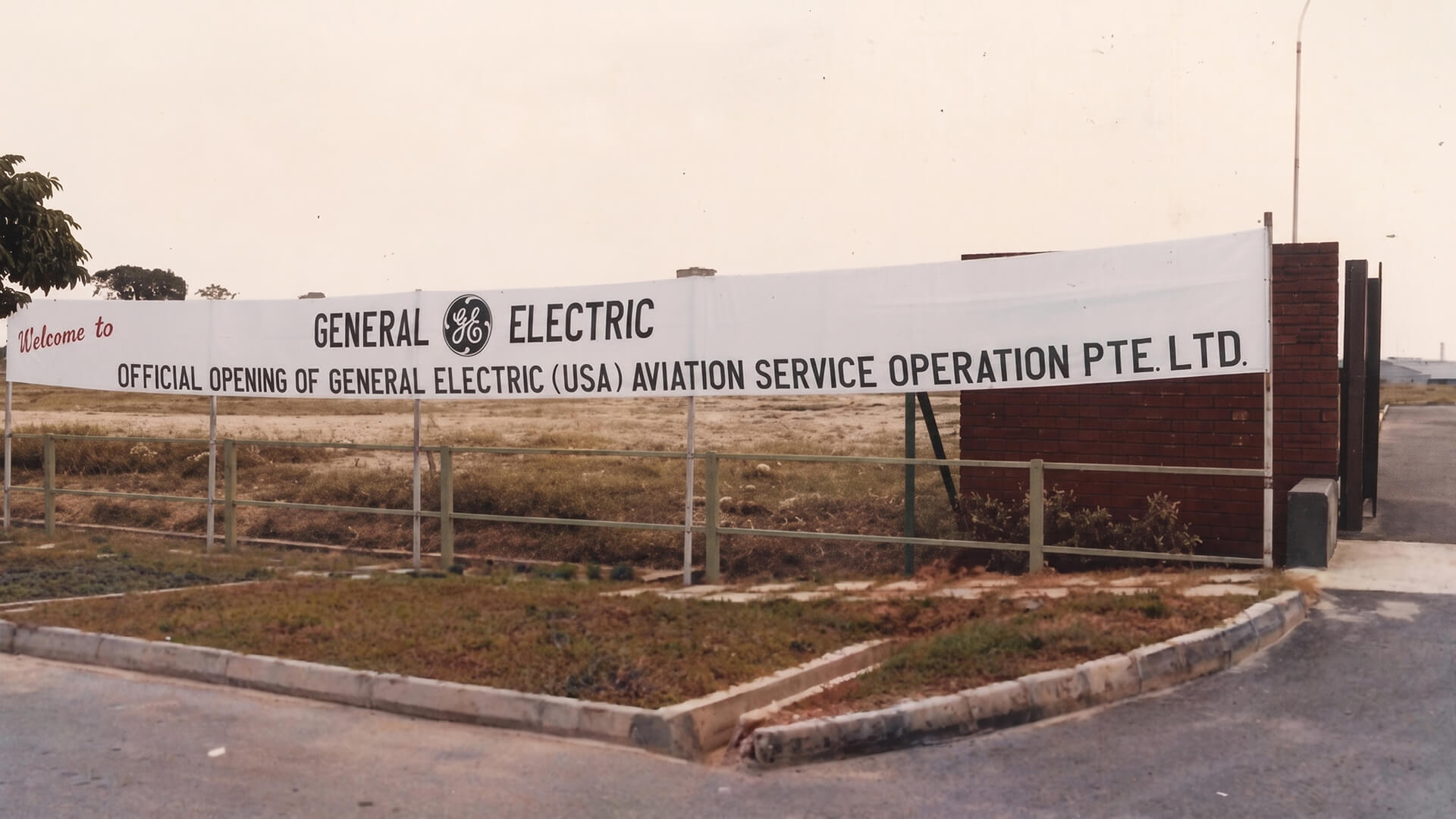
In July 1981, GE Aerospace opened its first office in Singapore, the GE Aviation Service Operations (GEASO) site, establishing an aircraft maintenance, repair, and overhaul (MRO) operation on a stretch of land surrounded by fields of the native tall grass called lalang.
The operation was modest: a single-floor building, a small team, a couple of lathes, and a handful of furnaces. Singapore’s aerospace sector, meanwhile, was still years away from becoming the industry it is today, one that now contributes about 10% of global MRO output, supported by a 22,000-strong workforce.
Forty-five years later, the site has grown into one of the largest facilities in GE Aerospace’s global MRO network, accounting for more than 60% of the company’s global repair volume and now employing more than 2,200 people.
For some, the transformation has been a decades-long journey. For others, it is a legacy they have inherited and are now helping to carry forward. Together, their stories offer a glimpse into how a small repair operation grew into a major center of capability, and how its people grew with it.
From a One-Floor Facility to a Center of Capability
What began as a modest repair and overhaul operation has evolved significantly over the past four decades. The site steadily expanded its capabilities to support an increasingly diverse range of GE Aerospace engine programs, from the CF34 and GE90 to the GP7200, GEnx, and CFM LEAP.*
Each new program brought new technologies to master, skills to develop, and expertise to build. For the technicians and engineers on-site, that meant continually learning new ways to repair increasingly sophisticated engine components.
For Yip Ah Foo, one of the site’s earliest employees, that transformation is something he has witnessed firsthand. He remembers when GEASO was a single-floor building and has watched as new capabilities, technologies, and generations of employees reshaped the site around him.
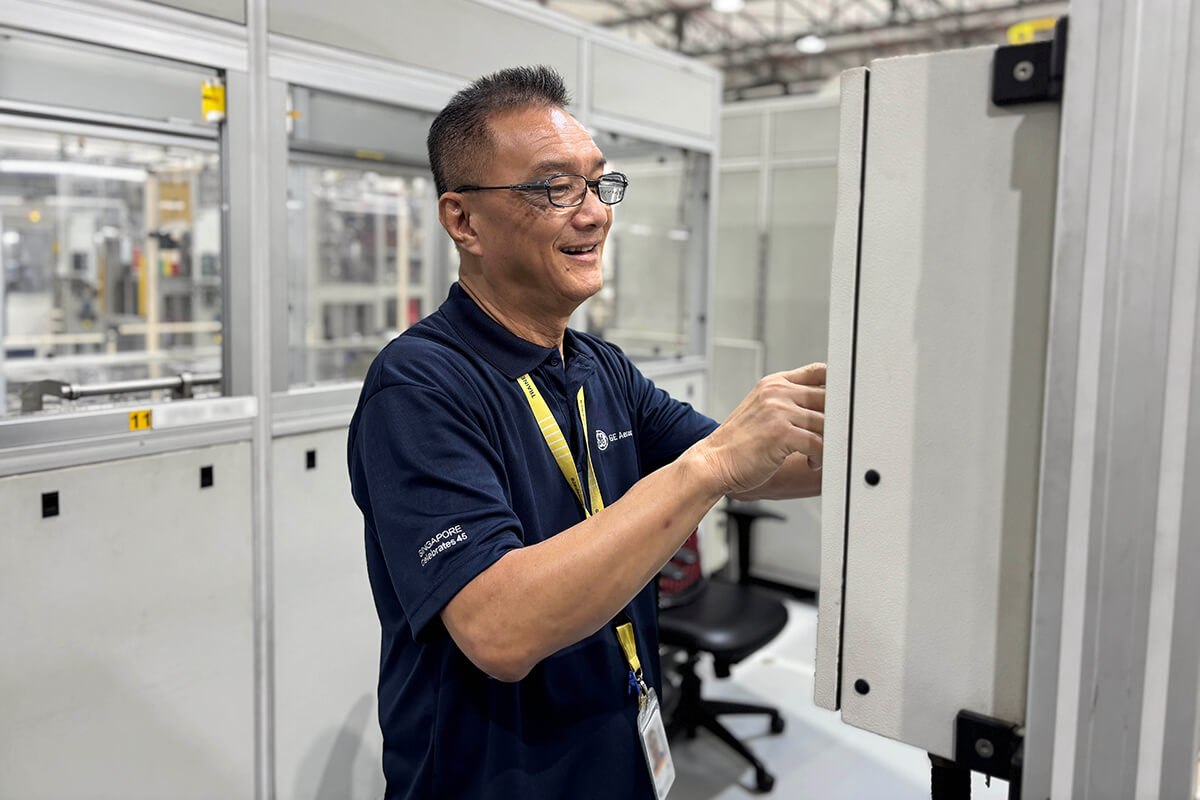
“I started [this journey] by learning many different things, alongside engineers and people leaders, and that experience helped me build my knowledge over the years,” he says.
That spirit of learning has also driven employees to find new ways to solve problems and build capabilities. As the Singapore site expanded over the years, its operations grew across different facilities and specialized capabilities. One of these is Plant 23 (so named because it sits at 23 Loyang Way), which focuses on the repair of turbine blades, turbine nozzles, combustors, and other large engine components.
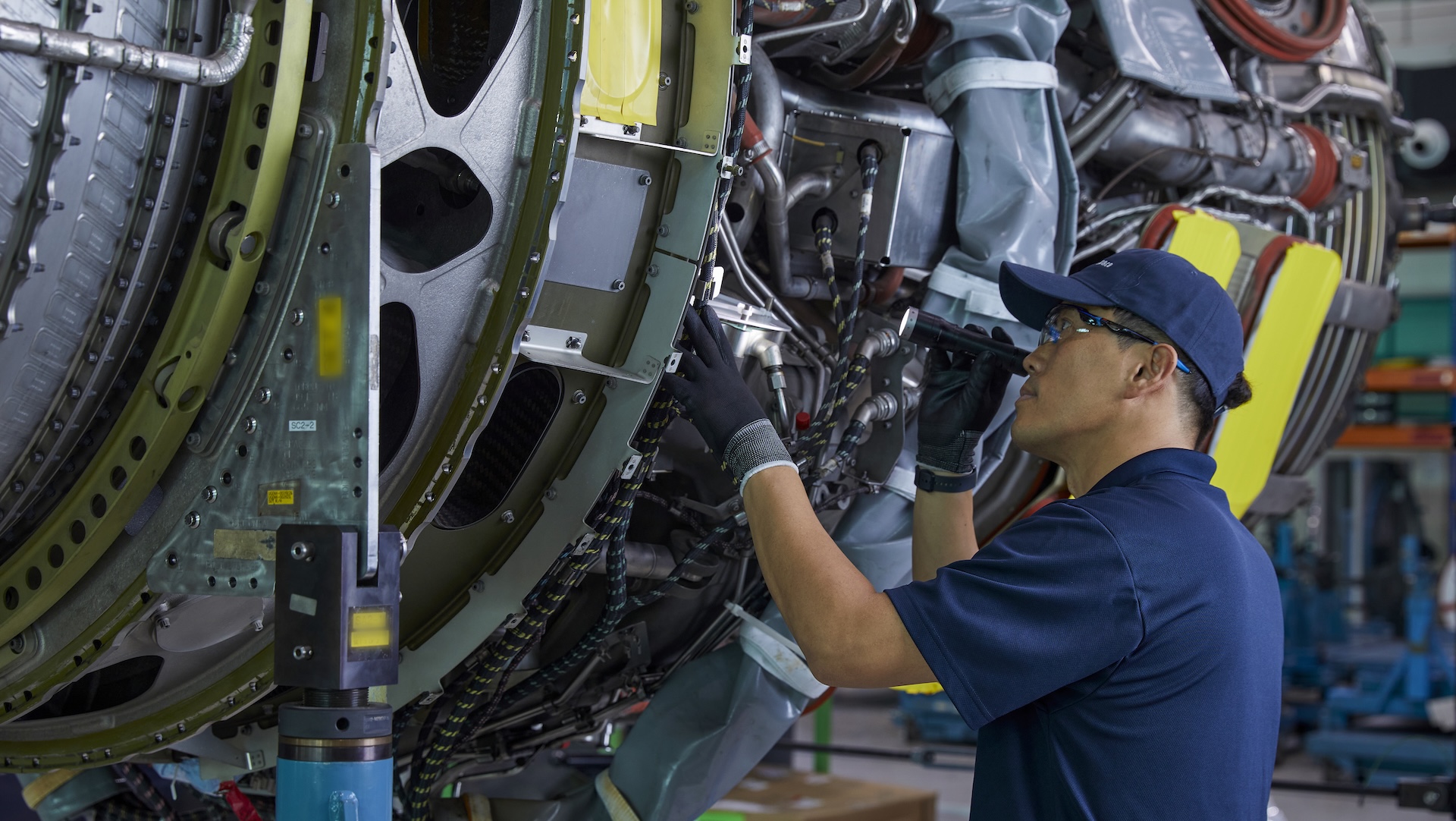
Component Repair Technician Tan Teck Hock recalls working alongside an engineer to develop a new coating process at Plant 23. Getting it right required experimentation, persistence, and eventually a significant change in approach.
It was the kind of improvement that began not with a new building or a major investment, but with people on the shop floor working together to find a better solution.
Stories like Tan’s show that the site’s transformation has been shaped not only by new programs and technologies, but by the people who continually find ways to improve how the work is done.
Growing with the Work — and with One Another
As the site evolved, so did the people behind it. New technologies and capabilities created opportunities for employees to learn new skills, assume different roles, and pass their experience on to the next generation.
Quality Associate Pauline Tong started her career as a processor before taking on new roles and responsibilities, learning from experienced colleagues and engineers along the way. Today she draws on that experience when supporting the technicians she works with. “I always teach the technicians that they should learn things the right way the first time, so they won’t go wrong,” she says.
That cycle of learning and sharing has continued across generations at the site. Employees who were once taught by experienced engineers and technicians have become mentors themselves.
After more than 40 years as a component repair technician, Mohd Ariffin Bahari has found a new sense of purpose in mentoring the next generation as an official mentor. “I enjoy teaching and training the juniors, helping them overcome challenges and ensuring they do things the right way. Seeing them achieve their responsibilities gives me great satisfaction,” he says.
The same mindset is reflected in GE Aerospace’s proprietary lean operating model, FLIGHT DECK, which places continuous improvement, problem-solving, and respect for people at the center of how the business operates. At the Singapore site, these principles have helped create a culture where knowledge is not simply retained but passed forward – allowing each generation to build on what came before.
A Legacy That Continues to the Next Generation
For some employees, GE Aerospace has become more than a career. It is a family story.
Unis Mohamed joined the company in 1998 as a component repair technician. That same year, Plant 62 (at 62 Loyang Way) was established by Airfoil Technology International (ATI), a joint venture between GE Aerospace and Teleflex, to repair compressor airfoils with excellent turnaround time and quality.
More than two decades later, his daughter, Nur Fauzina Binte Mohamed Unis, followed in his footsteps, joining GE Aerospace in 2021 and pursuing her degree with support from the company’s education assistance program.
Her arrival coincided with another defining moment for the Singapore site. As the facility celebrated its 40th anniversary in December 2021, the site also marked a global industry first: the successful use of direct metal laser melting (DMLM), a metal 3D-printing technology, to repair an engine component. Applying this advanced technology in the engine repair process doubles the number of jet engine parts repaired daily, shortening turnaround times, and allowing customers to return their aircraft to the skies more quickly.
The family connection grew again in 2022, when Unis’s son-in-law, Raja Mohamed Abdull Azees, joined GE Aerospace. Drawn by his passion for aviation and the company’s global reputation, he began his own career at the site.
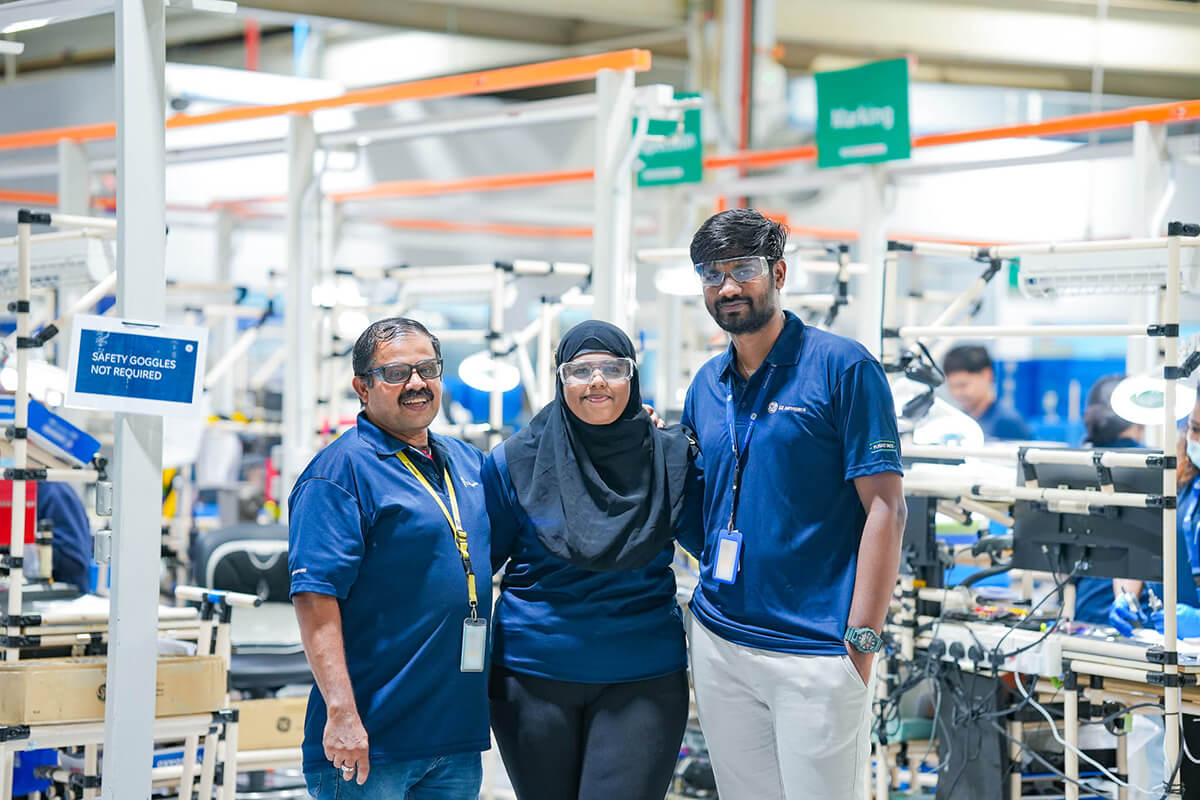
Today, Unis, Fauzina, and Azees continue to build their careers at a site that has transformed significantly since 1981 — and continues to evolve.
Supported by the Singapore Economic Development Board, GE Aerospace has announced a multi-year investment plan of up to US$300 million to further expand its Singapore repair capabilities through 2029, including investments in automation, digitization, and AI-enabled inspection technologies.
From the one-floor facility of 1981 to the advanced MRO operation today, the site has continued to evolve with each generation. The next chapter will bring new technologies and capabilities, but the people who have grown with the site will continue to shape what comes next.
*CFM International is a 50/50 joint company between GE Aerospace and Safran Aircraft Engines.
See other posts
GE Aerospace is a world-leading provider of jet and turboprop engines, as well as integrated systems for commercial, military, business and general aviation aircraft.